

Maddy summaryHR 6762, the Protecting American Advanced Manufacturing Act, blocks tax credits for manufacturing components produced by companies linked to foreign adversaries (like China or Russia). It prohibits the Advanced Manufacturing Production Credit under tax code section 45X for any component made by a "disqualified entity," defined as companies with 10%+ ownership by foreign adversaries, subject to their control, or involved in prohibited financial arrangements (like debt or leases). This directly affects manufacturers relying on components from such entities, requiring them to source domestically or from non-adversary suppliers to qualify for the credit. The law takes effect for taxable years after its enactment, with the IRS given authority to establish implementation rules.
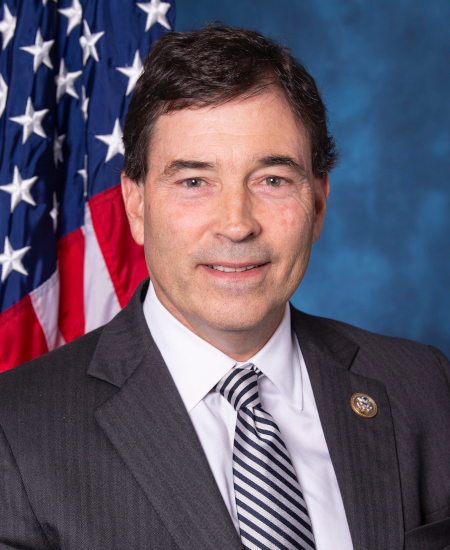
Rep. Troy Balderson
Sponsored bills
Maddy summaryThis bill reauthorizes and extends funding for programs addressing substance use disorders and opioid addiction, including residential treatment for pregnant and postpartum women, first responder training, and community recovery initiatives. It increases funding levels for these programs, adds xylazine to Schedule III of controlled substances, and requires a study on remote monitoring for patients prescribed opioids. The bill also expands Medicaid coverage requirements for medication-assisted treatment and mandates reporting on mental health condition data alongside substance use disorder data, directly affecting individuals with substance use disorders, healthcare providers, and state and tribal governments.
Maddy summaryThis bill reauthorizes and extends federal funding for research and support services related to preterm birth through 2028, replacing the previous 2019-2023 funding period. Key provisions include adding chronic condition screening and treatment to maternal health education services, mandating an interagency working group on prematurity within 18 months, and requiring a National Academies study on preterm birth costs, risk factors, and program gaps. The study must assess neonatal care expenses, societal impacts, and effective prevention strategies, with a final report due within 24 months. These changes directly affect preterm infants, their families, healthcare providers, and federal agencies managing maternal health programs.
Maddy summaryHJRES 88 is a resolution seeking to block a Department of Education rule that would have improved income-driven repayment options for federal student loan borrowers. The rule, published in the Federal Register on July 10, 2023, targeted the William D. Ford Direct Loan Program and the Federal Family Education Loan (FFEL) Program. This resolution uses the Congressional Review Act process to disapprove the rule, preventing it from taking effect and preserving the current repayment structure. If enacted, it would stop the proposed changes to repayment terms without altering existing loan policies.
Maddy summaryHR 6600, "Tyler’s Law," requires the Secretary of Health and Human Services to study how often hospital emergency departments test for fentanyl during overdose cases, along with the costs, benefits, risks, and patient privacy impacts. The study must be completed within one year of the bill’s enactment, followed by guidance issued within six months on whether fentanyl testing should become routine. This guidance will address how hospitals can inform clinicians about testing protocols and how fentanyl testing might affect future overdose risks and patient health outcomes. The bill directly affects hospitals and emergency departments treating overdose patients, focusing on improving data-driven practices for fentanyl detection.
Maddy summaryHR 4468, the Choice in Automobile Retail Sales Act of 2023, blocks the Environmental Protection Agency (EPA) from finalizing or enforcing a specific proposed rule setting emissions standards for 2027+ light-duty vehicles. It amends the Clean Air Act to prevent future EPA regulations from mandating specific vehicle technologies or limiting the availability of new vehicles based on engine type (e.g., gasoline vs. electric). The bill directly affects EPA rulemaking authority and automakers' compliance with emissions standards, ensuring new vehicle options remain diverse without technology mandates. This is a procedural change to federal emissions regulations, not a direct consumer or industry mandate.
Maddy summaryThe Nuclear Fuel Security Act of 2023 establishes three key programs to increase domestic production of nuclear fuel, specifically high-assay, low-enriched uranium (HALEU) and low-enriched uranium (LEU), to support advanced nuclear reactor development. The Department of Energy must establish a Nuclear Fuel Security Program to boost domestic production, expand the American Assured Fuel Supply Program to maintain uranium reserves for supply disruptions, and create a dedicated HALEU for Advanced Nuclear Reactor Demonstration Projects Program. This program requires the Department to make specific quantities of HALEU available to reactor developers by set deadlines (3 metric tons by 2024, 8 more by 2025, and 10 more by 2026). The bill directs the Department to prioritize domestic uranium production where possible or partner with allied countries when domestic options aren't available, while ensuring reasonable compensation for fuel provided and avoiding market disruption.
Maddy summaryHR 6578 establishes a 9-member bipartisan commission to study antisemitism in the United States. The commission will investigate current manifestations of antisemitism, evaluate government efforts to combat it, and report findings and recommendations to Congress within one year. It directly affects Jewish communities by examining incidents like the 300% surge in antisemitic activity reported by the Anti-Defamation League, and impacts federal, state, and local governments through its evaluation of existing policies. The commission terminates 120 days after submitting its report, with no predetermined conclusions or interference in ongoing law enforcement.
Maddy summaryThis bill reauthorizes the Never Again Education program, which funds Holocaust education initiatives in schools. It extends the program's funding authorization period from ending after four fiscal years to continuing annually through fiscal year 2030. The bill modifies the existing law (Public Law 116-141) by updating the funding timeline without changing program requirements or eligibility. It directly affects the existing grant program supporting educational materials and teacher training on the Holocaust. The change ensures continued federal funding for these specific educational efforts until 2030.
Maddy summaryThis bill appropriates $14.3 billion in supplemental security funding to Israel following the October 7, 2023 attacks. The funding includes $4 billion for Iron Dome and David's Sling defense systems, $1.35 billion for the Iron Beam defense system development, and $3.5 billion for foreign military financing. The bill requires regular reporting to Congress on security assistance provided to Israel and designates all funds as "emergency requirements" under federal budget law. It also modifies existing laws to facilitate the transfer of defense articles and services to Israel, aiming to strengthen Israel's defense capabilities against rocket threats.