

Maddy summaryHJRES 123 is a resolution seeking congressional disapproval of an Environmental Protection Agency (EPA) rule published on March 11, 2024, which would have required chemical facilities to implement new safety measures under the Clean Air Act to prevent accidental releases. The rule, titled "Accidental Release Prevention Requirements: Risk Management Programs Under the Clean Air Act; Safer Communities by Chemical Accident Prevention," aimed to strengthen existing risk management programs at chemical plants. If passed, this resolution would block the rule from taking effect by invoking a federal process for disapproving agency regulations. It directly affects the EPA's regulatory authority and the chemical industry's compliance obligations under the Clean Air Act.
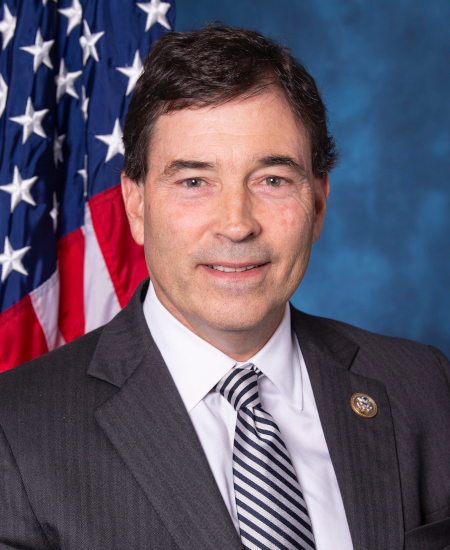
Rep. Troy Balderson
Sponsored bills
Maddy summaryH.J.Res. 116 seeks to block a Department of Labor rule finalized on January 10, 2024, which aimed to clarify how businesses classify workers as employees or independent contractors under the Fair Labor Standards Act (FLSA). If passed, this resolution would prevent the rule from taking effect, directly affecting businesses that use independent contractors and their workers, who rely on FLSA protections for minimum wage and overtime pay. The bill uses a specific congressional process (under Chapter 8 of Title 5, U.S. Code) to disapprove the rule, rather than creating new policy. This action would maintain the existing classification standards until a new rule is established.
Maddy summaryHR 7808, the EARLY Minds Act, amends the Public Health Service Act to require states receiving federal mental health funds to include evidence-based prevention and early intervention strategies for children and adolescents in their state plans. It allows states to use up to 5% of their annual mental health allotment to support these programs, which aim to prevent, delay, or reduce the severity of mental health issues before they become serious. States must report biennially to Congress by 2025 on the programs they implement, including demographics served, outcomes like reduced care access delays, and how programs lessen the onset of serious mental illness. The bill directly affects states administering federal mental health funds and targets youth populations aged 0-18.
Maddy summaryThis bill freezes new energy efficiency standards for distribution transformers. It prohibits the Energy Secretary from proposing or implementing any rules different from the 2013 standards (published April 18, 2013) for five years after the bill's enactment. The law directly affects the Department of Energy and transformer manufacturers by maintaining existing efficiency requirements. It ensures no changes to the 2013 rule during this five-year period.
Maddy summaryThis bill designates the U.S. Postal Service facility at 265 Main Street in Philo, Ohio, as the "Samuel J. Mitchell Jr. Post Office." It requires all federal documents, maps, and references to this specific location to use the new name going forward. The change applies only to the physical post office building and its official documentation, with no other policy or funding changes. This is a purely administrative naming resolution with no direct impact on residents or services beyond the facility's official designation.
Maddy summaryThe Protecting American Energy Production Act (HR 1121) states that Congress believes states should have primary authority to regulate hydraulic fracturing for oil and gas production on state and private lands. It prohibits the President from declaring a moratorium on hydraulic fracturing without specific authorization from Congress. This bill directly affects federal and state governments by limiting the executive branch’s power to halt hydraulic fracturing operations and reinforcing state regulatory control. The key provision ensures any federal restriction on hydraulic fracturing would require a new law passed by Congress, not a presidential order.
Maddy summaryThis bill amends the Clean Air Act to change how national air quality standards are implemented and reviewed. It extends the timeline for reviewing air quality standards from 5 to 10 years, requires consideration of economic impacts and feasibility when setting standards, and mandates that the EPA issue implementing regulations and guidance at the same time as new standards. It also gives states more time (up to 3 years) to correct deficiencies before federal plans are imposed, and adds wildfire mitigation measures as factors that can be considered in air quality designations. The bill directly affects states, local governments, and businesses that must comply with air quality regulations, particularly those in ozone and particulate matter nonattainment areas. These changes aim to create a more balanced implementation process that considers both environmental protection and practical economic considerations.
Maddy summaryHR 5499, titled "Congressional Oversight of the Antiquities Act," would amend the Antiquities Act to impose time limits on national monument designations. It requires that any national monument established by presidential proclamation under the law expires after six months unless Congress extends it, and if not extended, the land cannot be re-designated as a monument for 25 years. This directly affects federal land managers and future presidents, who would need congressional action to maintain or expand monument boundaries. The bill changes the current process by adding automatic expiration and a long-term moratorium on re-designation, shifting authority to Congress.
Maddy summaryThis resolution (HRES 1086) is a symbolic gesture expressing the House's support for designating March 19, 2024, as "National Agriculture Day." It does not create new laws or policies, but instead formally recognizes agriculture as a vital industry in the U.S. economy. The resolution celebrates agriculture's broad economic impact without imposing any requirements or changes on farmers, consumers, or government programs. It is a commemorative statement, not a substantive legislative action.
Maddy summaryHR 6421, the Affordable HOMES Act, repeals federal requirements for energy efficiency standards in manufactured housing. It removes the authority established under the Energy Independence and Security Act of 2007 to set such standards and invalidates a 2022 Department of Energy rule implementing those standards. This bill directly affects manufactured home manufacturers by eliminating a federal regulatory requirement related to energy conservation.