

Maddy summaryHR 10337, the Expanding the Health Care Workforce Act, creates a federal grant program to develop health care career pathways for high school students. It provides grants to hospitals partnering with secondary schools to establish structured work-based learning programs, requiring students to complete 20-100 hours of hands-on training in hospitals over five years, with specific hour requirements per grade. Priority is given to projects serving medically underserved communities, and grants must expand existing programs in 25% of cases. The program mandates annual reporting on student outcomes, including graduation rates, health care workforce entry, and post-secondary enrollment, with a final evaluation report to Congress after five years. This initiative directly affects secondary school students in underserved areas and participating hospitals through new educational partnerships.
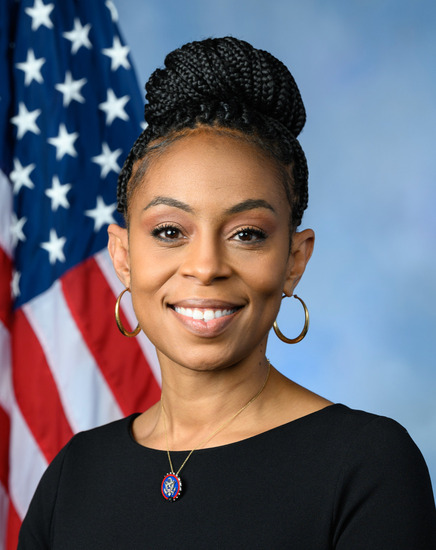
Rep. Shontel M. Brown
Sponsored bills
Maddy summaryThis bill amends the Foreign Agents Registration Act to require individuals who previously acted as agents for foreign governments or organizations to retroactively register with the U.S. government for any period they served in that role, even if they no longer work as agents. It directly affects past foreign agents who failed to register during their service under the 1938 law. The key provision allows the Attorney General to seek court orders mandating retroactive registration compliance for past periods, even if the person is no longer acting as an agent at the time the order is issued.
Maddy summaryHR 6751 authorizes the U.S. Mint to produce commemorative coins honoring Roberto Clemente, a Hall of Fame baseball player and humanitarian, including 50,000 $5 gold coins, 400,000 $1 silver coins, and 750,000 half-dollar coins. The coins must feature Clemente's image and inscriptions like "Roberto Clemente" and "2027," with all sales including a surcharge ($5-$35 per coin) paid to the Roberto Clemente Foundation. The foundation, which supports youth sports, education, and disaster relief programs, will use these funds for its mission, while the U.S. Treasury must recover all production costs. The coins will be sold exclusively in 2027, with no net cost to the government.
Maddy summaryThis bill (HR 5640) renames a specific United States Postal Service facility in Chesterland, Ohio, located at 12804 Chillicothe Road, as the "Sgt. Wolfgang Kyle Weninger Post Office Building." It directly affects the postal facility and all official U.S. government references to that location. The key provision updates all federal documents, maps, and records to use the new name instead of the previous designation. This is a commemorative measure honoring Sgt. Wolfgang Kyle Weninger with no policy changes or funding impacts.
Maddy summaryThis bill establishes a Truth and Healing Commission to investigate the history and impacts of U.S. Indian Boarding School policies on Native American communities, including cultural, emotional, and physical effects on survivors, descendants, and tribal communities. The Commission will document these impacts through research, public meetings, and testimony, working with two advisory committees focused on Native American perspectives and Federal agency coordination. The Commission will operate for six years, with annual reports to Congress and a final report containing recommendations for Federal action. The bill also includes provisions for managing burial sites related to boarding schools and ensures the Native American Graves Protection and Repatriation Act applies to remains found on Federal lands related to these schools.
Maddy summaryHR 10197, the "Analyzing Kinetic Impact Projectiles Against Americans Act," requires the U.S. Department of Health and Human Services to commission a study on the health impacts of kinetic impact projectiles (like rubber bullets, bean bag rounds, and sponge rounds) used by domestic law enforcement. The study, to be completed within one year, must analyze injury frequency/severity, demographic/racial impacts, usage patterns, and treatment efficacy. It mandates annual reports to Congress and the public, including recommendations for governmentwide changes, best practices, and oversight of federal funding for these projectiles. The bill authorizes $2 million for fiscal year 2025 to fund this study, focusing on data collection rather than immediate policy changes.
Maddy summaryThis bill establishes federal grants to expand training and support services for unpaid caregivers of people with Alzheimer's disease or related dementia. It authorizes funding for organizations like senior centers, area agencies on aging, and community health centers to provide direct caregiver support, requiring at least 50% of grant funds to go directly to services (not administration) and limiting administrative costs to 10%. Priority is given to nonprofit organizations serving underserved communities, including minority, low-income, and disability communities. The program, funded for fiscal years 2025-2029, aims to improve access to culturally appropriate caregiver resources nationwide.
Maddy summaryThe Minority Diabetes Initiative Act (HR 10193) creates a federal grant program to improve diabetes care in minority communities. It authorizes the Secretary of Health and Human Services to fund public and nonprofit health providers - including community health centers, tribal health departments, and community organizations - to deliver specific diabetes services. These grants must cover routine care, prevention education, eye/foot care, and treatment for complications like kidney disease, while requiring services to be culturally appropriate and offered in accessible languages. The program is funded through annual appropriations for fiscal years 2025-2030. This bill directly affects minority communities with high diabetes rates by expanding access to comprehensive, culturally responsive care through eligible health providers.
Maddy summaryThis bill extends the operating period for the African American Civil Rights Network program from 7 years to 10 years after the act's enactment. It directly affects the existing program, which supports organizations preserving civil rights history and promoting education, by allowing it to continue operating for a longer duration without needing new congressional approval. The change is a straightforward extension of an existing authorization period under federal law.
Maddy summaryThis resolution (HRES 1558) is a symbolic House of Representatives measure supporting October as "National Domestic Violence Awareness Month." It does not create new laws or allocate funding but formally expresses the House's support for raising awareness about domestic violence and its impacts, and urges continued backing for existing programs that address domestic violence. The resolution cites statistics on domestic violence prevalence (e.g., 24 people per minute affected by intimate partner violence) to underscore the importance of the observance. It directly affects public awareness efforts but does not change policies or directly impact individuals.