

Maddy summaryHR 964, the Rosa Parks Day Act, would designate Rosa Parks Day as a legal public holiday for federal employees and institutions. The bill amends Title 5 of the U.S. Code to add "Rosa Parks Day" to the list of recognized federal holidays, following Thanksgiving Day. This change would establish a new annual observance on the day designated by the President, requiring federal offices to close and employees to receive paid time off. The bill directly affects federal operations and employees, creating a new standard for federal holiday observance.
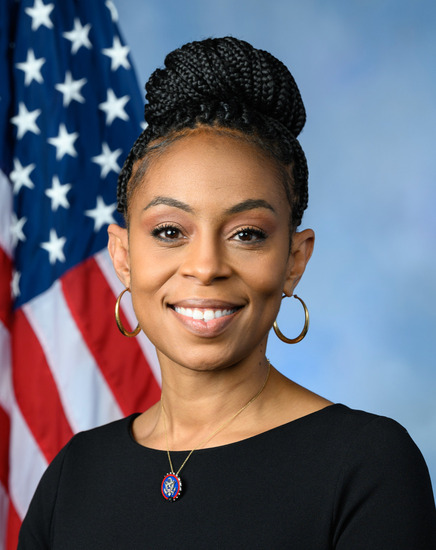
Rep. Shontel M. Brown
Sponsored bills
Maddy summaryThe EITC Modernization Act expands the Earned Income Tax Credit to include more types of dependents (not just "qualifying children" but also "qualifying dependents" including aged dependents and students) and creates a new category for qualifying students who receive Federal Pell Grants or have modified adjusted gross income below 250% of the poverty line. It establishes a minimum $1,200 credit for qualifying students and individuals with certain dependents, allows recipients to receive their credit in monthly payments instead of a single annual payment, and creates new return preparation assistance programs for low-income taxpayers through the IRS. The bill also adjusts eligibility to include individuals as young as 18 without dependents (previously age 25) and adds special provisions for new parents with children born or adopted during the year. These changes aim to increase access to the credit for more working individuals and families while improving the administration of the program.
Maddy summaryHR 844, the "Black History is American History Act," amends the Elementary and Secondary Education Act to require that Black history be included in all American history and civics education programs for K-12 students. The bill specifically adds "which shall include Black history" to multiple provisions, ensuring it becomes a standard part of curriculum standards, teacher training, and national assessments like the National Assessment of Educational Progress. This policy change directly affects public school curricula, educators, and students across the U.S. by mandating historically accurate instruction on African American contributions as integral to American history. The bill references the National Museum of African American History and Culture as a resource provider for educators implementing these changes.
Maddy summaryThis resolution expresses the House of Representatives' position that Congress should take steps to prevent the privatization of the United States Postal Service (USPS), ensuring it remains a federal independent agency. It highlights USPS’s constitutional role, self-sustaining nature (relying on service revenue, not taxpayer funds), and critical functions - serving 168 million addresses daily, supporting rural communities, and underpinning e-commerce. The resolution opposes privatization, noting it would raise prices, reduce services, and harm the $1.9 trillion mailing industry. As a non-binding resolution, it reflects the House’s stance but does not create new law or policy.
Maddy summaryThis bill requires the U.S. Department of Education to proactively notify eligible college students about potential access to SNAP (food stamp) benefits. It targets students with a negative or zero student aid index (SAI) who file the Free Application for Federal Student Aid (FAFSA). The Department must send annual written and electronic notices explaining SNAP eligibility and providing state contact information for applying. The bill also mandates consultation between the Education and Agriculture Departments to design these notifications. This is a policy change focused on improving access to nutrition assistance for low-income students already enrolled in college.
Maddy summaryHRES 68 is a non-binding House resolution expressing strong disapproval of the President’s announcement to withdraw the U.S. from the Paris Agreement. It commends states, businesses, and citizens supporting the Agreement, urges the President to reverse the withdrawal decision, and calls for Congress to prioritize U.S. climate leadership. The resolution does not create new laws or affect specific groups but formally states the House’s position against withdrawing from the international climate accord. It was introduced by 115 co-sponsors and reflects broad congressional concern about reversing U.S. climate commitments.
Maddy summaryHR 612, the Health Care Providers Safety Act of 2025, provides federal funding to help health care facilities improve safety. It authorizes the Secretary to award grants to hospitals, clinics, and other health care providers to cover costs for physical security (like structural improvements) and cyber security (such as data privacy tools and video surveillance systems). These grants directly help health care providers protect their facilities, staff, and patients from security threats. The bill creates a new funding mechanism under the Public Health Service Act, making specific security upgrades eligible for federal support.
Maddy summaryHRES 48 is a ceremonial resolution honoring Dr. Martin Luther King, Jr., by commemorating his 96th birthday on January 20, 2025. The resolution affirms his teachings on diversity, equality, and nonviolence, and specifically condemns hate, discrimination, and harassment targeting Black Americans, Indigenous peoples, Jewish communities, Asian-American/Pacific Islander groups, Muslim communities, Hispanic/Latino communities, LGBTQ+ individuals, and others. It calls on all people to uphold Dr. King’s values of justice, tolerance, and peace. As a symbolic gesture, this resolution has no legal effect but expresses the House’s commitment to these principles.
Chiropractic Medicare Coverage Modernization Act of 2025 This bill expands Medicare coverage of chiropractic services to include all services provided by chiropractors, rather than only subluxation corrections through manual manipulation of the spine.
Maddy summaryHR 486, the Young Americans Financial Literacy Act, authorizes $27.5 million to $55 million annually through 2029 to fund competitive grants for centers of excellence focused on financial literacy education for individuals aged 8-24. These centers, established by eligible institutions like schools, nonprofits, or financial organizations, must develop research-based programs covering budgeting, debt management, student loan guidance, and avoiding pitfalls like predatory lending. The bill specifically requires programs to address at-risk populations, include evidence-based teaching methods, and serve groups such as high school graduates, college students, young families, and military personnel. It mandates annual reporting to Congress on grant recipients and the populations they serve, with funding ending in 2029.