

Maddy summaryHR 4913, the CHALLENGES Act, aims to prevent frivolous challenges to voter registration by requiring anyone submitting a challenge (other than election officials) to provide clear, individualized evidence of ineligibility, swear under penalty of perjury to personal knowledge of the ineligibility, and (if an individual) be registered in the same voting jurisdiction. This directly affects citizens, organizations, and election challengers who might seek to remove voters from registration rolls. The bill establishes private lawsuits allowing victims of false challenges to seek compensation (up to $1,000 per violation) and criminal penalties including fines up to $10,000 or six months in jail for knowingly submitting false challenges. These provisions apply to challenges made after the law's enactment, targeting misuse of voter registration challenge processes.
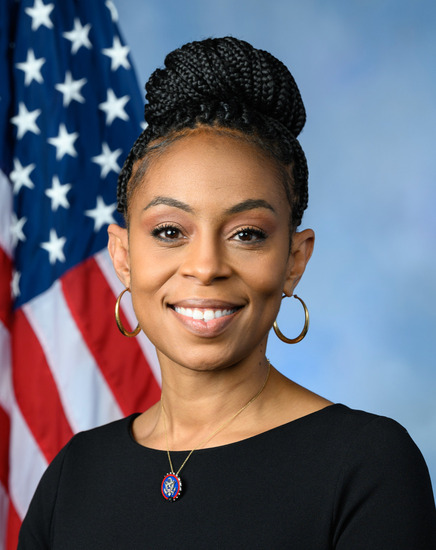
Rep. Shontel M. Brown
Sponsored bills
Unhoused Voter Opportunity Through Elections Act or the Unhoused VOTE Act This bill expands voter registration and voting access for unhoused individuals. The bill specifies that no state or political subdivision may deny or abridge the right of any U.S. citizen to vote because the citizen resides at or in a nontraditional abode. Additionally, the bill requires jurisdictions that allow for ballot drop boxes to ensure that these drop boxes are available for in-person use and are accessible and clearly labeled. If a state requires individuals to show proof of residence in order to vote in a federal election, then the state must accept the individual’s written attestation of residence. A state may not prohibit an individual who is residing in a homeless shelter from using the shelter as the individual’s residence for purposes of voting in a federal election. The bill requires chief state election officials to conduct outreach to unhoused individuals. The bill directs the Election Assistance Commission to (1) develop best practices for election officials regarding voter registration and voting access for unhoused individuals, and (2) make grants to eligible states and local governments for programs and activities to support access to voting for unhoused individuals. The bill also revises the National Voter Registration Act of 1993, including by (1) treating emergency shelters as voter registration agencies, and (2) allowing an unhoused individual to use an unsheltered street location as the individual's place of residence for purposes of a voter registration application.
Maddy summaryThe POLL Act requires states to develop plans ensuring voting wait times don't exceed 30 minutes at any polling place during federal elections. It establishes standards for allocating voting resources (including voting systems and poll workers) based on factors like voting-age population, past turnout, and needs of disabled voters and those with limited English proficiency. The bill creates a private right of action for voters who experience excessive wait times, allowing them to seek civil penalties. Additionally, it authorizes $500 million annually in federal funds to help states implement these changes and meet the new requirements.
Maddy summaryThe Sustaining Our Democracy Act establishes a federal program providing funding to states for election administration improvements, increased voter access, and protection of election workers. States must submit detailed plans for using funds to upgrade voting equipment, expand early and mail voting options, secure election infrastructure, and address disparities in voting access for underserved communities. The bill prohibits states from using funds for activities that restrict voting access or suppress participation, and creates an Office of Democracy Advancement and Innovation to administer the program. Funded through a $2.5 billion Trust Fund for fiscal years 2026-2035, this legislation directly affects all 50 states, the District of Columbia, and U.S. territories receiving federal election funding.
Maddy summaryHR 4819, the Click to Cancel Act of 2025, makes the Federal Trade Commission's November 2024 "Negative Option Rule" permanent law. This rule directly affects businesses that use automatic renewal subscriptions (like streaming services or software) and their consumers, requiring clear, easy cancellation options. The bill codifies the FTC's existing rule, treating violations as unfair or deceptive practices under the FTC Act, and grants the FTC full authority to enforce it using existing powers and penalties. The key change is that businesses must now explicitly obtain consumer consent for recurring charges and provide straightforward cancellation methods, moving beyond the previous rule-based guidance.
Maddy summaryThis bill authorizes $50 million annually for the Centers for Disease Control and Prevention (CDC) to conduct research on firearms safety and gun violence prevention, beginning in fiscal year 2026 through 2031. The funding is in addition to existing CDC appropriations and would support studies under the Public Health Service Act. It does not create new regulations or directly affect individuals, but aims to expand research into causes and prevention strategies for gun violence. The bill focuses solely on enabling CDC research, without proposing policy changes or restrictions.
Fix Our Flooded Basements Act of 2025 This bill expands the disaster assistance provided to individuals and households for repairs to and property in flood-damaged basements. It also expands eligibility and coverage for certain group flood insurance. Under current law, the Individual Assistance (IA) program of the Federal Emergency Management Agency (FEMA) limits home repair assistance for flood-damaged basements to damage affecting the safety, sanitation, or functionality of the home (e.g., structural damage, hazardous conditions). The bill allows home repair assistance for disaster-caused mold, mildew, and moisture damage in basements regardless of whether the damage affects safety, sanitation, or functionality. Additionally, flood-damaged basements are eligible for home repair assistance even when the basement is not required for occupying the dwelling. Also, currently, IA assistance for flood-damaged personal property in basements is limited to washers, dryers, and property essential for occupying the dwelling. The bill expands IA personal property assistance to more broadly cover property damaged by disaster-caused flooding in basements. The scope of such assistance must at least equal the coverage for such damage by a standard policy under the National Flood Insurance Program (e.g., covering air conditioning units and freezers in basements). Additionally, FEMA must expand the eligibility and coverage of the group flood insurance it provides to IA recipients, including increasing the maximum coverage and expanding coverage for basements. The bill also excludes from the maximum for IA housing assistance expenses for (1) hazard mitigation measures in flood-damaged basements, and (2) premiums for group flood insurance policies.
Maddy summaryHR 4763, the PTO Act, requires most employers to provide employees with at least 1 hour of paid annual leave for every 25 hours worked, with a maximum of 80 hours per year. It applies to private-sector workers and certain government employees, protecting their right to use paid leave for any purpose without disclosing the reason. The bill mandates employers to maintain health benefits during leave, allow carryover of up to 40 hours of unused leave, and pay out unused leave upon separation. It also prohibits employers from discriminating against employees for using paid leave or requiring them to find replacements while on leave. The law includes enforcement mechanisms, allowing employees to file complaints with the Department of Labor or pursue private lawsuits.
Maddy summaryHR 4719, the Freedom to Move Act, would create $5 billion in federal grants to help cities, counties, and transit agencies make public transportation free and improve service quality. Local governments applying for these grants must demonstrate how they will redesign bus routes to prioritize low-income and minority neighborhoods, eliminate criminal penalties for fare evasion, and address transit gaps in underserved communities. The grants cover lost fare revenue and fund specific improvements like safer bus stops, dedicated bus lanes, and better service frequency. This directly affects transit agencies and riders in communities currently lacking reliable, affordable transportation options.
Maddy summaryH.J. Res. 108 proposes a constitutional amendment to remove legal immunity for federal officials, including the President, from criminal prosecution for actions taken while performing official duties. It would prohibit the President from granting pardons to themselves and eliminate the defense that "official authority" excuses violations of federal or state law (with limited exceptions for certain congressional actions). If ratified, this amendment would require Congress to pass implementing laws to enforce these changes. The proposal is currently in the House Judiciary Committee and requires approval by three-fourths of state legislatures to become part of the Constitution.