

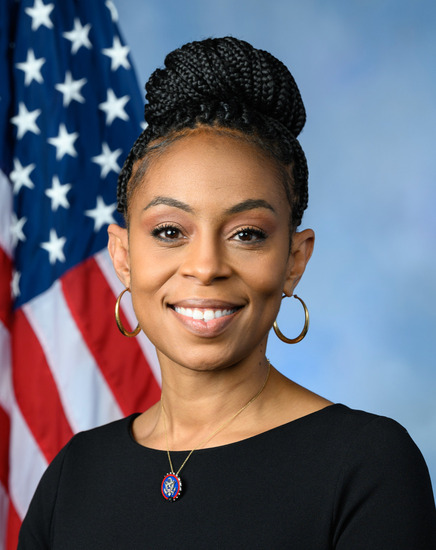
Photo of Shontel M. Brown
D United States House · District 11 · Ohio On the 2026 ballot

Rep. Shontel M. Brown

Compare
Total votes
2,501
all sessions
Attendance
100%
8 missed
Higher than 96% of chamber peers
With party
99%
of cast votes
Higher than 91% of chamber peers
Bipartisan score
1%
crosses aisle rarely
Lower than 92% of chamber peers
Sponsored
1,071
bills & resolutions
Near the chamber average
Committees
5
assignments
1,071 bills and resolutions

Sponsored bills

Total
1,071
Primary
45
Co-sponsor
1,026
This page
1,071
matching current filters
Co-sponsor HR 7441
In committee · United States House · Co-sponsor
Bayard Rustin Stamp Act

Maddy summaryThis bill directs the Postmaster General to issue a commemorative "forever stamp" depicting Bayard Rustin, a key civil rights leader and organizer of the 1963 March on Washington. The stamp must meet standard first-class mail postage requirements and remain valid for that purpose even if postage rates later increase. It is purely symbolic, honoring Rustin's legacy in civil rights and LGBTQ+ advocacy without creating new policies or affecting any laws. The Postal Service is the sole entity responsible for implementing this commemorative measure.

In committee Feb 9, 2026 1 co-sponsor
Co-sponsor HRES 1040
In committee · United States House · Co-sponsor
Recognizing the significance of the Greensboro Four sit-in during Black History Month.

Maddy summaryHRES 1040 is a symbolic resolution recognizing the Greensboro Four sit-in during Black History Month. It commemorates the 66th anniversary of the February 1, 1960, sit-in at a Greensboro Woolworth's lunch counter, where four Black students challenged racial segregation. The resolution encourages states to include the Greensboro Four's history and contributions in school curricula. As a non-binding resolution, it has no legal effect but formally honors this pivotal civil rights moment.

In committee Feb 5, 2026 1 co-sponsor
Co-sponsor HR 7346
In committee · United States House · Co-sponsor
Drain ICE Act of 2026

Maddy summaryHR 7346, the Drain ICE Act of 2026, repeals specific funding provisions (sections 90003 and 100052) from the "One Big Beautiful Bill Act" and cancels all unspent funds allocated under those sections. This bill directly affects ICE’s detention budget by removing existing financial authority for detention operations. It does not change immigration enforcement practices or directly impact individuals; it solely modifies budgetary allocations. The bill focuses on eliminating funding mechanisms, not on policy changes for migrants or enforcement. (Procedural bill; summary limited to 2 sentences as specified.)

In committee Feb 4, 2026 1 co-sponsor
Co-sponsor HR 7335
In committee · United States House · Co-sponsor
Humanitarian Standards for Individuals in ICE and CBP Custody Act

Maddy summaryHR 7335 establishes comprehensive humanitarian standards for individuals held in U.S. Immigration and Customs Enforcement (ICE) and U.S. Customs and Border Protection (CBP) custody. The bill requires facilities to provide immediate health screenings within 12 hours (6 hours for high-risk individuals like children, pregnant people, or those with medical conditions), ensure access to adequate water, sanitation, food (with 2,000+ calories daily for adults), and age-appropriate shelter. It mandates specific facility standards including separate housing for males and females, accessible accommodations for people with disabilities, daily outdoor access for those detained over 48 hours, and proper medical equipment and personnel on-site. The bill also requires regular inspections, staff training on humanitarian protocols, and public reporting of sexual abuse complaints. These standards directly affect all individuals detained by ICE or CBP, with special protections for vulnerable groups like children, pregnant people, and those with medical needs.

In committee Feb 4, 2026 1 co-sponsor
Co-sponsor HR 5658
In committee · United States House · Co-sponsor
Child Care for Every Community Act

Maddy summaryHR 5658, the Child Care for Every Community Act, establishes a federal framework to create universal, high-quality child care and early learning programs available to all young children not yet required to attend school. The bill requires that covered children (children below compulsory school age) be entitled to participate in these programs, with no fees for low-income families and sliding-scale fees for others based on family income. Key provisions include requiring full-working-day, full-calendar-year care; setting national quality standards for staff qualifications and facilities; mandating comprehensive services including health, nutrition, and family support; and requiring coordination with schools to support children's transitions to kindergarten. The bill directly affects families seeking child care, child care providers, and local communities that would administer these programs through designated "prime sponsors."

In committee Feb 4, 2026 1 co-sponsor
Co-sponsor HR 5000
In committee · United States House · Co-sponsor
Cybersecurity Hiring Modernization Act

Maddy summaryThis bill changes how federal agencies hire cybersecurity staff by restricting educational requirements for certain positions. It prohibits agencies from setting minimum education levels unless required by state or local law where the work occurs, and limits education consideration to directly relevant competencies. The bill applies to specific federal cybersecurity roles (like GS-2210 IT positions and NICE-designated roles) and requires the Office of Personnel Management to publish annual data on education levels for these hires. These changes aim to modernize hiring practices while ensuring education requirements align with actual job needs.

In committee Feb 4, 2026 1 co-sponsor
Co-sponsor HR 2985
In committee · United States House · Co-sponsor
Modernizing Government Technology Reform Act

Maddy summaryThis bill reforms how the Technology Modernization Fund is used to upgrade outdated federal computer systems. It requires agencies to identify and report high-risk legacy systems to a central office, which then compiles a national inventory and prioritizes the most critical systems for modernization. Agencies that receive funds must repay the fund under specific terms to ensure it remains fully operational until 2032. The bill also blocks funding for projects with fraudulent claims about their technology plans or costs.

In committee Feb 4, 2026 1 co-sponsor
Co-sponsor HRES 1027
In committee · United States House · Co-sponsor
Supporting the designation of the "International Year of the Woman Farmer" to recognize and honor the critical role of women in agriculture.

This resolution supports the designation of the International Year of the Woman Farmer and recognizes the critical role of women in agriculture. The resolution also encourages citizens to celebrate the impact these women have on the food systems and agricultural workforce of the United States by encouraging and empowering women to pursue careers in agriculture and cultivate leadership opportunities.

In committee Jan 30, 2026 1 co-sponsor
Co-sponsor HJRES 144
In committee · United States House · Co-sponsor
Providing for congressional disapproval under chapter 8 of title 5, United States Code, of the rule submitted by the Department of Veterans Affairs relating to "Reproductive Health Services".

Maddy summaryHJRES 144 is a congressional disapproval resolution targeting a specific rule issued by the Department of Veterans Affairs (VA) on December 31, 2025, which addressed "Reproductive Health Services" (90 Fed. Reg. 61310). This resolution directs Congress to disapprove the VA rule under Chapter 8 of Title 5, U.S. Code, meaning the rule would have no legal effect if passed. The bill directly affects the VA's implementation of reproductive health services for veterans, as it seeks to nullify the agency's existing policy. This is a procedural measure, not a substantive policy change, aimed solely at blocking the VA's rule through congressional action.

In committee Jan 27, 2026 1 co-sponsor
Co-sponsor HR 7247
In committee · United States House · Co-sponsor
Prison Libraries Act of 2026

Maddy summaryThe Prison Libraries Act of 2026 establishes a federal grant program to fund library services in state and territorial correctional facilities, directly benefiting incarcerated individuals. It requires grantees (states/territories) to submit plans demonstrating need, including demographic data on prison populations, and prohibits using funds for non-library purposes like food or facility maintenance. Grant funds must support library services such as digital access, educational programming (including job training and post-secondary curriculum), literacy initiatives, and partnerships with public libraries. The program authorizes $10 million annually from 2026-2031, prioritizes measurable outcomes like increased literacy and post-release employment opportunities, and mandates free access to all library resources for incarcerated people.

In committee Jan 27, 2026 1 co-sponsor
Showing 91 to 100 of 1,071 bills
Previous 1 … 9 10 11 … 108 Next