

No Taxpayer Funding for Abortion and Abortion Insurance Full Disclosure Act of 2021 This bill modifies provisions relating to federal funding for, and health insurance coverage of, abortions. Specifically, the bill prohibits the use of federal funds for abortions or for health coverage that includes abortions. Such restrictions extend to the use of funds in the budget of the District of Columbia. Additionally, abortions may not be provided in a federal health care facility or by a federal employee. Historically, language has been included in annual appropriations bills for the Department of Health and Human Services (HHS) that prohibits the use of federal funds for abortions—such language is commonly referred to as the Hyde Amendment. Similar language is also frequently included in appropriations bills for other federal agencies and the District of Columbia. The bill makes these restrictions permanent and extends the restrictions to all federal funds (rather than specific agencies). The bill's restrictions regarding the use of federal funds do not apply in cases of rape, incest, or where a physical disorder, injury, or illness endangers a woman's life unless an abortion is performed. The Hyde Amendment provides the same exceptions. The bill also prohibits qualified health plans from including coverage for abortions. Currently, qualified health plans may cover abortion, but the portion of the premium attributable to abortion coverage is not eligible for subsidies.
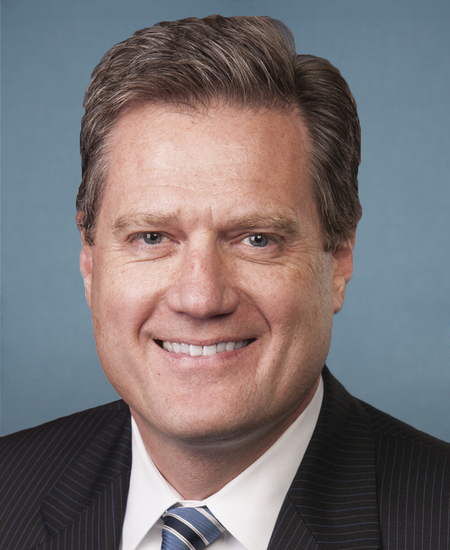
Rep. Michael R. Turner
Sponsored bills
Endless Frontier Act This bill establishes a Directorate for Technology and Innovation in the National Science Foundation (NSF) and establishes various programs and activities. The goals of the directorate shall be, among other things, the strengthening of U.S. leadership in critical technologies through basic research in key technology focus areas, such as artificial intelligence, high performance computing, and advanced manufacturing, and the commercialization of those technologies to businesses in the United States. The bill gives the NSF the authority to provide for the widest practicable and appropriate dissemination of information within the United States concerning the NSF’s activities and the results of those activities. The Office of Science and Technology Policy shall annually develop a strategy for the federal government to improve national competitiveness in science, research, and innovation to support the national security strategy. The Department of Commerce shall (1) establish a supply chain resiliency and crisis response program to address supply chain gaps and vulnerabilities in critical industries, (2) designate regional technology hubs to facilitate activities that support regional economic development that diffuses innovation around the United States, and (3) award grants to facilitate development and implementation of comprehensive regional technology strategies. The bill extends through FY2026 the Manufacturing USA Program and expands such program to support innovation and growth in domestic manufacturing.
PPP Revenue Adjustment Calculation To Increase Capital Accessibility Long-term Act of 2021 or the PRACTICAL Act of 2021 This bill modifies eligibility for second draw loans under the Paycheck Protection Program, established to support small businesses in response to COVID-19 (i.e., coronavirus disease 2019). Specifically, the bill provides for a period of 90 consecutive days to determine whether a borrower experienced a loss in revenue from 2019 to 2020 that qualifies them for a second draw loan. Currently, this qualification period must align with a corresponding calendar quarter from the previous year.
Affordable Housing Credit Improvement Act of 2021 This bill revises provisions of the low-income housing tax credit and renames it as the affordable housing credit . The bill increases the per capita dollar amount of the credit and its minimum ceiling amount beginning in 2021 and extends the inflation adjustment for such amounts. The bill modifies tenant income eligibility requirements and the average income formula for determining such income. It also revises rules for student occupancy of rental units and tenant voucher payments, and prohibits any refusal to rent to victims of domestic abuse. The bill further modifies the credit to increase state allocations of the credit; repeal the qualified census tract population cap; prohibit local approval and contribution requirements; increase the credit for certain projects designated to serve extremely low-income households; increase the credit for certain bond-financed projects designated by state agencies; eliminate the basis reduction for properties that receive certain energy-related tax benefits; and increase the population cap for difficult development areas (i.e., areas with high construction, land, and utility costs relative to area median gross income). The bill also includes Indian and rural areas as difficult development areas and modifies other requirements relating to casualty losses, acquisition credits, and foreclosures.
No Irresponsible Recovery or Reinvestment Expenditures Supporting Priorities Outside Necessary Surface Infrastructure Built Legitimately and Expediently Spending Act or the No IRRESPONSIBLE Spending Act This resolution provides that it shall not be in order for the House of Representatives to consider a bill containing an appropriation or authorization of more than $100 billion relating to infrastructure if the bill does not provide at least 50% of those funds to specified programs, initiatives, or projects (e.g., the construction or maintenance of highways, railways, airports, and waterways). A question of order on this percentage may be raised at any time.
This resolution condemns Iranian state-sponsored terrorist attacks against U.S. citizens and officials and Iranian dissidents and expresses support for the people of Iran who are engaged in legitimate and peaceful protests against the Iranian regime.
This resolution urges the Department of State to take action on unpaid Peruvian agrarian reform bonds by encouraging Peru to negotiate in good faith with U.S. bondholders regarding payment of these bonds.
Historic Tax Credit Growth and Opportunity Act of 2021 This bill increases the rehabilitation tax credit and modifies certain requirements for the credit. The bill increases the rate of the credit for qualified rehabilitation expenditures in taxable years beginning after December 31, 2019, and before January 1, 2027, after which the rate reverts to 20%. The bill increases the rate of the credit to 30% for certain small projects whose qualified rehabilitation expenditures do not exceed $2.5 million. The bill also expands the types of buildings eligible for rehabilitation by decreasing the rehabilitation threshold from 100% to 50% of project expenses. It also eliminates the basis adjustment requirement for the credit and modifies rules relating to tax-exempt use property eligible for the credit.
Resident Physician Shortage Reduction Act of 2021 This bill increases the number of residency positions eligible for graduate medical education payments under Medicare for qualifying hospitals, including hospitals in rural areas and health professional shortage areas. Current law provides for an increase of up to 200 positions per fiscal year beginning in FY2023, with a total increase of 1,000 positions; each hospital may receive up to 25 additional positions. The bill provides for an additional increase of 2,000 positions per fiscal year from FY2023-FY2029; during this period, each hospital may receive up to 75 additional positions in total under the bill and current law. Additionally, one-third of the positions that are made available under the bill must be allocated to hospitals that are already operating above applicable resident limits. The bill also requires the Government Accountability Office to report on strategies to increase the diversity of the health professional workforce, including with respect to representation from rural, low-income, and minority communities.
Military Retiree Survivor Comfort Act This bill addresses the overpayment of retired or retainer pay to a joint account (bearing the name of the decedent and the decedent's designated beneficiary) during the month of the death of a retired member of the armed forces. Specifically, the bill authorizes the Department of Defense (DOD) to forgive or offset the overpayment if the decedent was enrolled in the Survivor Benefit Plan (SBP). In the case of an offset, each of the first 12 SBP annuity payments after the death of the retired service member must be reduced by one-twelfth of the overpayment. If the decedent was not enrolled in the SBP, DOD is authorized to forgive the overpayment.