

Maddy summaryThe SAFE Act of 2023 extends a 2018 law that prohibits slaughtering animals for human consumption to include horses, donkeys, and other equine animals, such as ponies. It amends Section 12515 of the Agriculture Improvement Act of 2018 by updating the language to replace "dog or cat" with "dog, cat, or equine" in both the section title and the main prohibition. This change directly affects the livestock industry and slaughter facilities by banning the processing of equines for food. The bill modifies existing law without adding new enforcement mechanisms, closing a gap in animal protection.
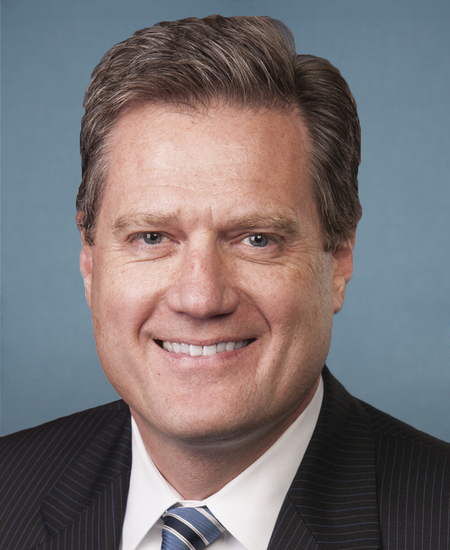
Rep. Michael R. Turner
Sponsored bills
Maddy summaryThis bill renames the U.S. Food for Peace program after Peter O'Brien and makes key changes to how agricultural aid is delivered. It prohibits using cash, food vouchers, or foreign-sourced food for aid (section 2d), requires that at least 50% of annual funds be used for procuring U.S. agricultural commodities (section 2b(5)), and mandates annual reports to Congress on fund usage (section 2b(6)). These changes directly affect U.S. farmers supplying aid and international recipients of food assistance. The bill focuses on strengthening domestic agricultural exports within the Food for Peace program while adding transparency requirements.
Maddy summaryHRES 488 is a non-binding resolution calling on the Biden administration to transfer Army Tactical Missile Systems (ATACMS) to Ukraine. It requests immediate provision of these long-range missiles - capable of striking targets up to 200 miles away - to help Ukraine counter Russian forces by targeting logistics hubs and command centers deeper in occupied territory. The resolution notes Ukraine already operates compatible launch systems and cites that allies like the UK and France have provided similar long-range weapons without triggering significant Russian escalation. It emphasizes that delaying this transfer could prolong the war and that the U.S. possesses sufficient existing stockpiles to fulfill the request while maintaining military readiness. The resolution does not mandate action but urges the administration to act.
Maddy summaryThis bill requires all U.S. flags displayed on federal property or purchased by federal agencies to be 100% made in the United States, meaning all materials and manufacturing must occur domestically. It directly affects federal agencies (including military departments, legislative/judicial branches, and U.S.-owned corporations) and their procurement of flags for display on government property. Key provisions include a 90-day implementation for new flag purchases and a 2-year phase-in for display requirements, with a separate mandate for the FTC to study and report on country-of-origin labeling enforcement for flags within one year. The bill does not apply to private entities or flags displayed off federal property.
Maddy summaryHR 4076 establishes a joint U.S.-Israel program to fund health technology development, authorizing $4 million annually (2024-2026) through the U.S. Health and Human Services Department. It requires Israel to match U.S. funding and focuses on collaborative projects in artificial intelligence, vaccines, telemedicine, diagnostic tests, and data-driven personalized medicine for emerging infectious diseases. The program can either build on an existing U.S.-Israel agreement or create a new one under a 2008 science cooperation framework. This bill directly affects U.S. federal health agencies and the Israeli government, with funds restricted to joint projects meeting specific technological and health priorities.
Maddy summaryThe Student Loan Refinancing Act would create a program allowing borrowers to replace existing federal student loans with new loans at potentially lower interest rates. Borrowers could refinance Federal Direct Loans (including Stafford, PLUS, and Consolidation Loans) and FFEL program loans, with the new interest rate based on current rates for similar loans. The refinanced loans would have fixed interest rates for the life of the loan, and payments made on the original loans would count toward requirements for income-driven repayment plans. Refinancing would not extend repayment periods, and borrowers could only refinance a loan twice within a 10-year period.
Maddy summaryHR 4021, the Fair and Open Skies Act, amends U.S. aviation law to require that the Department of Transportation consider labor standards when reviewing international air transport agreements. Specifically, it adds "preventing the undermining of labor standards" as a mandatory factor in the public interest test for approving such agreements under 49 U.S.C. § 40101. This change directly affects international airlines seeking to operate flights to or from the U.S. and the DOT, which must now evaluate whether proposed agreements could weaken U.S. labor protections. The bill updates existing provisions by replacing outdated language about "agreements with the United States Government" and explicitly including labor standards in the evaluation criteria.
Maddy summaryThis bill prohibits the Department of Veterans Affairs from changing its anesthesia care policies to allow nurse anesthetists (CRNAs) to provide anesthesia independently without a physician anesthesiologist. It specifically blocks implementation of a 2016 proposed rule that would have expanded CRNAs' authority in VA facilities. The law maintains current requirements that physician anesthesiologists must oversee or provide anesthesia care for veterans during surgical procedures. Emergency orders for veteran safety during surgery remain permitted under the bill's exception clause.
Maddy summaryHR 3713 creates federal grants to fund comprehensive school-based mental health programs for students in grades K-12, including those in Bureau of Indian Education schools. It requires partnerships between schools and community mental health providers to deliver trauma-informed, culturally appropriate services addressing suicide risk, grief, violence, and trauma exposure. The bill authorizes $300 million annually (2024-2027) for these programs, mandating privacy protections under HIPAA and FERPA, and requires annual reporting on program effectiveness.
Healthy Air Travel Act This bill directs the Federal Aviation Administration to establish an interagency task force to develop and implement a strategy to identify and advance research on communicable diseases in air travel. The task force must consult with representatives from the aviation industry, health experts, and labor stakeholders in developing the strategy. Under the bill, the term communicable disease refers to certain diseases that have the potential to cause a future epidemic or pandemic of infectious disease that would constitute a public health emergency of international concern as declared, after the date of the bill's enactment, by the Secretary of Health and Human Services.