

Reducing Accidents In Locomotives Act or the RAIL Act This bill addresses safety requirements for rail carriers and trains transporting hazardous materials. Specifically, the Department of Transportation (DOT) must issue safety regulations for trains carrying hazardous materials to require that rail carriers (1) provide state emergency response commissioners with advance notice and information about the hazardous materials; (2) reduce blocked rail crossings; and (3) comply with certain requirements regarding train length and weight specifications, track standards, speed restrictions, and response plans. DOT must also establish requirements for wayside defect detectors. These are used by railway systems alongside the tracks to detect defects and failures (e.g., wheel bearing failures). Current federal regulations do not require their use, but federal guidance does address their placement and use. Under the bill, DOT must issue regulations establishing requirements for the installation, repair, testing, maintenance, and operation of wayside defect detectors for each rail carrier operating a train carrying hazardous materials. Further, these regulations must establish requirements that safety placards be able to withstand heat in excess of 180 degrees. The bill also increases the maximum fines DOT may impose on rail carriers for violating safety regulations, requires DOT to update rail car inspection regulations and audit the federal inspection program, phases out certain railroad tank cars by May 1, 2028 (one year sooner than required under current law), expands training for local first responders, and imposes a new fee on certain rail carriers.
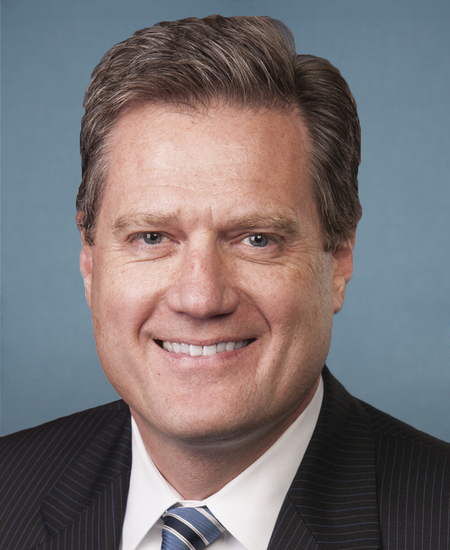
Rep. Michael R. Turner
Sponsored bills
Maddy summaryHRES 977 is a symbolic resolution recognizing National Board Certified Teachers (NBCTs), with over 137,000 educators holding this credential nationwide. It supports designating National Board Certified Teacher Week, acknowledges NBCTs' role in improving student achievement (especially in high-need schools), and encourages schools and states to promote NBCT growth and provide support. The resolution highlights that NBCTs are linked to higher student learning gains, greater teacher retention, and increased earnings for students - though it does not create new policies or funding. It is a non-binding statement of appreciation, not a legislative change.
Maddy summaryThe Death Tax Repeal Act would eliminate the federal estate tax and generation-skipping transfer tax for estates of people who die on or after the bill's enactment date, and for generation-skipping transfers made after that date. It would also establish a new $10 million lifetime gift tax exemption (adjusted annually for inflation) and replace the existing gift tax rate schedule with a revised structure. These changes would primarily affect high-net-worth individuals and their heirs, as the estate tax and gift tax typically apply to large estates or gifts exceeding the new exemption threshold. The bill's provisions would take effect on the date of enactment, with transitional rules for the year the bill is signed into law.
Maddy summaryThe Transit Emergency Relief Act (HR 7012) amends federal transportation law to provide more flexible funding for public transit agencies facing emergencies. It allows funds designated for emergency relief (under 49 U.S.C. § 5324) to remain available until spent, be used for prior or current fiscal years, and not reduce existing funding. The bill also increases annual funding caps for transit programs and adds $50 million per year (2024-2027) specifically for this emergency relief program. Public transportation agencies receiving federal grants are directly affected, as the changes simplify access to funds during crises while requiring compliance with labor standards (49 U.S.C. § 5333). This creates more predictable support for transit systems recovering from unexpected disruptions.
Maddy summaryThe Affordable Connectivity Program Extension Act of 2024 allocates $7 billion in funding for the Affordable Connectivity Program (ACP) during fiscal year 2024. The ACP provides subsidies to low-income households to help cover the cost of internet service and connected devices like laptops or tablets. This funding ensures the program can continue supporting eligible households throughout the year, with the money remaining available until fully spent. The bill extends existing program funding without changing eligibility criteria or service requirements.
Protecting Against Paperless and Electronic Requirements Act or the PAPER Act This bill requires depository institutions and credit unions to offer customers the option of receiving monthly paper statements. Depository institutions and credit unions are prohibited from requiring monthly digital statements as a condition of any service.
Maddy summaryThe FISA Reform and Reauthorization Act of 2023 makes significant changes to how the FBI conducts surveillance under Section 702 of the Foreign Intelligence Surveillance Act. It restricts the FBI from conducting queries unrelated to national security, limits who can approve queries of U.S. person information, and requires mandatory notifications to Congress for certain types of queries involving elected officials or sensitive information. The bill establishes minimum accountability standards for the FBI, mandates annual audits of U.S. person queries, and prohibits queries for suppressing criticism or discriminating against individuals based on protected characteristics. These provisions directly affect the FBI's surveillance practices and aim to increase oversight and accountability while protecting privacy rights.
Maddy summaryThis bill targets U.S. business activities that could help specific countries of concern (North Korea, China, Russia, and Iran) develop critical technologies. It requires the President to identify "covered sectors" (including semiconductors, artificial intelligence, quantum technology, hypersonics, and high-performance computing) and prohibit U.S. persons from engaging in certain activities involving these technologies with entities in countries of concern. The bill also mandates that U.S. persons submit notifications about certain activities involving these technologies, with requirements for public comment and transparency. It establishes reporting requirements for the President to Congress on implementation and impact, and includes provisions for national interest waivers.
Maddy summaryThis bill extends a tax incentive allowing businesses to immediately deduct costs for cleaning up contaminated properties (brownfields). It modifies the tax code to permit these deductions for expenses paid between 2012-2022 and starting in 2027. The change directly affects developers and property owners involved in brownfields redevelopment projects, enabling them to reduce taxable income for cleanup costs. The policy update avoids requiring capitalization of remediation expenses over time, providing immediate tax relief during specified periods.
Maddy summaryThis bill would authorize the U.S. government to confiscate Russian sovereign assets held in U.S. jurisdiction and use those funds to support Ukraine's reconstruction and humanitarian needs following Russia's invasion. It prohibits releasing these blocked assets until Russia fully compensates Ukraine or agrees to an international compensation mechanism. The bill establishes a "Ukraine Support Fund" to hold confiscated assets and requires regular congressional reporting on how these funds are allocated for Ukraine's recovery. It also includes provisions for international coordination with allies on sanctions and asset management related to Russia's invasion of Ukraine.