

Maddy summaryThis bill would allow Czech citizens to apply for E-1 business visas to work in the United States for trade and business, but only if the Czech Republic grants similar visa access to U.S. citizens. It directly affects Czech nationals seeking to conduct business in the U.S. and U.S. citizens traveling to the Czech Republic for business. The bill conditionally adds the Czech Republic to the list of countries eligible for E-1 visas, requiring reciprocity in visa treatment between the two nations. This change would expand E-1 visa eligibility for Czech citizens if the Czech government meets the reciprocity condition.
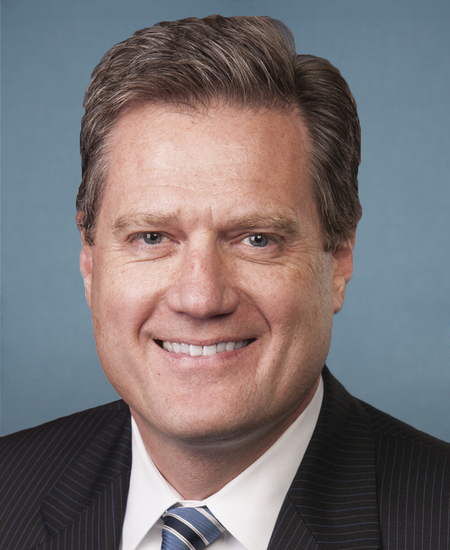
Rep. Michael R. Turner
Sponsored bills
Maddy summaryHRES 1063 is a non-binding resolution passed by the U.S. House of Representatives to reaffirm America's commitment to NATO ahead of its 75th anniversary. It formally recognizes NATO's role in collective security, emphasizes Article 5's importance for mutual defense, and supports Finland and Sweden's membership. The resolution also calls on NATO allies to meet the 2% defense spending target, but does not create new laws or affect specific individuals or groups.
Maddy summaryThe Awning Safety Act of 2023 requires the Consumer Product Safety Commission (CPSC) to create new safety standards for fixed and freestanding retractable awnings within 18 months of the bill's enactment. These standards aim to prevent deaths or serious injuries caused by awnings unexpectedly opening - particularly while users remove bungee tie-downs for the cover. The law directs the CPSC to define which awning types fall under the rule and treats the resulting standard as a formal safety rule under existing consumer product safety laws. This directly affects awning manufacturers, retailers, and consumers who use these products, focusing on a specific operational hazard during maintenance.
Maddy summaryThis bill authorizes the placement of a memorial honoring women who contributed to World War II efforts on the National Mall or adjacent federal land in Washington, D.C. It specifically removes a location restriction (under 40 U.S.C. § 8908) to allow the memorial - previously authorized by the 2023 Consolidated Appropriations Act - to be situated within Area I of the National Mall or the National Mall Reserve. The memorial would commemorate over 18 million women who worked as pilots, engineers, mechanics, and codebreakers during the war. The bill directly affects the Women Who Worked on the Home Front Foundation, which is tasked with establishing the memorial.
Maddy summaryThis resolution (HRES 1198) commemorates the 105th anniversary of formal diplomatic relations between the United States and Poland, established in 1919. It honors historical milestones including Poland’s fight for independence, Polish-American contributions (like the Blue Army and figures such as Kosciuszko and Paderewski), and shared democratic values. The resolution highlights key events like the 1918 Fourteen Points and Poland’s NATO/EU membership, but does not create new laws or affect any individuals or entities. It serves as a ceremonial recognition of enduring U.S.-Poland ties, reaffirming mutual commitment to democracy and security. As a commemorative resolution, it has no legal effect beyond expressing congressional sentiment.
Maddy summaryHRES 1197 is a non-binding House resolution recognizing the contributions of elementary and secondary school teachers. It formally thanks teachers for their role in building civic, cultural, and economic well-being, aligning with National Teacher Appreciation Week (May 6-10, 2024). The resolution encourages students, parents, school leaders, and officials to acknowledge teachers during this week. It does not create new programs, allocate funding, or impose obligations on schools or educators. As a symbolic gesture, it directly addresses the teaching profession without altering any laws or policies.
Maddy summaryHR 8061, the Crime Victims Fund Stabilization Act of 2024, ensures stable funding for the Crime Victims Fund by directing certain False Claims Act collections into it from 2024 through 2029. Specifically, it adds a provision requiring that amounts collected under the False Claims Act (excluding whistleblower rewards and government reimbursement for damages) be deposited into the fund during this period. This directly affects crime victims who rely on the fund for services like counseling and emergency aid, as it prevents potential shortfalls in funding. The bill makes a concrete policy change by redirecting specific federal civil penalties into the fund, rather than altering the fund's existing purposes or eligibility rules.
Maddy summaryHR 6947 establishes a permanent Department of Veterans Affairs History Office within the VA to collect, preserve, and share the agency's historical records, artifacts, and stories. The Office, led by a Chief Historian, will create public exhibits, educational materials, and coordinate activities leading to the VA's 2030 centennial. It can accept donations, lease facilities to nonprofit partners for historical displays, and maintain archives - all while reporting annually to Congress on staffing, facilities, and centennial planning. The bill directly affects VA operations by mandating this new office and its specific activities, without changing veteran benefits or external regulations.
Maddy summaryHR 5947 terminates specific U.S. waivers and licenses related to Iran, ending a 2023 waiver that allowed funds transfer from South Korea to Qatar. It prohibits the Treasury Department from reissuing similar waivers or licenses for the same purpose and blocks the President from granting Iran access to certain designated financial accounts established under prior laws. The bill directly affects U.S. foreign policy implementation by restricting how Treasury handles Iran-related financial transactions. It enacts concrete policy changes by ending existing authorizations and preventing future approvals for Iran to access specific accounts.
Maddy summaryHRES 1151 is a symbolic resolution recognizing the Interstate Compact on Educational Opportunity for Military Children and designating April 2024 as "Month of the Military Child." It directly affects military-connected children (over 1.5 million in the U.S.) who face frequent school transitions due to parental service. The resolution expresses congressional support for the Compact - which helps streamline educational transitions for military students - and encourages nationwide recognition through events like "Purple Up!" to honor these children. As a non-binding resolution, it does not create new policies or funding but aims to raise awareness of military-connected students' educational challenges.