

Maddy summaryThe Working Dog Commemorative Coin Act (HR 807) directs the U.S. Treasury to mint three types of commemorative coins honoring working dogs' service: $5 gold coins, $1 silver coins, and half-dollar coins with specific weight and composition requirements. Each coin will carry a surcharge ($35 for $5 coins, $10 for $1 coins, $5 for half-dollars) that will be paid directly to America's VetDogs to support their programs providing service dogs for veterans, the disabled, and others. The coins will be issued in 2027 with designs reflecting working dogs' roles in military, detection, therapy, and assistance work. The legislation specifies that all surcharge revenue must fund America's VetDogs' operations without creating new government programs. This is a commemorative measure focused on honoring working dogs' contributions through coin sales, with all surcharge funds going to a specific nonprofit organization.
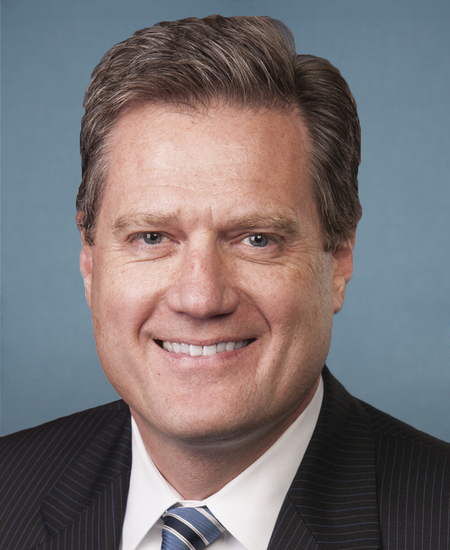
Rep. Michael R. Turner
Sponsored bills
Maddy summary# Summary of Veterans' Affairs Bill This comprehensive legislation (likely the 2024 version of the "Senator Elizabeth Dole 21st Century Veterans Healthcare and Benefits Improvement Act") addresses multiple aspects of veterans' benefits and services across several key areas: ## Key Provisions 1. **Healthcare Modernization** - Requires machine-readable format for disability benefit questionnaires - Mandates modernization of electronic health record systems - Improves telehealth access for homeless veterans - Establishes new standards for health information technology 2. **Disability Benefits** - Modernizes disability benefit questionnaires - Implements automatic processing for certain temporary disability ratings - Prohibits non-licensed health care professionals from performing medical disability examinations - Requires provision of agent/attorney contact information to health care professionals 3. **Homelessness Support** - Increases per diem payments for homeless veterans' services - Authorizes use of funds for food, shelter, transportation, and communication technology - Creates a strategic plan for homeless veteran services - Expands access to telehealth services for homeless veterans 4. **Native American Veteran Housing** - Expands direct housing loans for Native American veterans - Creates a Native community development financial institution relending program - Requires adequate personnel dedicated to Native American veteran housing - Expands outreach programs for Native American veterans 5. **Burial and Memorial Affairs** - Expands burial allowances for veterans who die at home while receiving hospice care - Updates definitions of surviving spouse 6. **Employment and Training** - Improves reemployment rights for veterans - Creates Warrior Training Advancement Course - Establishes pilot program for veterans in conservation and resource management positions 7. **Transparency and Accountability** - Requires 90-day notice before implementing policy changes - Improves transparency of educational institutions serving veterans - Establishes new reporting requirements for various programs The bill contains numerous technical corrections, updates to existing statutes, and new provisions designed to improve veterans' access to benefits, healthcare, housing, and employment opportunities, with particular attention to underserved veteran populations including Native American veterans, homeless veterans, and veterans with disabilities.
Maddy summaryHRES 1537 is a non-binding House resolution condemning Hamas' October 7, 2023, attacks on Israel, which killed over 1,200 people and took 251 hostages, including 7 Americans still held captive. It calls on Hamas to immediately surrender, cease attacks, and release all hostages unconditionally, while reaffirming Israel's right to self-defense. The resolution also urges international organizations to condemn Hamas' actions and address the global surge in antisemitism following the attacks. As a symbolic statement, it does not create new laws or alter policy but expresses congressional position. The bill specifically references the ongoing captivity of seven U.S. citizens: Edan Alexander, Itay Chen, Sagui Dekel-Chen, Gadi Haggai, Judith Weinstein Haggai, Omer Neutra, and Keith Siegel.
Maddy summaryHR 9752, the Tren de Aragua Southwest Border Security Threat Assessment Act, requires the Secretary of Homeland Security to submit two reports within 180 days of enactment. The first report (threat assessment) must detail Tren de Aragua's criminal threats, origins, methods, funding, and presence along the southwest border (U.S.-Mexico border), while the second report (strategic plan) must outline DHS's strategy to counter these threats through interagency coordination and disruption efforts. The bill directly affects DHS, intelligence agencies, and border law enforcement by mandating specific analysis and planning to address this transnational criminal group. It does not change existing laws but establishes a process for evaluating and responding to security vulnerabilities.
Maddy summaryHR 1719, the Honoring Our Fallen Heroes Act of 2023, establishes a presumption that certain cancers diagnosed in public safety officers (like police and firefighters) are work-related if linked to their duties. It defines 22 specific cancers (including lung, mesothelioma, and WTC-related cancers) as "exposure-related," allowing officers or their families to receive benefits without proving direct work connection, provided they were diagnosed within 15 years of leaving active service. The bill also creates a process for adding new cancers to the list based on scientific evidence, requiring the Bureau to review petitions and make decisions within 180 days. This applies to deaths or disabilities occurring on or after January 1, 2023, directly affecting officers who developed covered cancers during service.
Maddy summaryThis bill (HJRES 163) is a congressional disapproval resolution targeting an Environmental Protection Agency (EPA) rule finalized on May 9, 2024. The EPA rule established new emissions standards for greenhouse gases from fossil fuel power plants (both new and existing) and repealed a previous rule called the Affordable Clean Energy Rule. The resolution would block this EPA rule from taking effect by invoking the Congressional Review Act (Chapter 8 of Title 5, U.S. Code). If passed, it would prevent the EPA rule from being enforced, directly affecting fossil fuel power plant operators and the EPA’s regulatory authority over emissions.
Maddy summaryThe Fairness for Servicemembers and their Families Act of 2024 requires the Department of Veterans Affairs to review the automatic maximum coverage amount for Servicemembers’ Group Life Insurance (SGLI) and Veterans’ Group Life Insurance (VGLI) every three years, starting January 1, 2024. The review compares the current coverage amount to a new inflation-adjusted figure calculated as $400,000 multiplied by the cumulative increase in the Consumer Price Index (CPI) since 2005. The results of each review must be submitted to Congress. This provision directly affects active-duty service members and veterans enrolled in SGLI or VGLI by establishing a process to potentially increase their automatic coverage to keep pace with inflation.
Maddy summaryThis bill establishes a 3-year pilot program to coordinate care between the Department of Veterans Affairs (VA) and Medicare for veterans enrolled in both systems. It directly affects "covered veterans" (those enrolled in both VA health services and Medicare), primarily senior veterans and wounded warriors who use both programs. The key mechanism assigns each participant a VA case manager to develop personalized care plans, navigate VA and Medicare services, and eliminate gaps in care. The program aims to improve access, outcomes, quality, and cost-efficiency while tracking metrics like patient satisfaction, care coordination, and cost data.
Maddy summaryHRES 1440 is a symbolic House resolution commemorating the 80th anniversary of the 1944 Warsaw Uprising, a major Polish resistance effort against Nazi occupation during World War II. It does not create new policies or affect any individuals, as it is purely commemorative. The resolution honors those who fought and died in the uprising, expresses gratitude for their sacrifice, and reaffirms the historical friendship between the United States and Poland. It calls on the President to ensure the uprising’s legacy of courage and freedom is remembered, emphasizing shared democratic values. This resolution serves as a ceremonial gesture without binding legal or financial impact.
Maddy summaryThis bill authorizes funding for U.S. intelligence activities and related programs for fiscal year 2025. It specifies $650 million for the Intelligence Community Management Account (plus classified additional amounts) and $514 million for the Central Intelligence Agency Retirement and Disability Fund. The bill includes standard provisions requiring classified budget details to be shared only with authorized congressional committees, the President, and executive branch officials under strict confidentiality rules. It does not create new policies or change existing law, but formally authorizes existing intelligence spending under current legal frameworks. The bill explicitly states that its funding authorization does not permit any intelligence activity not already permitted by the Constitution or existing law.