

Goldie's Act This bill expands enforcement provisions under the Animal Welfare Act (AWA). Specifically, the bill directs the Department of Agriculture (USDA) to document and record detailed descriptions of violations of the act observed during inspections and investigations. USDA must provide a copy of all records documenting violations to state, local, and municipal animal control or law enforcement officials within 24 hours of such inspections or investigations. Inspections must be held at least once a year of each research facility, the premises of each animal dealer, and each exhibitor of animals. If violations are found during inspections, then USDA must conduct any necessary follow-up inspections until all the violations are corrected. Inspectors must confiscate or destroy in a humane manner animals found to be suffering physical or psychological harm as a result of failure to comply with the AWA. Violators are subject to civil penalties as outlined in the bill.
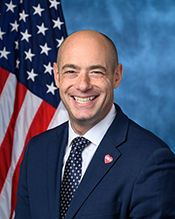
Rep. Greg Landsman
Sponsored bills
This concurrent resolution declares that Congress should not impose any new performance fee, tax, royalty, or other charge relating to the public performance of sound recordings on a local radio station for broadcasting sound recordings over the air, or on any business for such public performance of sound recordings.
Maddy summaryThis bill creates a new federal tax credit for family child care providers who operate from their primary residence. It allows eligible providers to claim up to $5,000 annually toward specific startup costs like licensing fees, supplies (diapers, toys), insurance, fencing, playground equipment, and required renovations. To qualify, providers must be licensed/registered, serve at least two non-family children, and operate from their home. The credit is limited to one year per provider (no repeat claims) and expires after seven years. It directly affects small-scale home-based child care operators seeking to establish or improve their licensed services.
Maddy summaryThis bill requires the Pension Benefit Guaranty Corporation (PBGC) to recalculate monthly pension benefits for retirees in six specific Delphi-related pension plans to reflect the full vested amount they would have received without prior benefit limits. It mandates lump-sum payments for past underpayments, including 6% annual interest, to eligible retirees and beneficiaries who received lower benefits than guaranteed under ERISA. The PBGC must fund these payments through a new Delphi Full Vested Plan Benefit Trust Fund established in the Treasury. This directly affects retirees in the Delphi Hourly-Rate, Delphi Retirement Program for Salaried Employees, PHI Non-Bargaining, ASEC Manufacturing, PHI Bargaining, and Delphi Mechatronic Systems pension plans. The law does not alter existing PBGC rules for other plans or change how the agency administers benefits generally.
More Homes on the Market Act This bill increases the amount of gain from the sale of a principal residence that an individual may exclude from gross income (for federal tax purposes). Under the bill, an individual may exclude from gross income gain from the sale of a principal residence of up to $500,000 (currently $250,000), and taxpayers who are married and file a joint federal income tax return may exclude up to $1 million (currently $500.000). The bill also requires these amounts to be adjusted annually for inflation.
Maddy summaryHR 1321, the "Ending DOGE Conflicts Act," requires special government employees (like officials overseeing federal contracts) who own, control, or lead companies doing business with the government to file financial disclosure reports with the Office of Government Ethics. These employees must now comply with the same financial disclosure rules as other government officials under Title 5 of the U.S. Code. Until their initial report is certified as compliant by the Office of Government Ethics, these employees are prohibited from performing any official duties related to federal contracting. The bill directly affects high-level government officials with direct financial ties to federal contractors.
Maddy summaryThe Office of Gun Violence Prevention Act of 2025 would create a new office within the Department of Justice to coordinate federal efforts on reducing gun violence. The office, led by a Director appointed by the Attorney General, would integrate existing DOJ programs, evaluate data gaps, and develop evidence-based recommendations for Congress and the President. It would also establish an advisory council including survivors of gun violence, public health officials, and community representatives to guide its work. The office would produce annual reports detailing gun violence trends and policy proposals, while collaborating with agencies like Health and Human Services and the FBI.
Maddy summaryThis bill proposes a constitutional amendment stating that only "natural persons" (living humans) have rights protected by the U.S. Constitution, explicitly denying constitutional rights to corporations, LLCs, and other artificial entities. It would require governments to regulate campaign contributions and spending to prevent money from influencing elections, banning the view that spending to influence elections constitutes protected speech under the First Amendment. The amendment would not affect the constitutional right to a free press. This change would directly impact how corporations and other non-human entities can legally challenge laws or regulations in court.
United States-Israel Defense Partnership Act of 2025 This bill requires or authorizes certain actions to increase defense-related cooperation between the United States and Israel. Specifically, the bill requires the Department of Defense (DOD) to establish a cooperative program, with the concurrence of Israel's Ministry of Defense (MOD), to develop and deploy advanced technologies for countering unmanned systems that threaten the United States and Israel; establish in Israel an office of the Defense Innovation Unit (an organization that focuses on rapidly fielding and scaling commercial technology across the U.S. military); and seek to engage Israel's MOD on the ascension of Israel into the national technology and industrial base (currently defined in law as the persons and organizations engaged in research, development, production, integration, services, or information technology activities conducted within the United States, the United Kingdom, Australia, New Zealand, and Canada). The bill authorizes DOD, upon request of Israel's MOD, to jointly conduct research, development, test, and evaluation (RDT&E) of emerging technologies such as artificial intelligence and robotics to meet defense challenges. Additionally, the bill extends the authority for DOD to (1) carry out RDT&E on a joint basis with Israel to establish anti-tunnel and counter unmanned aerial systems capabilities through 2028, and (2) transfer defense articles intended for use as reserve stocks for Israel through January 1, 2029.
Alternatives to Prevent Addiction In the Nation Act or the Alternatives to PAIN Act This bill reduces cost-sharing and prohibits the imposition of certain utilization requirements under the Medicare prescription drug benefit for certain non-opioid pain management drugs. Specifically, the bill requires such drugs to be covered without a deductible and to be placed on the lowest cost-sharing tier (if any). The bill also prohibits the imposition of prior authorization requirements (i.e., requiring prior approval from a plan) or step therapy requirements (i.e., requiring the use of alternative drugs before a drug is covered under a plan) with respect to such drugs.