

Maddy summaryHRES 619 is a non-binding resolution recognizing the disproportionate mental health challenges faced by minority communities in the U.S. and supporting "Minority Mental Health Awareness Month." It highlights specific disparities, such as higher rates of untreated mental health conditions among Black, Indigenous, Asian American, and Pacific Islander populations due to barriers like stigma, lack of culturally competent care, and systemic inequities. The resolution calls on the President to improve mental health care access that addresses racial, cultural, and social differences in minority communities. It does not create new laws or allocate funds but serves as a symbolic acknowledgment of these health disparities.
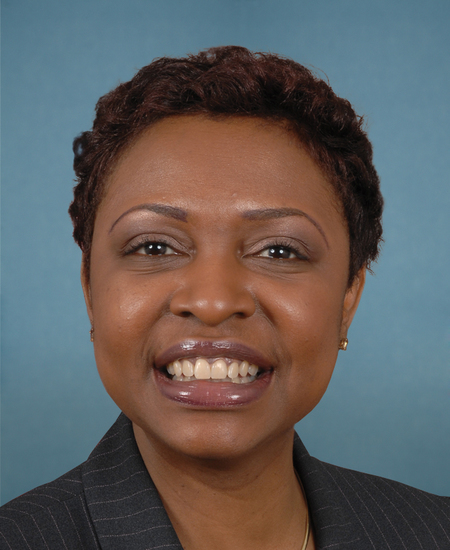
Rep. Yvette D. Clarke
Sponsored bills
Maddy summaryThis bill removes a barrier preventing most low-income students from accessing SNAP benefits. It amends the Food and Nutrition Act to explicitly allow students enrolled at least half-time in recognized higher education programs to qualify for SNAP, reversing a prior exclusion. The key change eliminates the previous requirement that students meet specific exceptions (now deleted) and adds a new eligibility category under Section 3(m)(5). This directly affects low-income undergraduate and graduate students at colleges and training programs who were previously ineligible. The changes take effect January 2, 2026.
Maddy summaryThis bill authorizes $50 million annually for the Centers for Disease Control and Prevention (CDC) to conduct research on firearms safety and gun violence prevention, beginning in fiscal year 2026 through 2031. The funding is in addition to existing CDC appropriations and would support studies under the Public Health Service Act. It does not create new regulations or directly affect individuals, but aims to expand research into causes and prevention strategies for gun violence. The bill focuses solely on enabling CDC research, without proposing policy changes or restrictions.
Maddy summaryHR 4796, the Restoring Essential Healthcare Act, repeals a provision that blocked Medicaid payments to certain healthcare providers during a specific period. It directly affects Medicaid beneficiaries who received care from these providers between the enactment of the prior law (Public Law 119-21) and this bill's enactment. The key provision retroactively restores Medicaid payments for services already provided during that blocked period, treating the payment restriction as if it never existed. This change ensures eligible individuals and providers receive reimbursement for covered care delivered during the prohibited timeframe.
Maddy summaryHR 4763, the PTO Act, requires most employers to provide employees with at least 1 hour of paid annual leave for every 25 hours worked, with a maximum of 80 hours per year. It applies to private-sector workers and certain government employees, protecting their right to use paid leave for any purpose without disclosing the reason. The bill mandates employers to maintain health benefits during leave, allow carryover of up to 40 hours of unused leave, and pay out unused leave upon separation. It also prohibits employers from discriminating against employees for using paid leave or requiring them to find replacements while on leave. The law includes enforcement mechanisms, allowing employees to file complaints with the Department of Labor or pursue private lawsuits.
Maddy summaryThis bill updates the TRICARE Young Adult Program to make healthcare coverage more accessible for military dependents. It directly affects young adults (ages 21-26) who are children of active-duty service members, by eliminating a separate premium they previously paid for coverage. Key changes include removing an extra cost for young adults and adjusting eligibility rules to simplify enrollment. These amendments aim to reduce out-of-pocket expenses and streamline access to health insurance under the program.
Maddy summaryHR 4767 establishes two key programs to expand international educational exchanges. It creates a scholarship program allowing international students, scholars, and experts to study at U.S. community colleges and vocational institutions for up to one academic year in priority sectors like agriculture, engineering, health, and environmental resilience. The bill also funds a capacity-building program to help these U.S. institutions develop stronger study abroad offerings through grants, training, and resources for faculty and underrepresented students. These provisions directly affect eligible U.S. junior colleges and vocational schools by increasing their opportunities to partner with international participants and expand global education programs.
Maddy summaryThis bill would prohibit the detention of pregnant women, lactating women, and postpartum mothers (within one year of childbirth) in immigration custody, requiring their immediate release except in rare circumstances involving public safety threats. It bans the use of physical restraints on these individuals during pregnancy, labor, delivery, and postpartum recovery, with only extremely limited exceptions. The bill mandates that facilities provide comprehensive reproductive health care including prenatal care, labor and delivery services, postpartum care, and access to abortion services. It requires facilities to maintain medical records, obtain informed consent for medical procedures, and conduct weekly reviews of any detained individuals under exceptional circumstances. The bill also establishes reporting requirements for facilities and creates transparency through public reporting of detention practices.
Maddy summaryHR 4628, the AI Impersonation Prevention Act of 2025, prohibits using artificial intelligence to impersonate federal officials (including mimicking their voice or likeness) without a clear disclaimer, if the content is materially false or misleading. It makes knowingly creating such deceptive AI content a crime punishable by up to three years in prison or a fine, while explicitly exempting satire, parody, or protected speech that includes a clear disclosure it is not authentic. The bill directly affects individuals or entities producing AI-generated content falsely posing as federal employees or officials. It defines "artificial intelligence" broadly as systems performing human-like tasks (e.g., generating realistic audio or video) and "impersonates" as falsely representing oneself as another identifiable person.
Maddy summaryThe End Solitary Confinement Act would prohibit most solitary confinement in federal prisons and detention centers, requiring all incarcerated people to have at least 14 hours daily of out-of-cell group interaction in shared spaces. It establishes strict limits on when solitary confinement can be used (only for brief counts, emergencies as a last resort, or medical isolation), with specific protections for vulnerable populations including youth, the elderly, people with disabilities, pregnant people, and LGBTQ+ individuals. The bill creates a community monitoring body to oversee implementation, requires detailed reporting on confinement practices, and provides incentives for states to adopt similar standards through funding adjustments. It also includes due process protections for placement in restrictive housing and prohibits punitive practices like limiting access to services or confiscating personal property.