

Maddy summaryThis bill creates a new grant program under the Public Health Service Act to provide emergency funding for health care facilities during declared emergencies (like pandemics or natural disasters). It authorizes grants to public or private nonprofit health care facilities and home health agencies to pay hazardous duty compensation to eligible health care workers - such as nurses, medical technicians, and facility cleaners - performing essential on-site work. Grants can cover up to $13 per hour in hazard pay (capped at $25,000 annually per worker) or fund safety measures like personal protective equipment and alternative transit. The program requires the Secretary of Health and Human Services to determine if work or commutes are hazardous during emergencies.
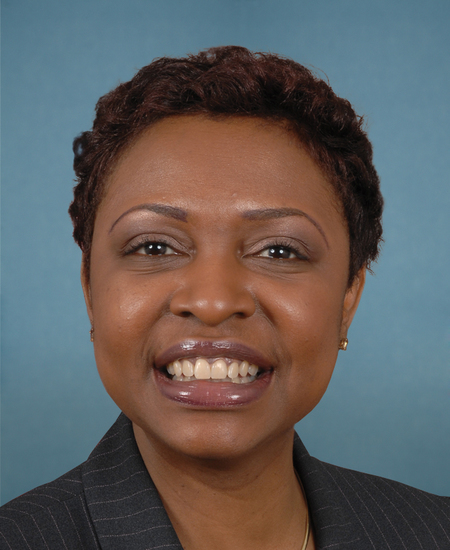
Rep. Yvette D. Clarke
Sponsored bills
Maddy summaryThis bill requires schools to train staff on administering naloxone (an opioid overdose reversal drug) and expands access to naloxone for schools and communities. It increases funding for prevention programs targeting fentanyl-laced substances, including school education and community outreach, and mandates research on fentanyl's health effects and new treatments. The bill also strengthens penalties for fentanyl trafficking, including longer prison terms for deaths linked to fentanyl-laced drugs, and directs law enforcement to prioritize disrupting fentanyl supply chains. It directly affects schools, public health programs, law enforcement, and communities impacted by the opioid crisis.
Maddy summaryThe Real Education and Access for Healthy Youth Act of 2023 would provide federal grants to support comprehensive sex education and sexual health services for young people ages 10-29, with specific focus on marginalized communities including Black, Indigenous, Latine, Asian American, Native Hawaiian, Pacific Islander, and LGBTQ+ youth. The bill authorizes $100 million annually for 2024-2029 to fund programs through grants for elementary/secondary schools (section 4), colleges (section 5), educator training (section 6), and youth-friendly sexual health services for marginalized young people (section 7). These programs must be evidence-informed, medically accurate, culturally responsive, age-appropriate, and trauma-informed, while addressing racial and gender inequities in current sex education approaches. The bill also repeals the "abstinence-only-until-marriage" program and redirects its funding to support this comprehensive approach, requiring grantees to report on implementation and impact.
This resolution calls on the Senate to ratify the U.N. Convention on the Elimination of All Forms of Discrimination Against Women, also known as CEDAW.
Maddy summaryThis bill allows the U.S. Postal Service to ship alcoholic beverages under specific conditions. It enables registered businesses (like wineries, breweries, and retailers) to mail alcohol directly to consumers, provided the recipient is at least 21 with valid ID, the shipment isn’t for resale, and state alcohol taxes are paid upfront. The Postal Service must establish rules for delivery, registration, and verification, while explicitly preserving all existing state, local, or tribal laws governing alcohol sales and shipments. The bill does not override state restrictions on alcohol delivery, and the Postal Service remains liable for violations under state law.
Maddy summaryHRES 439 is a non-binding resolution expressing the House of Representatives' support for keeping the U.S. Postal Service (USPS) as an independent federal agency, not subject to privatization. It highlights USPS's constitutional role, self-sustaining nature (relying on service revenue, not taxpayer funds), and its importance to rural communities, e-commerce, and over 600,000 employees. The resolution urges Congress to take action to preserve USPS's independence, emphasizing that privatization could raise prices, reduce services, and harm the nation's mail infrastructure. As a procedural resolution, it does not change law but formally states the House's position.
Maddy summaryThis bill expands TRICARE coverage to include wigs and treatment for traction alopecia - a type of hair loss caused by tight hairstyles, chemical treatments, or prolonged tension on the hair - directly affecting active-duty military members who develop this condition. It amends military health law to explicitly add "traction alopecia" to coverage for wigs and treatment, and requires the military to issue new grooming guidelines by September 2024 warning service members about the health risks of tight hairstyles, dyes, and chemical products. The key change is broadening existing TRICARE benefits to specifically cover this preventable condition, while mandating education on its causes. This is a policy adjustment to improve health care access for affected service members, not a new benefit.
Maddy summaryThis bill prohibits corporal punishment (such as spanking or paddling) in all schools receiving federal funding, directly affecting students, school personnel, and school administrators. It requires schools to notify parents within 24 hours if corporal punishment occurs and establishes enforcement through civil lawsuits by students/parents, Attorney General actions, and Office for Civil Rights oversight. The bill mandates states to submit school climate reports and develop training programs on positive behavioral interventions to reduce exclusionary discipline practices that disproportionately affect students of color, students with disabilities, and other marginalized groups. It creates a grant program to help schools implement these approaches, with priority given to schools with high suspension rates and disciplinary actions. The bill does not apply to private schools or home schools that don't receive federal funding.
This resolution encourages the U.S. Holocaust Memorial Museum to continue its work in educating the public about the dangers of antisemitism and the origins of the Holocaust, congratulates those responsible for the creation of the museum, condemns antisemitism, supports educational and community-based programs that counter antisemitism and hate, and supports the designation of a U.S. Holocaust Memorial Museum Day.
Maddy summaryThis bill would designate approximately 1.7 million acres of public land in Utah's Colorado Plateau and Great Basin regions as wilderness areas, protecting them from development while preserving traditional uses by Indigenous communities. It establishes specific wilderness areas across Utah's red rock canyons, including the Great Basin Wilderness Areas, Grand Staircase-Escalante Wilderness Areas, and others, with detailed acreage for each designated zone. The bill includes administrative provisions for managing these areas, such as maintaining existing livestock grazing rights, setting road setbacks to protect wilderness character, and reserving water rights for the wilderness areas. This legislation directly affects how the Bureau of Land Management administers public lands in Utah and defines the boundaries for public use of these designated wilderness areas.