

Maddy summaryHR 5784 would provide federal grants to public schools (including Bureau of Indian Education schools) to make them more environmentally sustainable and equitable. It prioritizes schools in the most vulnerable communities (based on CDC Social Vulnerability Index) for full funding to become "healthy zero-carbon schools" through energy-efficient retrofits and new construction, while offering reduced funding for less vulnerable schools. The grants require community engagement in planning, mandate hiring from local communities with specific diversity goals, fund social services and mental health support, and include strict energy efficiency standards for all projects. The bill also includes funding for educational equity planning and climate resiliency programs to help schools serve as community centers during disasters.
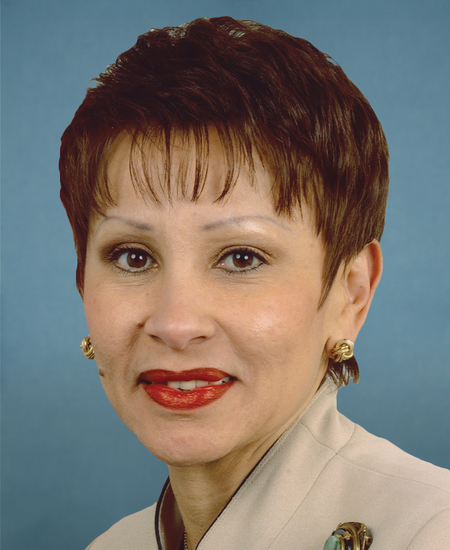
Rep. Nydia M. Velázquez
Sponsored bills
Maddy summaryThis bill requires the Federal Emergency Management Agency (FEMA) to implement concrete measures to ensure equitable disaster response and assistance. It mandates FEMA to modify data collection systems, develop equity criteria for all programs, appoint an equity advisor, and establish a steering group with diverse representation - all to address barriers faced by underserved communities (including racial minorities, rural areas, low-income populations, and those with disabilities). FEMA must also submit annual reports to Congress on progress and metrics measuring equity impacts, while the GAO will review FEMA’s decision-making factors for disaster declarations. These changes directly affect how FEMA delivers federal disaster aid, aiming to reduce disparities in access and outcomes for communities historically underserved in emergency management.
Maddy summaryThe WIC for Kids Act expands eligibility for the Special Supplemental Nutrition Program for Women, Infants, and Children (WIC) by adding new qualifying pathways. It allows children to qualify if they live in households where someone receives Head Start, Indian reservation food assistance, or Puerto Rico/Northern Mariana Islands nutrition block grants, and streamlines documentation by permitting states to use existing records. The bill extends certification periods for children from one to two years and automatically enrolls infants born to current WIC participants. This directly affects low-income families with children who qualify for related assistance programs but previously faced barriers to WIC access.
Maddy summaryThe Main Street Competes Act requires the Department of Justice and Federal Trade Commission to annually report on how their antitrust enforcement actions address harms to small businesses from anticompetitive conduct. These reports must detail complaints from small businesses, investigations, and enforcement actions, broken down by violation type and industry. The Small Business Administration’s Chief Counsel then analyzes the data and submits a congressional report with evaluations and recommendations to promote competition and support small business growth. This bill focuses on increasing transparency and accountability in antitrust enforcement as it relates to small business concerns.
Maddy summaryThe Agricultural Worker Justice Act (HR 4978) improves working conditions for agricultural and meatpacking workers through several key provisions. It requires USDA to only purchase from entities paying prevailing wages (based on local rates and collective bargaining agreements), prohibits stock buybacks by USDA-funded companies, and creates a list of companies with labor violations that would be ineligible for USDA contracts. The bill establishes new safety standards for meatpacking plants including restrictions on line speeds (requiring safety inspections before increases), requirements for toilet facilities, and enhanced protections for workers reporting safety concerns. It also mandates a GAO report on racial disparities in meatpacking employment and authorizes $400 million for local food purchase programs. The bill directly affects meatpacking facilities, agricultural businesses receiving USDA funds, and the workers employed in these industries.
Maddy summaryHRES 693 designates September 9 as "National African Immigrant and Refugee HIV/AIDS and Hepatitis Awareness (NAIRHHA) Day" to highlight health disparities affecting African immigrant and refugee communities in the U.S. It recognizes these communities face significantly higher rates of HIV (6x the general population) and hepatitis B (10% prevalence) due to barriers like stigma, language gaps, immigration status fears, and misclassification in health data. The resolution aims to raise awareness, reduce stigma, and promote culturally appropriate education, testing, and treatment access. As a symbolic measure, it does not create new laws or funding but encourages greater attention to these health needs.
Maddy summaryHR 5686 authorizes $30 million in U.S. humanitarian aid for Armenians in Armenia and Nagorno-Karabakh affected by recent conflicts and blockades, and $12 million in foreign military financing to support Armenia's sovereignty and security cooperation. The bill requires the State Department to develop a strategy protecting Nagorno-Karabakh residents' rights, including cultural heritage and security, and mandates a 90-day report on Azerbaijani military actions during 2022-2023 attacks. It also directs the U.S. to push for International Criminal Court investigations into alleged atrocities and imposes sanctions on Azerbaijani officials involved in blockades or attacks. The legislation focuses on concrete U.S. policy actions - aid, accountability measures, and diplomatic efforts - without prescribing specific outcomes.
Maddy summaryThis bill amends the Higher Education Act to require all U.S. colleges and universities receiving federal financial aid to create detailed anti-harassment policies covering physical, online, and institution-sponsored settings. It mandates policies prohibiting harassment based on race, sex (including sexual orientation and gender identity), disability, religion, and other protected characteristics, including harassment via institutional email, computers, or electronic messaging. The bill also establishes a $50 million annual grant program to fund colleges developing prevention programs, victim support services, and training for students and staff on recognizing and addressing harassment. These policies and grants must comply with existing civil rights laws like Title IX but add specific requirements for reporting and prevention.
Maddy summaryHR 5606, the Future Generations Protection Act, prohibits new fossil fuel infrastructure and exports to accelerate the transition to clean energy. It bans greenhouse gas emissions from new fossil fuel power plants, blocks approvals for new LNG terminals (with limited emissions-reduction exceptions), and prohibits hydraulic fracturing by 2027. The bill also bans most exports of domestically produced crude oil and natural gas, except for limited cases involving Canada and Mexico. These provisions directly affect energy companies, LNG developers, and oil/gas producers, aiming to reduce fossil fuel reliance while prioritizing environmental justice and worker transitions.
Ban All Neurotoxic Organophosphate Pesticides From Our Food Act or the BAN OPs From Our Food Act This bill prohibits any organophosphate pesticides in food. (The Environmental Protection Agency banned chlorpyrifos, a type of organophosphate pesticide, from food in February 2022.)