

Maddy summaryHRES 1074 is a symbolic House resolution reaffirming congressional support for a two-state solution to the Israel-Palestine conflict. It explicitly states the House supports Israel's right to exist as a Jewish, democratic state and recognizes Palestinians' right to sovereignty through a separate state. The resolution identifies a two-state solution as the best path to lasting peace and condemns efforts opposing this approach. As a non-binding resolution, it does not create new law or policy but formally expresses the House's position on this issue. It was introduced by multiple House members on March 12, 2024.
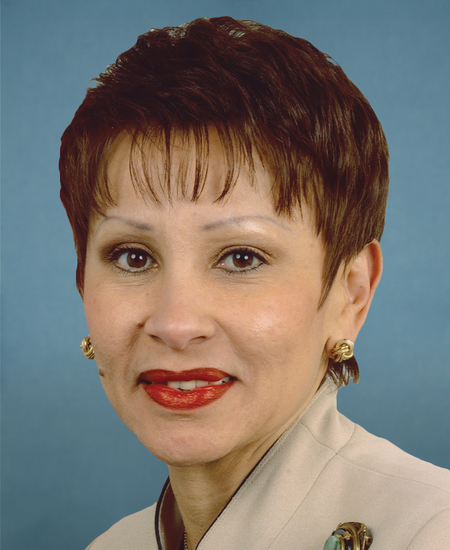
Rep. Nydia M. Velázquez
Sponsored bills
Maddy summaryHR 7639 establishes a 14-member National Advisory Council to address unpaid school meal fees in child nutrition programs. The Council, composed of diverse members including school nutrition directors, parents, FNS officials, and food service workers, will provide recommendations to the Food and Nutrition Service Administrator within three years. Its key focus is ensuring students aren’t shamed for unpaid fees while helping schools maintain financial stability for meal programs. The Council’s report will guide future policy guidance, but the bill itself creates no immediate changes to school meal eligibility or funding. This procedural bill sets up a process for studying the issue, not implementing new rules.
Maddy summaryHCONRES 95 is a symbolic resolution recognizing March 10, 2024, as "Abortion Provider Appreciation Day." It expresses congressional support for abortion providers and staff who deliver care amid heightened restrictions following the Dobbs decision. The resolution honors their work, acknowledges the threats they face, and condemns the impact of abortion bans on access and provider safety. It does not create new laws or alter existing policies, serving only as a non-binding statement of support.
Maddy summaryThis bill requires states to immediately stop Medicaid recovery claims against beneficiaries' estates. Specifically, it mandates that states withdraw all existing liens within 90 days of enactment and notify affected individuals or their estates about the withdrawal. The law also prohibits states from initiating, maintaining, or collecting any future Medicaid recovery claims for benefits correctly paid. It directly affects Medicaid recipients and their heirs who were previously subject to state recovery efforts. The key mechanism is the 90-day deadline for states to remove existing liens and cease all new recovery actions.
Maddy summaryHR 7575, the Supporting America’s Young Entrepreneurs Act of 2024, provides student loan relief to borrowers who start or work for qualifying small businesses in economically distressed areas. Founders of certified "distressed area businesses" (operating 5+ years in designated low-income/unemployment zones) can have up to $20,000 of their Federal Direct Loans canceled after 24 months of payments while employed by their business. Employees of new "small business start-ups" (operating ≤3 years) may qualify for up to $3,000 annually (max $15,000 total) after 12 months of full-time employment. The Young Entrepreneurs Business Center, established under the Small Business Act, certifies businesses, identifies distressed areas, and approves loan cancellations, with canceled debt excluded from taxable income.
Maddy summaryThe Community Advantage Loan Program Act of 2024 establishes a new loan guarantee program under the Small Business Act to increase lending to small businesses in underserved markets, including rural areas, low-income communities, businesses owned by veterans or people with disabilities, and new businesses that typically struggle to secure credit elsewhere. The program requires covered lenders - such as community development financial institutions and nonprofit intermediaries - to make at least 60% of their loans to businesses in underserved markets, with maximum loan amounts of $350,000 (or $750,000 for experienced lenders) and no collateral required for loans under $50,000. Covered institutions must meet specific experience requirements and maintain loan loss reserves, while the program mandates detailed reporting on loan demographics, including business ownership characteristics, location, and loan size categories. The legislation aims to expand access to capital for small businesses that face traditional credit barriers by leveraging the expertise of mission-oriented lenders. It requires annual reporting to Congress on program performance and includes provisions for training and technical assistance to support lenders and borrowers.
Maddy summaryThis resolution (HRES 1050) designates March 2024 as National Colorectal Cancer Awareness Month. It symbolically supports existing public awareness efforts around colorectal cancer prevention, screening, and early detection, without creating new requirements or funding. The resolution encourages the public to observe the month with educational activities, aligning with ongoing annual campaigns. It directly affects public awareness efforts but has no binding policy impact.
Maddy summaryHRES 1040 is a ceremonial House resolution recognizing February as Black History Month. It formally acknowledges the achievements of Black Americans throughout U.S. history and encourages continued celebration of this observance. The resolution highlights the cultural and artistic contributions of Black Americans, including historical figures and movements like the Harlem Renaissance and hip-hop. As a non-binding resolution, it does not create new programs or affect any specific group, but serves to affirm the importance of commemorating Black history.
Survivor Financial Safety and Inclusion Working Group Act This bill establishes an interagency working group of financial regulators to study domestic violence and economic abuse carried out through regulated financial institutions. The working group must study and report on approaches for collecting relevant data, suggestions for improvements to financial products and services, considerations for the needs of underserved communities, and legislative or regulatory authorities necessary to implement the working group’s recommendations.
Maddy summaryThis bill removes self-certified women-owned small businesses (WOSBs) from federal contracting goals that count toward government-wide and agency targets for women-owned business participation. Only WOSBs with official certification through the Small Business Administration (SBA) will count toward these goals, though businesses that self-certified before the law took effect may still count temporarily while awaiting SBA review. The SBA must issue implementing rules within one year and provide quarterly reports to Congress on certification applications, processing timelines, and administrative costs. This affects how federal agencies track women-owned business participation in contracts and impacts women-owned businesses seeking formal SBA certification.