

Maddy summaryThis bill allocates $5 million annually (2026-2030) to states for collecting de-identified stillbirth data through existing health systems, including risk factor analysis. It also provides $1 million yearly to develop standardized guidelines for healthcare providers and public educational materials about stillbirths, requiring consultation with medical professionals, bereavement organizations, and affected families. The bill mandates that all data collection complies with privacy laws and requires the Department of Health and Human Services to publish a public report on stillbirth guidelines within five years. It directly affects state health departments, healthcare providers, and families experiencing stillbirth by improving data quality and access to resources.
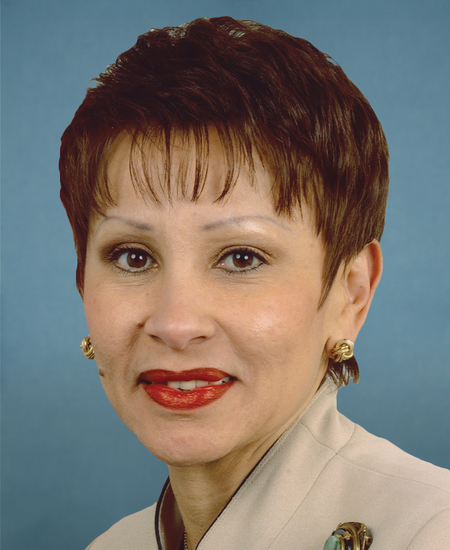
Rep. Nydia M. Velázquez
Sponsored bills
Maddy summaryHR 5501, the "Data Improvement for Puerto Rico Recovery Act," requires the Comptroller General to study data systems used by federal agencies distributing recovery funds to Puerto Rico after Hurricanes Irma, María, and Fiona, the 2020 earthquakes, and the pandemic. The study must catalog all relevant grants, assess how data gaps hindered grant management, and recommend including Puerto Rico in federal data systems that currently exclude it. This procedural bill mandates a detailed report to Congress on improving data transparency for future recovery efforts, directly affecting 22 federal agencies managing Puerto Rico's disaster aid.
Maddy summaryThe Tyler Clementi Higher Education Anti-Harassment Act of 2025 requires U.S. colleges and universities participating in federal financial aid programs to create and distribute clear anti-harassment policies covering harassment based on race, color, national origin, sex (including sexual orientation and gender identity), disability, or religion. These policies must explicitly prohibit harassment in all settings - including online, on campus, off-campus housing, and during school-sponsored activities - and outline reporting procedures and support services for victims. The bill also establishes a $50 million annual grant program to fund schools developing prevention programs, victim support services, or staff/student training on recognizing and addressing harassment. Grants are competitive, require annual reporting on effectiveness, and must be used to improve existing efforts without replacing existing civil rights laws like Title IX.
Maddy summaryThis bill prohibits new fossil fuel infrastructure by banning greenhouse gas emissions from new power plants, blocking new LNG terminals, and banning hydraulic fracturing (effective January 1, 2029). It also prohibits exports of domestically produced crude oil and natural gas, with limited exceptions for Canada, Mexico, and temporary shipments. These provisions directly affect energy companies planning new power plants, LNG projects, and oil/gas extraction firms. The bill requires a "just transition" for workers through labor union partnerships and environmental justice considerations. It does not impact existing fossil fuel operations or infrastructure.
Maddy summaryThis bill reforms the National Flood Insurance Program by requiring initial claim decisions within 120 days, enhancing policyholder appeals rights, and mandating clearer disclosure of coverage limitations in standard flood insurance policies. It establishes a voluntary pilot program allowing insurers to investigate preexisting property conditions that could affect claims, and creates a new Federal Flood Insurance Advisory Committee to provide input on program operations. The bill also includes provisions to prevent fraud, improve transparency around technical reports used in claims adjustment, and ensure adequate staffing for the Office of Flood Insurance Advocate. These changes aim to streamline claims processing, increase transparency for policyholders, and improve program oversight.
Maddy summaryThis bill prohibits current and future members of the Federal Reserve's Board of Governors, Federal Reserve Bank presidents, and the First Vice President of the Federal Reserve Bank of New York from simultaneously holding any other position appointed by the President - including those held on leave. It amends the Federal Reserve Act to explicitly ban such dual appointments, ensuring these key monetary policy roles remain free from potential political conflicts. The law also terminates any current official who holds another presidentially-appointed position as of the bill's enactment date. This targets concerns about presidential influence on Fed independence, as outlined in the bill's findings. The change applies directly to the Fed's highest leadership positions, not to general Fed employees or policy decisions.
Maddy summaryHRES 724 is a symbolic House resolution commemorating the eighth anniversary of Hurricane Maria’s 2017 devastation of Puerto Rico and the U.S. Virgin Islands. It honors victims and survivors while urging the Federal Emergency Management Agency (FEMA) to expedite disbursement of recovery funds and calling for Congress to prioritize resilient infrastructure investments in these territories. The resolution highlights ongoing challenges like power grid fragility, healthcare access gaps, and bureaucratic delays in federal aid - despite $23.4 billion in FEMA assistance and $20 billion in HUD disaster funds already allocated. As a non-binding resolution, it does not create new laws or funding but serves as a formal recognition of the storm’s lasting impacts and a call for continued support.
Maddy summaryThis bill requires the 988 Suicide Prevention Lifeline to establish a dedicated "Press 3" option (via IVR) for LGBTQ+ youth seeking crisis support, directly affecting LGBTQ+ youth who face a four times higher suicide risk than peers. It mandates that at least 9% of funds allocated for the lifeline's services be reserved specifically for these specialized LGBTQ+ youth services. The bill amends existing law to formalize this dedicated resource, building on current services that handled over 1.5 million contacts from LGBTQ+ youth in 2025. This creates a concrete policy change for accessing tailored crisis support without altering other lifeline operations.
Maddy summaryHR 5399, the Equitable Arts Education Enhancement Act, provides competitive federal grants to Minority-Serving Institutions (MSIs) to expand access to arts education for Black, Indigenous, and people of color students. The bill directs grant funds toward specific activities, including financial aid for arts students, mentorship programs, career counseling, and preserving BIPOC art collections. MSIs must prioritize initiatives directly benefiting minority students, such as outreach programs, paid internships with arts organizations, and training for future arts educators. This legislation aims to address systemic underfunding and lack of diversity in arts education by supporting institutions uniquely positioned to serve diverse artists and students.
Maddy summaryThe FAMILY Act would establish a national paid family and medical leave insurance program that provides wage replacement benefits for workers needing time off for caregiving or medical reasons. It defines "qualified caregiving" to include caring for a family member with a serious health condition, personal medical needs, or recovery from violence (including domestic violence, sexual assault, or stalking). Benefits would be calculated based on earnings, with a minimum monthly benefit of $580 and maximum of $4,000, administered by a new Office of Paid Family and Medical Leave within the Social Security Administration. Eligible individuals would need to have worked for at least 8 quarters in the previous year and file an application with required documentation, while existing state paid leave programs would continue to operate alongside this federal program.