

Maddy summaryThis bill mandates the Government Accountability Office (GAO) to study Argentina's 2025 financial crisis. The GAO must examine the crisis origins, U.S. and IMF awareness of Argentina's financial problems, the U.S. response including terms of assistance, the legal authority for using the Exchange Stabilization Fund, and Argentina's recovery efforts. The GAO must submit a report to Congress within 18 months of the bill's enactment, followed by public release of the findings. The bill directly affects U.S. oversight of international financial assistance but does not provide funding or alter existing bailout programs.
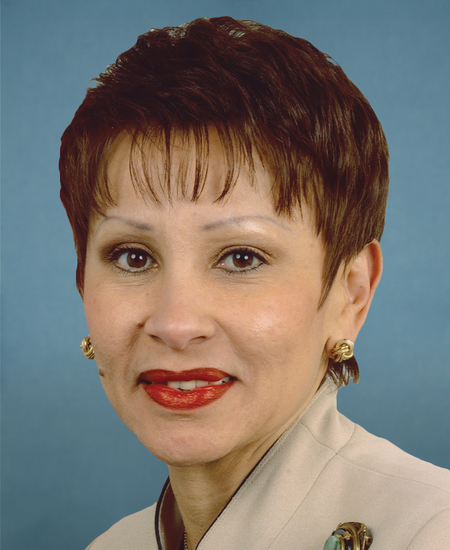
Rep. Nydia M. Velázquez
Sponsored bills
Maddy summaryThis bill establishes a voluntary federal certification program recognizing employers that meet specific family-friendly workplace standards. To qualify, employers must offer paid family leave (at least 12 weeks annually for reasons like childbirth, adoption, or caring for sick family members), paid sick days separate from other leave, fertility/adoption assistance, child care subsidies, flexible scheduling after parental leave, remote work options when feasible, and lactation support. The program, administered by the Secretary of Labor, would certify employers demonstrating these policies through a submitted application. The certification aims to publicly recognize companies supporting employees in balancing work and family responsibilities.
Maddy summaryThe Antisemitism Response and Prevention Act of 2025 aims to combat rising antisemitism through evidence-based policies rather than political weaponization. It requires universities to designate Title VI coordinators to handle civil rights complaints, establishes a National Coordinator to Counter Antisemitism within the Department of Justice, and creates a Hate Crime Reporting Center at the FBI to improve data collection on hate crimes. The bill prohibits using antisemitism accusations to restrict diversity programs, political advocacy, or immigration policies, and ensures nonprofit security grants for Jewish community centers cannot be tied to unrelated political conditions. The legislation authorizes $280 million annually for the Department of Education's Office for Civil Rights and $50 million for the Hate Crime Reporting Center from 2027-2032.
Maddy summaryHCONRES 64 is a congressional resolution directing the President to withdraw U.S. military forces from any hostilities against Venezuela that lack explicit congressional authorization. It applies to ongoing military operations in Venezuela not approved by Congress through a declaration of war or specific law authorizing force. The resolution invokes the War Powers Resolution (50 U.S.C. 1544(c)), requiring the removal of troops within the timeframe specified by that law. This bill does not affect military actions already authorized by Congress but mandates the end of unapproved operations.
Maddy summaryHRES 955 is a symbolic House resolution recognizing the importance of maintaining U.S. leadership in ending pediatric HIV/AIDS globally. It affirms support for existing programs like PEPFAR and the Global Fund, which provide critical prevention services (e.g., antiretroviral prophylaxis for pregnant women) and treatment for children. The resolution specifically calls for continued commitment to closing the treatment gap for children, expanding access to long-acting prevention methods, and advancing the Global Alliance to End AIDS in Children by 2030. As a recognition measure, it does not create new laws or allocate funding but underscores ongoing U.S. efforts to prevent mother-to-child transmission and improve pediatric HIV outcomes.
Maddy summaryThis bill requires federal monitors and receivers overseeing public housing agencies to testify annually before two congressional committees. Specifically, they must appear before the House Financial Services Committee and Senate Banking, Housing, and Urban Affairs Committee by October 1 each year to report on their management oversight. The testimony must cover their oversight activities from the previous year, directly affecting federal monitors and receivers managing public housing agencies under the 1937 Housing Act. The requirement applies to all such oversight roles, not specific agencies or outcomes.
Maddy summaryHR 5778 requires the Small Business Administration (SBA) to participate in federal interagency meetings about employee ownership and cooperatives. Specifically, the SBA Administrator (or a designee) must attend such meetings when invited or if there's a prior relationship with the host agency. The bill also updates outreach language for Small Business Investment Companies to include investors and mandates the SBA to implement existing outreach through its Employee Ownership Program within 180 days of enactment. This directly affects the SBA's operational procedures and indirectly supports employee-owned businesses by improving federal coordination on these models.
Essential Caregivers Act of 2025 This bill prohibits certain health care facilities from limiting the access of essential caregivers to residents of those facilities, including during designated emergency periods. Specifically, the bill generally prohibits Medicare skilled nursing facilities, Medicaid nursing facilities, Medicaid intermediate care facilities, and associated inpatient rehabilitation facilities from restricting the access of essential caregivers to residents of the facilities, including during emergency periods in which visitation rights are otherwise restricted. During emergency periods, facilities may restrict access for an initial period of up to seven days and for one additional maximum seven-day period (if the additional period is approved by the state health department). Facilities may restrict access for a total of 7 days (or 14 days with the approval of the state health department) during an emergency period. Essential caregivers must agree to comply with any safety protocols set by the facility, which may be no more stringent for caregivers compared to those for staff. Caregivers who fail to comply with these requirements may be denied access, subject to an appeals process.
Maddy summaryThis bill amends a section of federal law to change the reference from "the White House" to "the People's White House" in a specific legal citation (Section 307104 of Title 54, U.S. Code). It is a purely procedural change to the text of the law, not a substantive policy shift. The bill does not alter historic preservation standards, protections, or funding for the White House grounds. It simply updates the formal name used within the legal code.
Maddy summaryThe ARMAS Act of 2025 transfers control of certain firearms export regulations from the Department of Commerce to the Department of State to better regulate exports to Mexico, Central America, and the Caribbean. It designates specific countries (including Mexico, Guatemala, Honduras, and El Salvador) as "covered countries" requiring stricter export oversight, including mandatory annual reports on firearms exports and end-use monitoring to prevent diversion to criminal groups. The bill requires the Department of State to develop a strategy to disrupt illegal firearm trafficking, including increased participation in the eTrace program for tracking U.S.-sourced firearms and improved data sharing with foreign governments. Based on findings that U.S.-sourced firearms are commonly used in crimes in these regions, the act aims to reduce the flow of weapons that fuel violence and crime.