

Targeting Resources for Equitable Access to Treatment for Long COVID Act or the TREAT Long COVID Act This bill requires the Department of Health and Human Services to award competitive grants to create or expand the capacity of clinics that treat patients with persistent, long-term symptoms following recovery from acute COVID-19 (i.e., Long COVID) and associated conditions. Eligible recipients include federally qualified health centers, rural health clinics, urban Indian health centers, and state and local health departments.
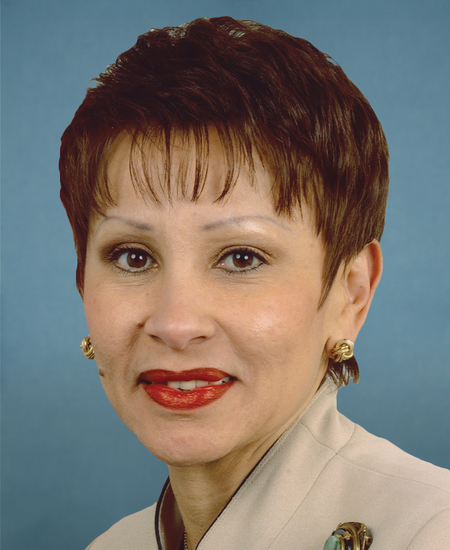
Rep. Nydia M. Velázquez
Sponsored bills
Maddy summaryThe PAST Act of 2023 amends the Horse Protection Act to ban specific devices used to cause pain (soring) in horses at shows, particularly affecting Tennessee Walking Horses, Racking Horses, and Spotted Saddle Horses. It defines prohibited "action devices" (like boots or chains causing friction) and requires licensed, conflict-free inspectors at events to enforce rules. The bill increases penalties for violations to up to $5,000 fines or 3 years in jail, and mandates longer disqualifications for repeat offenses (180 days → 1 year → 3 years). Horse show organizers, exhibitors, and participants must comply with these new inspection and penalty requirements.
Maddy summaryHRES 390 is a resolution recognizing May as Asian American, Native Hawaiian, and Pacific Islander (AANHPI) Heritage Month. It formally honors the historical contributions of AANHPI communities to the United States, highlighting their diverse cultural impact and achievements across U.S. history. The resolution emphasizes celebrating these contributions while acknowledging ongoing challenges, such as anti-Asian hate crimes, and references key milestones like the 125th anniversary of *United States v. Wong Kim Ark*. As a symbolic recognition resolution, it does not create new policies or affect specific groups through legislation.
Maddy summaryHR 3276 establishes two pilot programs under the National School Lunch Act. First, it creates a $10 million, 3-year grant program to help schools serve 100% plant-based meals (no animal products) to students, prioritizing schools serving high proportions of low-income students and supporting culturally appropriate meal planning. Second, it creates a $2 million pilot to reimburse schools for costs of providing nondairy milk substitutes for students with dietary needs, targeting schools with high lactose intolerance rates. Both pilots require annual reporting on participation and outcomes, with the dairy substitute program ending after 3 years. The bill directly affects public school food authorities serving eligible students.
Aaron Salter, Jr., Responsible Body Armor Possession Act This bill establishes a federal statutory framework to restrict the purchase, ownership, or possession of enhanced body armor by civilians. The term enhanced body armor means body armor, including a helmet or shield, with a ballistic resistance that meets or exceeds the ballistic performance standard of Type III armor, as determined using the National Institute of Justice standard in effect at the time the person purchases, owns, or possesses the armor.
Maddy summaryThe RAISE Act of 2023 creates a new refundable tax credit for teachers and early childhood educators working in schools with high student poverty rates. The credit starts at $1,000, with additional amounts up to $14,000 (or $9,000 for early childhood educators without bachelor's degrees) based on the school's poverty ratio. The bill also increases the educator expense deduction from $250 to $500 and establishes mandatory funding for local schools that maintain or increase teacher salaries. These provisions directly affect K-12 teachers, early childhood educators, and their schools, with specific eligibility requirements and protections against employer retaliation regarding the credit.
Maddy summaryThis bill requires U.S. public schools to include Asian Pacific American history in all K-12 American history and civics education. It amends the Elementary and Secondary Education Act to mandate that curriculum standards, teacher training, and national assessments explicitly cover this history as part of American history. The policy directly affects students and teachers nationwide by changing how history is taught in public schools. The key mechanism is requiring specific curriculum updates to address gaps in current Eurocentric teaching, ensuring students learn about APA contributions, experiences, and challenges as integral to U.S. history.
Maddy summaryHR 3138 amends the Elementary and Secondary Education Act to improve support for English learners and immigrant children/youth. It requires states to collect and report disaggregated data on English learners (including by disability, ethnicity, race, and native language) and monitor the progress of former English learners. The bill mandates new activities for schools, such as providing legal/educational resources to families, implementing evidence-based practices, and offering culturally responsive training for educators. It also directs agencies serving communities with rising immigrant populations to assess state laws affecting these students and notify families. These changes directly affect schools, educators, and English learner students across the U.S.
Maddy summaryThis bill modifies how distilled spirits taxes collected in Puerto Rico are handled. It repeals a rule limiting tax coverage to Puerto Rico and the U.S. Virgin Islands, allowing those territories to transfer certain distilled spirits taxes to the U.S. Treasury. Crucially, it requires Puerto Rico to transfer 1/6 of the tax difference (above $10.50 per gallon) from rum taxes covered over into the Puerto Rico Conservation Trust Fund, which supports natural habitat conservation and sustainable agriculture. This directly affects Puerto Rico's rum industry and ensures a portion of those tax revenues funds conservation efforts.
Maddy summaryThe Transit to Trails Act establishes a federal grant program to fund transportation projects connecting critically underserved communities - defined as areas lacking adequate park access, low-income, communities of color, or environmental justice areas - to public lands and recreational spaces. Eligible entities, including states, local governments, tribal organizations, and park districts, can apply for grants to develop transportation connectors (like bus routes) and culturally appropriate education materials, with priority for projects using low-emission vehicles and offering discounted fares for low-income riders. Grants range from $25,000 to $500,000, with federal funding covering up to 80% of costs, and recipients must report on demographics served and project outcomes. The program is funded at $40 million annually in its fifth year, aiming to improve mobility to parks and recreation in communities historically excluded from such access.