

Women's Health Protection Act of 2021 This bill prohibits governmental restrictions on the provision of, and access to, abortion services. Specifically, governments may not limit a provider's ability to prescribe certain drugs, offer abortion services via telemedicine, or immediately provide abortion services when the provider determines a delay risks the patient's health. Furthermore, governments may not require a provider to perform unnecessary medical procedures, provide medically inaccurate information, comply with credentialing or other conditions that do not apply to providers whose services are medically comparable to abortions, or carry out all services connected to an abortion. In addition, governments may not (1) require patients to make medically unnecessary in-person visits before receiving abortion services or disclose their reasons for obtaining such services, or (2) prohibit abortion services before fetal viability or after fetal viability when a provider determines the pregnancy risks the patient's life or health. The bill also prohibits other governmental measures that are similar to the bill's specified restrictions or that otherwise single out and impede access to abortion services, unless a government demonstrates that the measure significantly advances the safety of abortion services or health of patients and cannot be achieved through less restrictive means. The Department of Justice, individuals, or providers may bring a lawsuit to enforce this bill, and states are not immune from suits for violations. The bill applies to restrictions imposed both prior and subsequent to the bill's enactment.
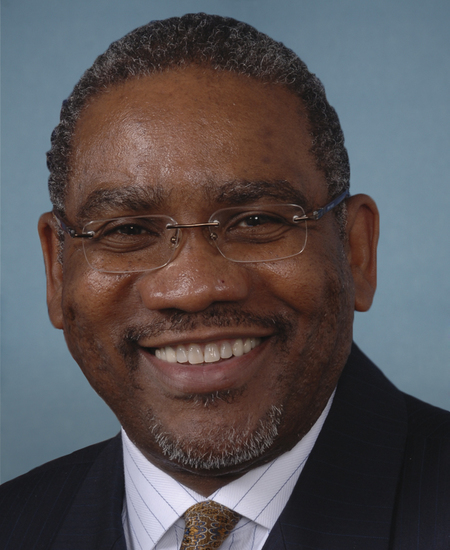
Rep. Gregory W. Meeks
Sponsored bills
Original Black History Month Resolution of 2022 This resolution recognizes the importance of commemorating Black History Month to acknowledge the achievements of Black Americans throughout history.
Congressional Tribute to Constance Baker Motley Act of 2022 This bill provides for the award of a Congressional Gold Medal posthumously to Constance Baker Motley in recognition of her contributions and service to the United States in advancing civil rights as an attorney, elected official, and judge.
Ensuring Diversity in Community Banking Act This bill establishes and revises provisions related to minority depository institutions, community development financial institutions, and impact banks. The bill (1) expands the definition of minority depository institutions to include women-owned banks, and (2) establishes impact banks as depository institutions with total assets less than $10 billion and where a certain total dollar value of loans are extended to low-income borrowers. The bill establishes a program allowing minority depository institutions and impact banks to receive deposits from certain Department of the Treasury accounts through designated custodial entities. It also establishes the Minority Bank Deposit Program to prioritize the use of minority depository institutions to the maximum extent possible to serve the financial needs of federal departments and agencies. Federal banking agencies must issue rules allowing new minority depository institutions and impact banks three years to meet capital requirements.
This resolution extends collective bargaining rights prescribed in the Congressional Accountability Act of 1995 to employees of the House of Representatives.
This resolution recognizes that the Harlem Renaissance represented a pivotal moment in American history for African Americans and the African diaspora community of intellectuals, artists, performers, writers, poets, and musicians whose works of political discourse and creative expression set a path for self-determination and self-empowerment that is still evident today. The resolution also celebrates the lasting impact of the Harlem Renaissance on the art, literature, music, discourse, and culture of the United States.
This resolution expresses that the House of Representatives (1) remains committed to nurturing the enduring ties between the people and the governments of the United States and Liberia; (2) encourages Liberia to redouble its efforts to counter corruption, advance the causes of human rights, and implement critical economic reforms necessary to accelerate sustainable economic growth and human capital development; (3) calls on the Departments of State and the Treasury to continue to impose targeted sanctions and other measures against those responsible for undermining the rule of law in Liberia and the faith and trust of the Liberian people; (4) recalls the significance of the bicentennial of the arrival of the first free Black American in Liberia; and (5) supports the continuing efforts and contributions of the Liberian diaspora in the United States.
This resolution strongly condemns the government of Cameroon's abuses in the country's Anglophone regions, including the use of violence and violations of press freedoms. It urges the government to initiate dialogues with separatist groups and civil society, follow through on initiatives developed to address various grievances, and comply with international human rights standards. The resolution also urges separatist groups to immediately stop committing human rights abuses and end their incitement of violence and hate speech.
This resolution condemns the military coup that took place in Burma (Myanmar) on February 1, 2021. The resolution denounces the Tatmadaw (the military of Burma) for perpetrating gross violations of human rights as part of its brutal campaign to suppress the democratic aspirations of the people of Burma and calls on the Tatmadaw to cease all violence against prodemocracy activists and reach a cease-fire with ethnic armed organizations, release all political prisoners, and engage in constructive dialogue with all parties to negotiate a pathway toward a government that reflects the will of the Burmese people. The resolution also calls on the President to enact new targeted sanctions on individuals and entities affiliated with the Tatmadaw, including an international arms embargo and a prohibition on the sale of aviation fuel.
Global Respect Act This bill imposes visa-blocking sanctions on foreign persons responsible for or complicit in violating the human rights of individuals due to actual or perceived sexual orientation, gender identity, or sex characteristics. The President must report and periodically update a list of foreign persons responsible for such human rights violations and apply sanctions accordingly. The Department of State must designate at least one senior officer who shall be responsible for tracking violence and discrimination against individuals based on actual or perceived sexual orientation, gender identity, or sex characteristics in foreign countries.