Aaron Salter, Jr., Responsible Body Armor Possession Act This bill establishes a federal statutory framework to restrict the purchase, ownership, or possession of enhanced body armor by civilians. The term enhanced body armor means body armor, including a helmet or shield, with a ballistic resistance that meets or exceeds the ballistic performance standard of Type III armor, as determined using the National Institute of Justice standard in effect at the time the person purchases, owns, or possesses the armor.
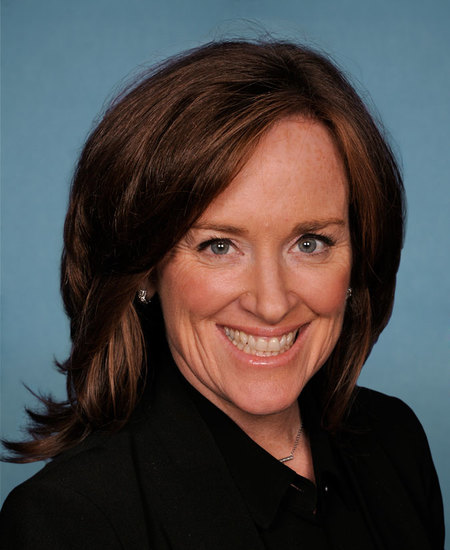
Rep. Kathleen M. Rice
Sponsored bills
Schedules That Work Act This bill provides employees with the right to request changes to their work schedules related to the number of hours they are required to work or be on call, the location of the work, the amount of notification about work schedule assignments, and fluctuations in work hours. Employers must negotiate in good faith with employees who make such requests and comply with certain work schedule notice and split shift pay requirements for retail, food service, cleaning, hospitality, or warehouse employees.
Bringing an End to Harassment by Enhancing Accountability and Rejecting Discrimination in the Workplace Act or the BE HEARD in the Workplace Act This bill expands protections against discrimination and harassment in the workplace and raises the minimum wage for tipped employees. Specifically, the bill (1) makes it an unlawful employment practice to discriminate against an individual in the workplace based on sexual orientation, gender identity, pregnancy, childbirth, a medical condition related to pregnancy or childbirth, or a sex stereotype; and (2) provides a statutory definition for what constitutes workplace harassment. Further, these protections apply to all workplaces, regardless of size, and to all workers, including independent contractors, interns, volunteers, and trainees. The bill prohibits employers from entering into contracts or agreements with workers that contain certain nondisparagement or nondisclosure clauses and prohibits certain predispute arbitration agreements and postdispute agreements. It also establishes grant programs to (1) prevent and respond to workplace discrimination and harassment, (2) provide legal assistance for low-income workers, and (3) establish a system of legal advocacy in states to protect the rights of workers. The bill further provides employees the right to retain their tips and it increases, in specified annual increments, the minimum wage for tipped employees to match the federal minimum wage for nontipped employees. Additionally, the bill requires the Equal Employment Opportunity Commission to provide specified training and resource materials, establish and convene a harassment prevention task force, and establish an Office of Education and Outreach with regard to prohibited discrimination and harassment in employment. The bill also requires specified studies, reports, and research on prohibited workplace harassment.

Reduced Costs and Continued Cures Act This bill establishes and alters several programs and requirements relating to the prices of prescription drugs. For example, the bill establishes and alters several requirements under Medicare and Medicaid, including requiring drug manufacturers to issue rebates to the Centers for Medicare & Medicaid Services for covered drugs under Medicare that cost $100 or more and for which the average manufacturer price increases faster than inflation, capping annual out-of-pocket spending under the Medicare prescription drug benefit, and increasing the maximum rebate amount under the Medicaid Drug Rebate Program. The bill also makes changes relating to market exclusivities and manufacturer price concessions for prescription drugs, including authorizing the Federal Trade Commission to initiate proceedings against parties to settlements of patent infringement claims that have anticompetitive effects with respect to drugs or biologics, limiting in certain instances the number of patents that the manufacturer of a biologic can assert in a lawsuit against a company seeking to sell a biosimilar version, and nullifying regulations relating to the treatment of certain Medicare prescription drug benefit rebates from drug manufacturers for purposes of federal anti-kickback laws.
Reduced Costs and Continued Cures Act of 2021 This bill establishes and alters several programs and requirements relating to the prices of prescription drugs. For example, the bill establishes and alters several requirements under Medicare and Medicaid, including requiring drug manufacturers to issue rebates to the Centers for Medicare & Medicaid Services for covered drugs under Medicare that cost $100 or more and for which the average manufacturer price increases faster than inflation, capping annual out-of-pocket spending under the Medicare prescription drug benefit, and increasing the maximum rebate amount under the Medicaid Drug Rebate Program. The bill also makes changes relating to market exclusivities and manufacturer price concessions for prescription drugs, including authorizing the Federal Trade Commission to initiate proceedings against parties to settlements of patent infringement claims that have anticompetitive effects with respect to drugs or biologics, limiting in certain instances the number of patents that the manufacturer of a biologic can assert in a lawsuit against a company seeking to sell a biosimilar version, and nullifying regulations relating to the treatment of certain Medicare prescription drug benefit rebates from drug manufacturers for purposes of federal anti-kickback laws.
Stop the Importation and Manufacturing of Synthetic Analogues Act of 2021 or SIMSA This bill establishes a process and requirements for regulating substances that have a similar chemical structure and actual or predicted effect as a controlled substance that is currently subject to such regulation because of its potential for abuse or dependence.
3D Printed Gun Safety Act of 2021 This bill makes it unlawful to intentionally publish digital instructions for programming a three-dimensional printer to make a firearm.
Study To Observe and Prevent (STOP) Human Trafficking Act of 2021 This bill directs the Department of Justice, in coordination with the President's Interagency Task Force to Monitor and Combat Trafficking in Persons, to study and report on the prevalence and instances of human trafficking at adult entertainment clubs in the United States.
Disarm Hate Act The bill expands the categories of persons who are prohibited from receiving or possessing a firearm. Specifically, it prohibits firearm sale or transfer to and receipt, possession, shipment, or transport by a person (1) who has been convicted of a misdemeanor hate crime, or (2) who has received an enhanced hate crime misdemeanor sentence.
Maddy summaryHR 3803 provides a one-time payment to Ted Simonson and Reoforce, Inc. from the U.S. Treasury to settle all their claims against the government related to losses from the government taking their mining claims. The payment fully satisfies all past and future claims regarding these specific losses and prohibits the recipients from seeking additional compensation from the Bureau of Land Management. The bill also limits attorney fees to 20% (if not referred to a federal court judge) or 33% (if referred) of the payment amount.