Fairness in Airspace Includes Residents Act or the F-AIR Act This bill revises the priorities of the Federal Aviation Administration (FAA) in developing plans and policy for the use of navigable airspace. Specifically, the FAA must ensure (1) the safety of aircraft as a primary priority in developing such plans and policy; and (2) the minimization of the impact of aviation noise, and other health impacts, on residents and communities, and other impacts of the use of airspace on the environment as a secondary priority on an equal basis with the efficient use of airspace.
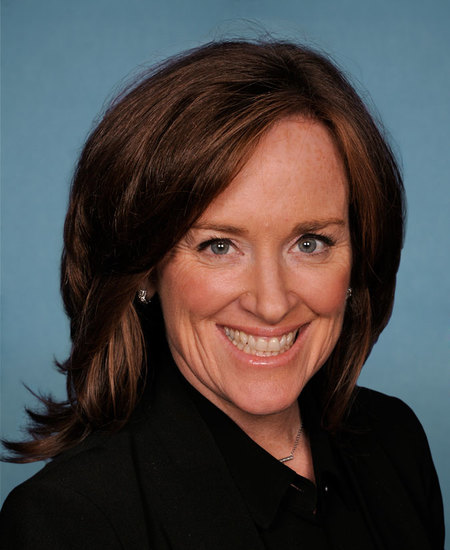
Rep. Kathleen M. Rice
Sponsored bills
Quiet Communities Act of 2021 This bill requires the Environmental Protection Agency to reestablish an Office of Noise Abatement and Control to promote the development of local noise control programs, carry out research, and develop and disseminate educational materials, among other duties.
This resolution supports the designation of National Whistleblower Appreciation Day.
Protecting the Information of our Vulnerable Children and Youth Act or the Kids PRIVCY Act This bill expands the requirements for digital services when handling the personal information of children. Specifically, the bill (1) requires digital services to obtain express, affirmative consent that is specific, informed, and unambiguous before processing the personal information of a child or teenager under the age of 18; (2) prohibits certain targeted advertising; and (3) allows individuals to access, correct, or delete their personal information. The bill increases the civil penalty for violations of the children's online privacy protections and provides for enforcement by the Federal Trade Commission and a private right of action.
Rescinding DHS' Waiver Authority for Border Wall Act This bill rescinds the authority of the Department of Homeland Security to waive legal requirements in order to ensure the expeditious construction of barriers and roads in the vicinity of the U.S. border.
This resolution expresses the sense of the House of Representatives that the murder of Alireza Fazeli Monfared should be investigated and prosecuted and that the practice of honor killings in Iran is a violation of internationally recognized human rights. Further, it urges the Department of State to rebuke Iran for this practice and to condemn Iranian human rights abuses against vulnerable populations, including abuses based on sex, sexual orientation, and gender expression.
Onward to Opportunity Act This bill requires the Department of Defense to implement a pilot grant program at five military installations to provide enhanced support and funding to eligible entities to supplement the Transition Assistance Program (TAP) in providing job opportunities for industry-recognized certifications, job placement assistance, and related employment services to service members participating in TAP and their spouses.
Recognizing the Role of Direct Support Professionals Act This bill requires the Office of Management and Budget to establish a separate category within the Standard Occupational Classification system for direct support professionals (i.e., individuals who provide services to promote independence in individuals with a disability) for data reporting purposes.
Closing the Meal Gap Act of 202 1 This bill revises the requirements for calculating Supplemental Nutrition Assistance Program (SNAP) benefits. The bill increases the minimum SNAP benefit and requires benefits to be calculated using the value of a low-cost food plan. The Department of Agriculture (USDA) must determine the requirements for the low-cost food plan, which is the diet required to feed a family of four, consisting of a man and a woman 19-50 years of age, a child 6-8 years of age, and a child 9-11 years of age. USDA must (1) reevaluate and publish the market baskets of the plan by January 1, 2027, and every five years thereafter, based on current food prices, food composition data, consumption patterns, and dietary guidance; and (2) make adjustments to the plan to account for household size, changes in the cost of the diet, and the costs of food in specified areas. The bill modifies the requirements for calculating household income to determine SNAP eligibility by (1) authorizing a standard medical expense deduction for households containing an elderly or disabled member, and (2) eliminating the cap on the excess shelter expense deduction. The bill eliminates certain work requirements for SNAP. The requirements apply to able-bodied adults who are ages 18-49 and have no dependent children. The bill allows Puerto Rico, American Samoa, and the Northern Mariana Islands to participate in SNAP. Currently, the three territories receive block grants instead of participating in SNAP.

Rebuilding Economies and Creating Opportunities for More People Everywhere To Excel Act or the RECOMPETE Act This bill establishes a grant program to assist economically distressed local communities and labor markets that meet specified economic criteria, including employment criteria. The Economic Development Administration (EDA) must award 10-year grants to a local government, tribal government, economic development district, or consortium of local government units located in such areas. Each grant recipient must develop and implement a comprehensive strategy to address the economic challenges specific to the area. The grants may be used to increase employment opportunities, increase local per capita income, support economic development, and develop infrastructure and housing. Additionally, the EDA must periodically evaluate each grant recipient based on certain benchmark criteria and annually report on the implementation of the program. The bill specifies formulas for determining the grant amount for each community or market and the federal share of the cost of each program or activity conducted under the program.