

Ending the Monopoly of Power Over Workplace Harassment through Education and Reporting Act or the EMPOWER Act This bill makes it an unlawful labor practice for an employer to enter into, or attempt to enforce, a contract with an employee or job applicant that contains a nondisparagement or nondisclosure clause that covers workplace or sexual harassment, including retaliation for participating in a workplace harassment proceeding. The bill exempts certain settlement or separation agreements from such prohibition. The bill also requires the Securities and Exchange Commission to promulgate a regulation that requires any issuer of securities to submit a report for the most recent five-year period with respect to workplace and sexual harassment. The commission must provide for the development and dissemination of training programs and information regarding workplace and sexual harassment. The bill denies a tax deduction for amounts related to judgments and expenses in connection with litigation related to workplace or sexual harassment. It also excludes from gross income, for income tax purposes, any amount received in connection with a claim or settlement related to workplace or sexual harassment, or other unlawful discrimination.
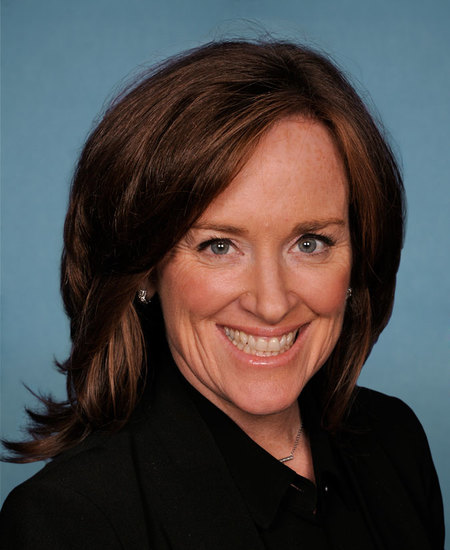
Rep. Kathleen M. Rice
Sponsored bills
Pandemic Risk Insurance Act of 2021 This bill establishes the Pandemic Risk Reinsurance Program within the Department of the Treasury. The program generally provides compensation to property and casualty insurers if they incur losses as a result of coverage related to pandemics and outbreaks of disease. All insurers as specified in the bill must participate in the program. These insurers must offer, in all property and casualty insurance policies, coverage of losses related to an outbreak of infectious disease or a pandemic for which a covered public health emergency is certified by the Department of Health and Human Services. Additionally, these insurers must offer, in all its commercial property insurance policies, coverage to compensate the insured for a portion of 180 days' fixed costs and payroll triggered upon the certification of a public health emergency and state or local government closure orders without requiring specific proof of losses. The bill establishes the share of insured losses covered by the program and conditions for payment to insurers. The bill also provides for the treatment of reinsurance, captive insurers, other self-insurance arrangements, and state residual market insurance entities. The Government Accountability Office must report on the availability and affordability of property and casualty insurance.
This resolution expresses that the House of Representatives applauds the Biden administration for reaffirming the U.S. commitment to the Paris Agreement on climate change and to our collective responsibility to globally combat climate change; encourages the Biden administration to implement measures to ensure global climate change remains a top priority for this and future administrations and to cement the United States as a global leader in the fight to mitigate its most severe consequences; voices strong commitment as legislators toward achieving the climate goals of the Paris Agreement, fulfilling the forthcoming pledges from the COP26 in Glasgow, Scotland, and advancing other international efforts to keep global warming to no more than 1.5 degrees Celsius and realize global net-zero carbon emissions by 2050 using a whole-of-government approach; and recognizes the critical responsibility of the United States and other developed nations to ensure all societies have the capabilities to transition to a clean energy economy, the resources to protect against climate-induced disasters, and the necessary assistance to endure climate-related challenges to food security, regional migration, and public health.
Original National Domestic Violence Awareness Month Resolution of 2021 This resolution supports the goals and ideals of National Domestic Violence Awareness Month. Further, it expresses the sense of the House of Representatives that Congress should continue to raise awareness of and support programs to end domestic violence.
Public Service Freedom to Negotiate Act of 20 21 This bill provides minimum collective bargaining rights and procedures for public employees and prohibits strikes by certain public safety workers. The Federal Labor Relations Authority (FLRA) shall determine for each state whether the laws of such state substantially provide for each of the minimum standard collective bargaining rights and procedures specified by this bill, including the right of public employees and supervisory employees to self-organize, form or join a labor organization, or collectively bargain. The FLRA must issue rules and take actions to establish and administer bargaining rights and procedures for those states that do not substantially provide for them. No employers, emergency services employees, or law enforcement officers may engage in a lockout, strike, or any other organized job action that is likely to result in a measurable disruption of the delivery of emergency or public safety services. Furthermore, no labor organization may be the cause of a violation of such prohibition.
State, Local, Tribal, and Territorial Fiscal Recovery, Infrastructure, and Disaster Relief Flexibility Act This bill allows states, tribes, territories, and localities to use certain COVID-19 relief funds for new categories of spending, including for natural disasters and infrastructure projects. It also makes changes to expenditure deadlines and other aspects of this funding. Specifically, recipients may use funds for emergency relief from natural disasters and associated negative economic impacts of natural disasters. In addition, recipients may use a portion of their COVID-19 relief funds for designated infrastructure projects, such as nationally significant freight and highway projects. Furthermore, the bill allows recipients to expend COVID-19 relief funds on these types of infrastructure projects until September 30, 2026. Under current law, recipients must expend the funds by December 31, 2024. Other changes in the bill include (1) modifying eligibility and allocation requirements for funding set aside for counties and Indian tribes that are near public lands, (2) allowing Indian tribes an additional year to expend their COVID-19 relief funds, and (3) establishing a process for government entities to decline COVID-19 relief funds and requiring any declined funds to be used to reduce the federal deficit.
Priority Response for Veterans Impacted by Disasters and Emergencies Act or the PROVIDE Act This bill requires the Department of Veterans Affairs to set forth criteria (1) for the priority processing of claims related to compensation for service-connected disability for certain veterans (e.g., veterans affected by homelessness or major disasters), and (2) to establish flexible evidence requirements for veterans who are unable to meet ordinary evidence requirements for such priority claims due to a major disaster.
Teachers and Parents at the Table Act This bill directs the Department of Education to establish (1) a Teacher Advisory Committee to monitor the implementation and impact of the Every Student Succeeds Act (ESSA), the elementary and secondary education law that replaced the No Child Left Behind Act; and (2) a Parents and Families Advisory Committee to monitor the effects and implementation of the ESSA on children and families and to review and analyze the implementation of various family engagement activities.
Jaime's Law This bill establishes background check requirements for the sale and transfer of ammunition. Specifically, the bill prohibits a licensed importer, manufacturer, or dealer from transferring ammunition to an unlicensed individual prior to submitting a background check through the National Instant Criminal Background Check System. It also establishes penalties for violations. (Currently, background checks are required under these circumstances for the transfer of firearms, but not for ammunition.) Additionally, it prohibits an ammunition transfer between private parties (i.e., unlicensed individuals) unless a licensed importer, manufacturer, or dealer first takes possession of the ammunition to conduct a background check. However, this prohibition does not apply to certain ammunition transfers, such as a gift between spouses in good faith.
Keep Americans Safe Act This bill establishes a new criminal offense for the import, sale, manufacture, transfer, or possession of a large capacity ammunition feeding device (LCAFD). The bill does not prohibit certain conduct with respect to an LCAFD, including the following: importation, sale, manufacture, transfer, or possession related to certain law enforcement efforts, or authorized tests or experiments; importation, sale, transfer, or possession related to securing nuclear materials; and possession by a retired law enforcement officer. The bill permits continued possession of, but prohibits sale or transfer of, a grandfathered LCAFD. Newly manufactured LCAFDs must display serial number identification and the date of manufacture. Additionally, the bill allows a state or local government to use Edward Byrne Memorial Justice Assistance Grant Program funds to compensate individuals who surrender an LCAFD under a buy-back program.