

Maddy summaryHR 2800, the Master Sergeant Roddie Edmonds Congressional Gold Medal Act, authorizes a posthumous Congressional Gold Medal to honor Master Sergeant Roddie Edmonds for his actions during World War II. The bill directs the Treasury Secretary to strike a gold medal commemorating Edmonds' bravery, specifically his defiance of Nazi orders to separate Jewish-American prisoners at Stalag IX-A, which saved approximately 200 lives. The medal will be presented to Edmonds' son, Pastor Christopher Waring Edmonds, or his next of kin, with bronze duplicates available for sale to cover costs. This is a commemorative measure recognizing Edmonds' service, not a policy change affecting current legislation or programs.
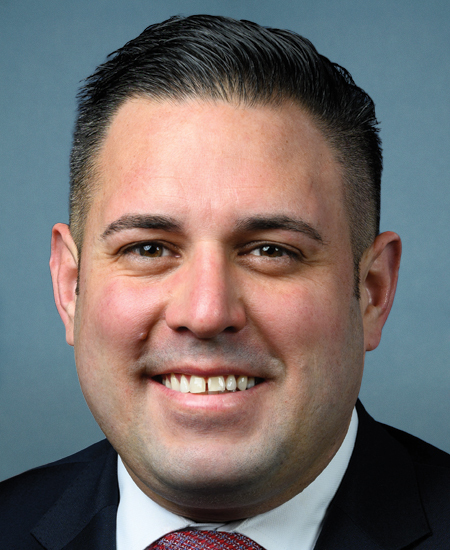
Rep. Anthony D’Esposito
Sponsored bills
Maddy summaryThis bill requires the CDC to collect and publicly share information about concussions and brain injuries affecting public safety officers (including police, firefighters, and emergency responders). It directs the CDC to update its website with this information and develop targeted resources for medical professionals, employers, mental health providers, and families. The CDC must also consult with these groups to ensure the information meets their needs and support the creation of model treatment guidelines through grants. The law aims to improve diagnosis, treatment, and prevention strategies for brain injuries in this workforce.
Maddy summaryHR 2785, the REEF Act, amends a 2020 law to change when certain payments from the Railroad Unemployment Insurance Account take effect. It retroactively applies changes to these payments as if they had been in place before the national emergency related to the COVID-19 pandemic ended. This directly affects railroad workers who receive unemployment benefits through this account, ensuring they receive payments under the revised timing. The bill's key change is making the effective date of these payment rules apply retroactively from before the pandemic emergency period.
Maddy summaryHR 2743 prohibits large financial institutions (over $100 billion in assets) from denying banking services to lawful businesses based on subjective political reasons, industry type, or reputational concerns. It requires these institutions to use objective, risk-based assessments for service decisions and provide written justifications for denials. The law applies to banks, credit unions, and payment networks, with civil penalties for violations including fines up to $10,000 per incident. It specifically ensures businesses operating legally under federal law receive fair access to financial services without discrimination. The bill mandates that denials be based on documented risk factors, not political bias or category-based exclusion.
Maddy summaryThis bill establishes a federal grant program to help states fund child care for the minor children of police officers during their irregular work schedules. It provides competitive grants to states, with 20% reserved for jurisdictions employing fewer than 200 officers, to support law enforcement agencies in creating or expanding child care services. States must match federal funds (10-33% over three years) and use grant money for startup costs, provider training, sick child care, extended hours, or facility construction. The program runs through 2028, requiring annual audits and two federal studies to assess its effectiveness.
Maddy summaryHR 2726, the Small Business Payment for Performance Act of 2023, requires U.S. government agencies to provide small businesses with interim partial payments when they unilaterally change construction contract terms. Specifically, it mandates that agencies pay at least 50% of the estimated additional costs requested by small businesses within the timeframe specified by the contract. The bill also requires small businesses to pass these interim payments to first-tier subcontractors and any lower-tier subcontractors who incurred increased costs due to the contract change. This law applies directly to small business concerns awarded federal construction contracts and takes effect by October 1, 2025, or the start of the next full fiscal year after enactment.
Maddy summaryThe Puppy Protection Act of 2023 sets new standards for businesses that sell dogs (dealers), directly affecting pet stores and breeders operating under the Animal Welfare Act. It requires specific housing with space allowances based on dog size (e.g., 12-30 square feet per dog), temperature control (45-85°F), clean food twice daily, and daily exercise or socialization with humans/dogs for at least 30 minutes. The bill also mandates annual veterinary exams including dental care, strict breeding limits (e.g., age restrictions, maximum 2 litters in 18 months), and efforts to place retired breeding dogs in homes instead of selling them to other breeders. Regulations must be finalized within 18 months of enactment.
Maddy summaryHJRES 27 is a congressional resolution seeking to block a federal rule that redefined which waterways fall under the Clean Water Act's protections. It targets a rule submitted by the Army Corps of Engineers, Department of Defense, and Environmental Protection Agency (EPA) on January 18, 2023, which aimed to revise the "Waters of the United States" definition. The resolution would formally disapprove this rule under a specific federal procedure (Chapter 8 of Title 5), preventing it from taking effect. This would directly affect how federal agencies regulate pollution and development near water bodies, including wetlands and smaller streams.
Maddy summaryHR 2665 delays Medicaid payment reductions for safety net hospitals by two years, changing the effective date from 2024 to 2026 under Section 1923(f)(7)(A) of the Social Security Act. This bill directly affects hospitals that serve high numbers of low-income and uninsured patients, providing them with additional time before facing reduced federal Medicaid payments. The key mechanism is a technical amendment to existing law, postponing an already scheduled payment adjustment without altering funding levels or eligibility. As a procedural bill, it does not create new programs or change hospital requirements.
This resolution expresses the sense of the House of Representatives that (1) Congress should conduct investigations to determine the impacts of offshore wind development, (2) Congress should use the findings of the investigations to develop legislation to mitigate potential negative environmental or economic impacts of such development, and (3) a moratorium should be placed on leasing and construction of offshore wind farms along the Atlantic coast until the investigations and their findings are presented to Congress and the public.