

Maddy summaryThe HALT Fentanyl Act expands the definition of fentanyl-related substances in the Controlled Substances Act to include many structurally similar compounds, making it easier to regulate new fentanyl analogs without individual listing. It defines these substances based on specific chemical modifications to fentanyl, with limited exceptions for substances already controlled or listed elsewhere. The bill also streamlines research procedures for schedule I substances by creating expedited registration processes and allowing multiple studies under one registration, while requiring the Attorney General to publish a list of substances meeting the new definition.
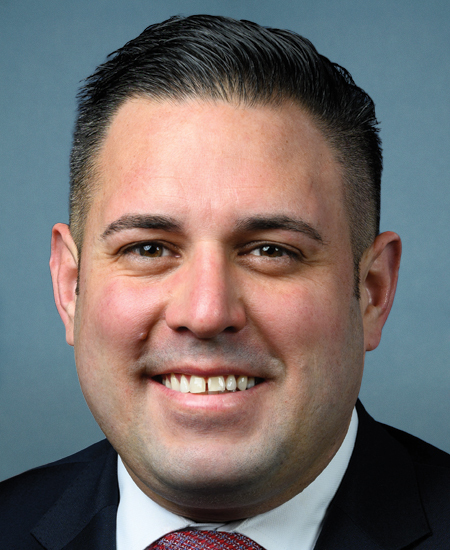
Rep. Anthony D’Esposito
Sponsored bills
Maddy summaryHR 3713 creates federal grants to fund comprehensive school-based mental health programs for students in grades K-12, including those in Bureau of Indian Education schools. It requires partnerships between schools and community mental health providers to deliver trauma-informed, culturally appropriate services addressing suicide risk, grief, violence, and trauma exposure. The bill authorizes $300 million annually (2024-2027) for these programs, mandating privacy protections under HIPAA and FERPA, and requires annual reporting on program effectiveness.
This resolution condemns all manifestations of expressions of racism and anti-Asian, Native Hawaiian, and Pacific Islander or ethnic intolerance. The resolution calls on federal law enforcement officials, working with state and local officials, to expeditiously and vigorously investigate all reports of hate crimes and threats against Asian Americans, Native Hawaiians, and Pacific Islanders in the United States; work to improve the reporting of such hate crimes; and hold the perpetrators of those crimes, incidents, or threats accountable and bring the perpetrators to justice.
Maddy summaryHR 3693, the Migrant Relocation Transparency Act, requires federal agencies (HHS for minors, DHS for adults) to consult with state governors and local leaders at least three business days before moving non-detained migrants. It mandates monthly reports to Congress, state governors, and the public detailing migrant numbers by family status, age, gender, country of origin, housing types, work permits, federal spending, and security screenings. The reports must be published online and include specific data on resettlement methods, educational resources, and whether relocations are temporary or permanent. This bill directly affects state/local officials and federal agencies managing migrant relocation, aiming to increase transparency in federal migration policies.
Maddy summaryHR 3711, the "Schools Not Shelters Act," prohibits elementary, secondary, and higher education institutions receiving federal funding from using their facilities to shelter certain immigrants - specifically those unlawfully present in the U.S. or in removal proceedings - unless the shelter is a dormitory where the individual pays standard room and board fees. The bill applies to all federally funded school facilities except dormitories (including dining facilities) where the immigrant covers costs like regular residents. It explicitly excludes short-term emergency shelters needed during natural disasters. The law does not change immigration status but restricts school facilities from serving as housing for targeted immigrants without payment.
Maddy summaryHR 3639, the After Hours Child Care Act, creates a new Child Care and Development Innovation Fund to improve access to child care for parents working nontraditional hours (such as evenings, nights, or weekends). The bill directly affects working parents with young children and eligible child care providers who serve these families. It authorizes competitive grants (ranging from $25,000 to $500,000) to providers or partnerships with businesses/community organizations to expand after-hours care programs, establish workplace child care, or improve existing facilities. Grantees must cover 25% of costs, and the Secretary of Health and Human Services must report biennially on program impact to Congress.
Maddy summaryThe Sailor Standard of Care Act of 2023 requires the Navy to improve mental health support for service members designated for "limited duty" (temporarily restricted from full duties due to medical needs). It mandates quarterly mental health screenings for these members, additional medical staff in units with over 15 such personnel, and a framework for centralized care coordination during their limited duty period. The bill also directs the Navy to study multiple suicides within units, report on TRICARE mental health provider credentialing timelines and reimbursement rates, and establish a dashboard tracking quality-of-life program usage. These provisions directly affect active-duty Navy members in limited duty status and aim to address systemic gaps in mental health care access and response.
Maddy summaryHR 3592, the Donut Dollies Congressional Gold Medal Act, would award a Congressional Gold Medal to the 627 women who served as "Donut Dollies" in the Red Cross Supplemental Recreation Activities Overseas (SRAO) program during the Vietnam War (1962-1973). The bill directs the Treasury to design and strike the medal, which would be presented by congressional leaders and then given to the Smithsonian Institution for public display and research. It also authorizes the sale of bronze duplicates at cost to cover production expenses. This commemorative measure recognizes the service of these women, who provided recreational support to U.S. troops across 28 locations in Vietnam while facing war-zone dangers.
Maddy summaryThis bill requires that AM radio receivers be included as standard equipment in all new motor vehicles (such as cars and trucks) sold in the United States, with a rule to be issued by the Department of Transportation within one year. The rule must ensure AM radio is easily accessible on the dashboard and allows manufacturers to use digital AM radio technology instead of traditional AM. During the one-year period between the bill's enactment and the rule's effective date, manufacturers must clearly label vehicles without AM radio. The bill also directs a study to evaluate whether an alternative system could deliver emergency alerts as reliably as AM radio across the country, especially during crises.
Maddy summaryThis bill establishes federal standards for labor-management cooperation between public safety employers (state and local governments) and public safety workers (law enforcement officers, firefighters, and emergency medical services personnel). It requires the Federal Labor Relations Authority to determine if states substantially provide rights like collective bargaining, union representation, and binding arbitration for these workers. States found lacking would need to follow federal bargaining procedures after a two-year transition period or following the next legislative session. The bill explicitly respects existing state laws that provide comparable or better rights to public safety workers. It also prohibits strikes or work stoppages that would disrupt emergency services.