

Maddy summaryHR 5798, the Protecting Our Nation’s Capital Emergency Act of 2023, aims to address rising crime in Washington, D.C., by reversing two specific policies affecting the city’s police force. It restores collective bargaining rights for police discipline (by removing a 2022 restriction) and reinstates a longer statute of limitations for claims against Metropolitan Police Department members (repealing a 2022 law that shortened it). These changes target D.C. law enforcement officers directly, seeking to improve recruitment and retention by ensuring fairer treatment. The bill focuses solely on modifying these two legal provisions, without introducing new funding or crime-fighting measures.
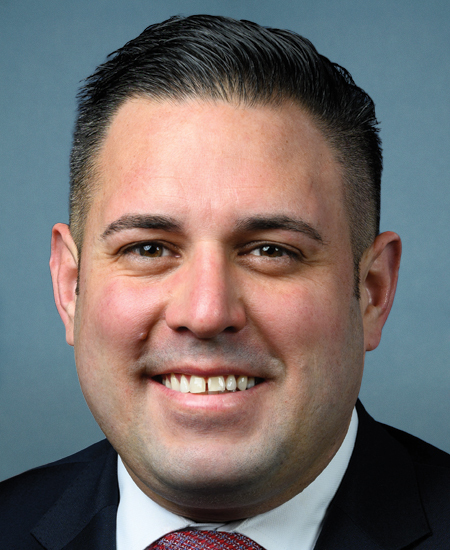
Rep. Anthony D’Esposito
Sponsored bills
Maddy summaryHR 5401, the 9/11 Memorial and Museum Act, provides a one-time federal grant of $5 million to $10 million to the National September 11 Memorial & Museum (operated by the World Trade Center Foundation). The grant funds the museum's operations, security, and maintenance, with specific requirements including free admission for veterans, first responders, and victims' families, dedicated weekly free public hours, and annual financial audits. The museum must also report annually to Congress on how the funds were used. This bill directly affects the museum's financial operations and access policies, not broader legislative changes.
Maddy summaryHR 3396, the Fire Department Repayment Act of 2023, requires the Secretaries of Agriculture, Interior, Homeland Security, and Defense to establish standard procedures for federal fire suppression cost share agreements within one year. It mandates reviewing existing agreements to align them with local cooperative fire protection agreements and conducting second-level reviews after wildfires, involving state and local fire organizations. The bill directly affects fire departments and agencies participating in these cost-sharing arrangements under the Reciprocal Fire Protection Act. Key changes include standardized procedures for agreement management and post-wildfire reviews to ensure cost-sharing compliance.
Maddy summaryThis bill creates a $10,000 annual tax credit for individuals who make non-directed living kidney donations (where donors don’t know the recipient’s identity) for five years (the donation year plus four subsequent years). It directly affects living kidney donors who qualify under these specific conditions, covering costs related to the donation process. The credit applies to kidneys removed after December 31, 2024, and expires December 31, 2034. The bill does not alter organ transplant recipient eligibility or medical procedures, focusing solely on financial incentives for donors.
Maddy summaryHR 9269, the IVF Access and Affordability Act, creates a non-refundable federal tax credit for individuals paying out-of-pocket costs for fertility treatments like IVF. It allows a $20,000 credit per person ($40,000 for joint filers) for "assisted reproductive technology" expenses, subject to income limits ($200,000 AGI for singles, $400,000 for joint filers). The credit cannot be claimed for expenses covered by insurance or previously deducted, and unused credit can be carried forward for up to five years. This directly affects individuals or families undergoing fertility treatments who pay costs not covered by insurance and meet income thresholds.
Maddy summaryThe PROVE IT Act of 2024 directs the U.S. Energy Secretary to study and publicly report on the greenhouse gas emissions intensity of key U.S. manufactured products (like steel, aluminum, lithium batteries, and critical minerals) compared to those produced in "covered countries" (including the EU, China, and major trading partners). It requires a transparent methodology for calculating emissions data, identifies gaps in existing data, and establishes a public online database showing U.S. emissions advantages for these products. The bill also mandates an annual report on foreign countries using forced labor or human rights abuses in the production of critical minerals or rare earths. Importantly, it clarifies the study does not create new taxes, fees, or mandatory reporting requirements.
Maddy summaryThe University Accountability Act imposes penalties on tax-exempt universities found in federal court to have violated Title VI of the Civil Rights Act of 1964, requiring them to pay $100,000 or 5% of their administrative compensation per violation. It mandates the IRS to review the tax-exempt status of institutions with more than two such violations and requires these institutions to report civil rights violations on their tax returns. If a violation determination is overturned, the penalty must be refunded. The bill applies to most public and private universities that are tax-exempt under federal law, directly affecting their financial obligations and reporting requirements.
Maddy summaryThis bill requires Medicare Advantage plans to implement electronic prior authorization systems by 2027 and publish detailed data on their approval and denial rates for medical services by 2026. It directly affects Medicare Advantage plans (private insurers offering Medicare coverage) and their enrollees (seniors 65+), mandating transparency about prior authorization decisions, processing times, and appeal outcomes. Key provisions include requiring plans to report annual statistics on request approvals/denials, average processing times, and use of technology, with this data published publicly by the Centers for Medicare & Medicaid Services. The bill also sets timelines for plan responses to prior authorization requests and mandates reports to Congress on implementation and impacts.
Maddy summaryThe HEROS Act (HR 8487) modifies Social Security rules to protect benefits for families of emergency responders who died in the line of duty. It exempts certain monthly Social Security benefits from being reduced by government pensions for survivors of eligible officers. Specifically, it applies to families of federal/state/local law enforcement officers, firefighters (as defined by labor laws), and correctional officers whose deaths occurred while performing official duties. This change takes effect for benefits paid starting from the law's enactment date, ensuring these survivors receive full Social Security payments without offset.
Maddy summaryThis bill would impose increasing tariffs on Chinese-made drones (starting at 30% and rising to 45% over four years) to reduce reliance on Chinese drone manufacturers. It establishes a fund using tariff revenue to provide grants for first responders, farmers, ranchers, and critical infrastructure providers to purchase secure drones not made in China or by Chinese companies. The legislation also requires documentation for drones entering the US to verify they don't contain components made in China. The bill directly affects those who currently rely on Chinese-made drones for critical operations, as over 90% of drones used by first responders are made in China. Its goal is to strengthen national security by reducing dependence on Chinese drone technology for essential services.