

Maddy summaryHRES 1223 designates October 10, 2024, as "American Girls in Sports Day" through a symbolic resolution. It recognizes the impact of women in sports history, emphasizes the importance of Title IX protections for female athletes, and urges sports organizations to safeguard opportunities for biological girls in competition. The resolution does not create new laws or funding but serves as a formal acknowledgment of existing policy goals. It directly affects the symbolic recognition of women's sports participation, with no concrete policy changes or affected groups beyond this designation.
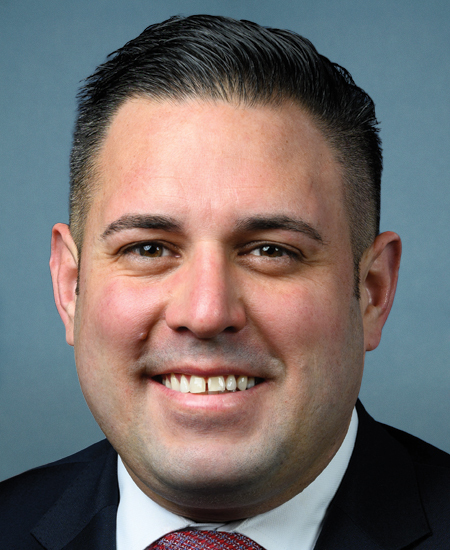
Rep. Anthony D’Esposito
Sponsored bills
Maddy summaryThis bill authorizes the placement of a memorial honoring women who contributed to World War II efforts on the National Mall or adjacent federal land in Washington, D.C. It specifically removes a location restriction (under 40 U.S.C. § 8908) to allow the memorial - previously authorized by the 2023 Consolidated Appropriations Act - to be situated within Area I of the National Mall or the National Mall Reserve. The memorial would commemorate over 18 million women who worked as pilots, engineers, mechanics, and codebreakers during the war. The bill directly affects the Women Who Worked on the Home Front Foundation, which is tasked with establishing the memorial.
Maddy summaryHCONRES 89 authorizes the use of Emancipation Hall in the Capitol Visitor Center for a Holocaust remembrance ceremony on May 7, 2024, as part of official observances honoring victims. The resolution specifies that preparations for the event must follow conditions set by the Architect of the Capitol. This procedural bill directly affects Capitol Visitor Center operations and the event organizers hosting the commemoration. It does not create new laws or alter policies, but formally permits space use for this specific ceremonial purpose.
Maddy summaryHR 8231, the James Earl Jones Congressional Gold Medal Act, authorizes a Congressional Gold Medal to be awarded to actor James Earl Jones in recognition of his distinguished career in theater and film, and his role in advancing inclusion and equal opportunities for people of all backgrounds in the entertainment industry. The Treasury will strike the medal with an image and inscription of Jones, and may produce and sell bronze duplicates to cover costs, with proceeds deposited into the U.S. Mint's public enterprise fund. This bill serves as a ceremonial honor with no new legal requirements or policy changes.
Maddy summaryHR 8224, the "No Subsidies for Wealthy Universities Act," limits federal funding for administrative costs at research universities based on their endowment size. It prohibits institutions with endowments over $5 billion from using federal research funds for indirect costs (like administrative overhead), caps indirect costs at 8% for universities with endowments between $2 billion and $5 billion, and sets a 15% cap for others. Universities must annually report endowment values to the Education Statistics Commissioner, and the government will track how indirect costs are spent on administrative staff and diversity initiatives. The bill takes effect one year after enactment and applies to new federal research awards.
Maddy summaryThis bill directs the Department of Education to use the International Holocaust Remembrance Alliance (IHRA) definition of antisemitism when enforcing Title VI of the Civil Rights Act in federal education programs. It clarifies that discrimination against Jewish individuals based on actual or perceived shared ancestry or ethnic characteristics may violate Title VI protections, requiring agencies to consider antisemitism intent during investigations. The law affects schools and universities receiving federal funds by guiding how they handle discrimination complaints related to antisemitism. It does not create new legal standards or expand the Department of Education's authority, as explicitly stated in the bill.
Maddy summaryHRES 1185 designates the month of May as "National First Responder Month" to honor police officers, firefighters, emergency medical personnel, and other first responders. The resolution expresses congressional support for this designation and encourages the public to recognize first responders' service through celebrations, thanks, and tributes. It does not create new laws, funding, or requirements; it is a symbolic gesture acknowledging their work. The bill directly affects all first responders across the U.S., including those serving in rural, tribal, and urban communities.
Maddy summaryHRES 1170 prohibits U.S. House Members, Delegates, and Resident Commissioners from bringing or displaying any foreign nation's flag on the House floor during sessions, except for lapel pins or flags shown during speeches under House rules. The resolution applies to all flag sizes and is enforced by the House Sergeant-at-Arms. It directly affects House members' conduct during floor proceedings but allows limited exceptions for personal accessories and official speeches. This is a procedural rule change, not a substantive policy.
Maddy summaryHRES 1168 is a symbolic resolution designating the week of April 21-27, 2024, as "National Crime Victims Rights Week." It supports existing efforts to recognize crime victims and survivors, emphasizing their right to dignity, support, and inclusion in justice systems. The resolution highlights the 2024 theme - "How would you help? Options, services, and hope for crime survivors" - to encourage victim advocacy and policy engagement. It does not create new programs but reaffirms commitment to funding existing victim assistance through laws like the Victims of Crime Act (VOCA) and Violence Against Women Act (VAWA).
Maddy summaryHR 8120, the "Motorist Tax Abuse Act," prohibits the federal government from implementing congestion pricing in New York City's Central Business District. It amends a 1991 transportation law to specifically block the Secretary of Transportation from establishing or maintaining a tolling program for downtown Manhattan under the existing value pricing pilot program. The bill directly affects New York City drivers who would have faced tolls in the central business district and the federal agency managing transportation programs. This is a procedural change that prevents a specific tolling initiative from moving forward, without altering broader tax policies.