

Maddy summaryHR 8941, the "No Tax on Tips Act," creates a new tax deduction for workers who receive cash tips. It allows employees to deduct the full amount of cash tips they report to their employer (via statements required under tax law) from their taxable income, reducing their overall tax burden. This deduction applies to both itemizing and non-itemizing taxpayers and is exempt from standard limitations on miscellaneous deductions. The provision takes effect for taxable years beginning after December 31, 2024, directly benefiting service industry workers like servers and bartenders who rely on cash tips.
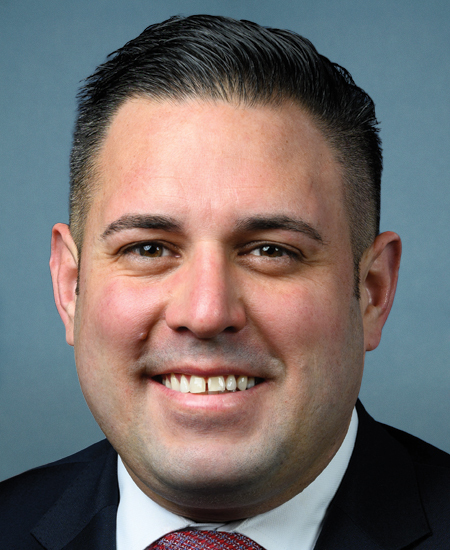
Rep. Anthony D’Esposito
Sponsored bills
Maddy summaryHR 5567, the CLASS Act, prohibits public elementary and secondary schools receiving federal education funds from accepting money or entering contracts with the Chinese government, Chinese Communist Party, or entities acting on their behalf. Schools must disclose any foreign funding sources within 30 days, including the foreign entity’s name, country, amount received, and any terms or conditions. This applies to all schools receiving federal financial assistance under applicable programs, as defined by existing education laws. The bill aims to restrict foreign influence in U.S. school systems by requiring transparency about foreign funding. It does not alter school curricula or address content, only funding sources and disclosure requirements.
Maddy summaryHR 8903, the UPRISERS Act, would revoke the student visas of international students on F, J, or M visas who are convicted of assaulting a police officer or participating in riot-related violence. It specifically targets offenses like inciting riots, organizing riots, committing violence during riots, or aiding others in such activities. The bill amends immigration law to make these convictions grounds for visa revocation and deportation. This policy directly affects international students holding these specific visa types who face criminal charges for the listed violent acts.
Maddy summaryHR 8859, the Deafblind DATA Act, requires the Census Bureau to create and publish a new annual table starting in 2026 showing the number of people in the U.S. who reported both hearing and vision loss in the American Community Survey. This table will display data by state, including sex, race, age, and economic factors like employment and income, without revealing personal details. The bill directly addresses the lack of a centralized count for deafblind individuals, who currently aren't accurately represented in census data. By cross-referencing existing survey responses, the Act aims to provide a clearer national picture to better understand and serve this population's needs.
Maddy summaryThis bill requires the Secretary of Commerce to standardize and publish geospatial data about public ocean and waterway access rules on a public website within 4 years. It mandates detailed information on where fishing is restricted, waterway closures, speed limits, allowed vessel types (like motorboats or kayaks), and fishing method rules. The data will include geographic boundaries of protected areas, seasonal closures, and navigation details like depth charts. This directly affects recreational users (boaters, anglers) and commercial operators who need clear, up-to-date access information for Federal waterways and fishing areas. The bill does not change existing fishing regulations but makes compliance information more accessible.
Maddy summaryHR 6841 creates a new Coastal and Estuarine Resilience and Restoration Program under the Coastal Zone Management Act, authorizing the Secretary of Commerce to protect and restore coastal and estuarine areas. The program prioritizes lands with ecological, recreational, or community value that face development threats or climate impacts, with special focus on low-income communities and climate mitigation. It requires non-governmental organizations applying for grants to demonstrate public access or ecological protection, and includes $47 million annually (2024-2028) for these efforts. This directly affects coastal states, local communities, and conservation groups managing vulnerable coastal lands.
Maddy summaryThis bill (HR 8827) renames a specific U.S. Postal Service facility in Rochester, New York, at 216 Cumberland Street as the "Minister Franklin Florence Memorial Post Office." It directly affects USPS records, maps, and official documents by updating all references to this location to the new name. The bill contains no policy changes or funding provisions; it solely serves to honor Minister Franklin Florence through a ceremonial naming. This is a standard procedural bill with no impact on postal services or operations.
Maddy summaryHR 8821, the HOPE with Fertility Services Act, requires group health plans and health insurance issuers that cover obstetrical services to provide comprehensive coverage for infertility treatments and fertility preservation when medical treatments (like cancer therapy) cause or risk iatrogenic infertility. It defines infertility broadly and mandates coverage for procedures like IVF, egg freezing, and ovulation induction, while allowing standard cost-sharing but prohibiting insurers from discouraging or penalizing these services. Insurers must annually submit analyses of their coverage rules for these treatments to the Secretary of Labor for 5 years after enactment, with potential civil penalties for noncompliance. The law applies to all applicable plans starting January 1, 2026.
Maddy summaryHR 5012 (SHINE for Autumn Act of 2023) authorizes federal funding to improve stillbirth research and data collection. It provides $5 million annually for states to collect standardized stillbirth data (including risk factors) while protecting privacy, $1 million annually for developing public educational materials and data collection guidelines, and $3 million annually for medical fellowships training pathologists in perinatal autopsy and stillbirth research. The bill directly affects state health departments, medical professionals (like obstetricians and pathologists), and families who experience stillbirth by improving data quality for future research. It requires federal reports on guidelines and program effectiveness within five years but does not provide direct medical care or financial assistance to families.
Maddy summaryHR 537 authorizes a Congressional Gold Medal to honor 60 diplomats who saved Jewish lives during the Holocaust by issuing visas and passports against their governments' orders, risking expulsion and personal danger. The medal will be presented to the next of kin of these diplomats, alongside representatives from their home countries, and permanently displayed at the United States Holocaust Memorial Museum. The bill also permits the sale of bronze duplicates to cover production costs, with proceeds going to the U.S. Mint. This legislation recognizes the diplomats' humanitarian actions without creating new government programs or altering existing laws.