

Maddy summaryHR 5636, the "Protect Children’s Innocence Act," prohibits federal criminal penalties for performing gender-affirming medical care on minors under specific circumstances. It defines prohibited care as surgeries (like hysterectomy or mastectomy), puberty blockers, and hormone therapies at supraphysiologic doses, with exceptions for medical emergencies, intersex conditions, or life-threatening illnesses. The law only applies when the care involves interstate commerce (e.g., payments, communications, or travel across state lines). Minors receiving such care cannot be prosecuted, but they may sue providers for civil damages. The bill directly affects minors under 18, healthcare providers, and families seeking gender-affirming medical treatment.
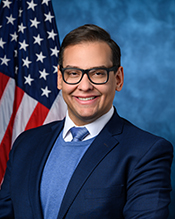
Rep. George Santos
Sponsored bills
Maddy summaryHR 5529 requires the Secretary of Commerce to lead a study within 180 days of enactment, consulting NASA, FEMA, and the Defense Department, to assess the risk of space debris impacting metropolitan areas with over 1 million residents within the next 25 years. The study must examine the probability of such impacts, prediction capabilities, warning lead times, evacuation feasibility, federal response coordination, and potential defensive measures. The findings must be reported to six specific congressional committees within 28 months of the bill's enactment. This bill does not create new regulations but mandates a risk assessment to inform future preparedness planning.
Maddy summaryHR 5455, the Collision Avoidance Systems Act of 2023, allows automakers to install pulsating light systems as rear-end collision avoidance technology on new vehicles. The bill requires the Secretary of Transportation to issue new regulations within 180 days updating Federal Safety Standard 108 to include performance-based rules for these systems. Specifically, it defines a "pulsating light system" as a high-mounted brake light that flashes rapidly (up to 4 times for no more than 1.2 seconds) before switching to steady light, with a 5-second lockout period after braking stops. This directly affects vehicle manufacturers who must comply with the updated safety standards for brake lights.
Maddy summaryThe Life.Gov Act (HR 5406) requires the U.S. Department of Health and Human Services to create a federal website called life.gov within one year of enactment. The website will provide pregnant and postpartum women with locally tailored resources - such as health services, financial assistance, and mental health support - via zip code searches, multilingual access, and user feedback tools. States must submit resource recommendations meeting strict criteria (e.g., no abortion providers, 3+ years of service), and the website cannot list "prohibited entities" (defined as abortion providers or supporters). The Secretary must report to Congress within 180 days on website usage, user feedback, and gaps in resources, using existing HHS funding.
Maddy summaryThe Freedom to Breathe Act (HR 5368) prohibits the use of federal funds to enforce mask mandates for passengers traveling on air carriers, public transit, or in elementary, secondary, and higher education institutions from enactment until December 31, 2024. It bans federal agencies from requiring masks in these settings and prevents transportation providers or schools from denying service to individuals who refuse to wear masks. The law also overrides conflicting state or local rules during the applicable period. This applies specifically to settings receiving federal funding, such as public schools and federally supported transit systems.
Maddy summaryHR 3152, the "Fight CRIME Act," aims to maintain international restrictions on Iran's missile-related activities by requiring diplomatic efforts to extend these restrictions before they expire in October 2023. The bill mandates annual reports detailing U.S. diplomatic strategies, potential impacts of expiration, and measures to deter missile technology transfers to Iran. It establishes sanctions against foreign individuals or entities that knowingly support Iran's missile or drone programs, including asset freezes and visa restrictions. These sanctions apply regardless of whether UN restrictions remain in effect after their expiration, directly affecting foreign entities involved in these activities.
Maddy summaryHR 5288, the Securing Women’s Independence For Today Act of 2023 (SWIFT Act), requires public high schools and colleges to implement health education curricula teaching prevention of rape, sexual assault, and harassment. It mandates comprehensive training for healthcare workers and first responders on supporting victims of sexual violence and domestic abuse, including 13 specific modules covering evidence handling, empathy, and legal procedures. Covered entities (like hospitals and first responder agencies) must ensure all relevant staff complete this training within three months of hire and every two years, with failure resulting in loss of federal funding or $50,000 monthly fines per non-compliant employee. The bill also prohibits U.S. foreign aid to countries with gender-based legal discrimination for five years, redirecting unspent funds to reduce the national debt.
Maddy summaryThis bill redirects unspent funds from the IRS and COVID-19 relief programs to water infrastructure projects. It rescinds unused IRS funds from 2021 and unspent pandemic relief funds, then authorizes $1.1 billion for Clean Water State Revolving Funds, $665 million for Drinking Water State Revolving Funds, $1.9 billion for Army Corps water projects, and $1.16 billion for Bureau of Reclamation projects - all for fiscal years 2024-2026. At least $200 million must go to water projects in the Northeast U.S., including Long Island and New York City. The bill focuses on modernizing water systems, treatment, and infrastructure without creating new taxes or fees.
Maddy summaryThis bill requires the Comptroller General to submit a comprehensive report to Congress within one year of enactment, detailing the economic and social impacts of the fentanyl crisis. The report must cover effects on labor markets (by race/gender), industry sectors, federal tax revenue, healthcare programs (Medicare/Medicaid), housing instability, and state finances. It also mandates data on federally assisted rental housing access for people with drug convictions, underage fentanyl overdose deaths, and federal actions to support states. The bill does not create new policies or funding but directs data collection for congressional review.
Maddy summaryThe SAVES Act establishes a VA grant program to provide service dogs to veterans with specific disabilities. Nonprofit organizations must be accredited (e.g., by Assistance Dogs International) and apply competitively to receive grants for training service dogs, teaching veterans to use them, and offering aftercare. The program targets veterans enrolled in VA care with covered disabilities like PTSD, mobility issues, blindness, or military sexual trauma. It requires grantees to ensure equal access for women veterans and evaluate program effectiveness, with $10 million authorized annually for fiscal years 2024-2028.