

Maddy summaryThis bill reinstates a pre-American Rescue Plan Act (ARP) tax reporting rule for gig economy platforms. It requires third-party payment platforms (like Uber or DoorDash) to report transactions to the IRS only if a gig worker earns over $20,000 in total or completes more than 200 transactions in a year. This directly affects gig workers whose income falls below these thresholds, exempting them from the reporting requirement. The provision effectively reverses a change made by the ARP, reducing administrative burden for both platforms and lower-earning gig workers. The bill amends IRS Code Section 6050W to restore these specific de minimis payment thresholds.
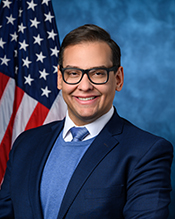
Rep. George Santos
Sponsored bills
Maddy summaryThe Working Dog Commemorative Coin Act (HR 807) directs the U.S. Treasury to mint three types of commemorative coins honoring working dogs' service: $5 gold coins, $1 silver coins, and half-dollar coins with specific weight and composition requirements. Each coin will carry a surcharge ($35 for $5 coins, $10 for $1 coins, $5 for half-dollars) that will be paid directly to America's VetDogs to support their programs providing service dogs for veterans, the disabled, and others. The coins will be issued in 2027 with designs reflecting working dogs' roles in military, detection, therapy, and assistance work. The legislation specifies that all surcharge revenue must fund America's VetDogs' operations without creating new government programs. This is a commemorative measure focused on honoring working dogs' contributions through coin sales, with all surcharge funds going to a specific nonprofit organization.
Maddy summaryThis bill reauthorizes federal funding for graduate medical education (GME) programs at children's hospitals through fiscal year 2028. It prohibits payments to any children's hospital that provided gender-affirming care to minors during the previous fiscal year (with a special rule for 2024 payments covering July-September 2023). The bill defines "gender-affirming care" as specific medical treatments like surgeries or puberty-blocking medications for gender transition, but excludes care for certain medical conditions or gender dysphoria treatment not classified as such. This directly affects hospitals receiving GME funding that serve minors, potentially impacting their federal support if they provided the specified care. The policy change modifies existing funding rules without altering broader healthcare access for minors.
Maddy summaryHR 825, the BOLIVAR Act, prohibits U.S. federal agencies from entering into contracts for goods or services with entities knowingly conducting significant business dealings with Venezuela's government under Nicolás Maduro, which the U.S. does not recognize as legitimate. The law directly affects U.S. government contractors and businesses operating in Venezuela, banning contracts with those engaging in commerce with the Maduro regime. Key exceptions include contracts for humanitarian aid, disaster relief, national security needs, U.S. diplomatic operations in Venezuela, and contracts with international organizations. The prohibition applies to contracts entered into within three years of the bill's enactment, with the Secretary of State required to notify Congress about exceptions used.
Maddy summaryThe Sunshine Protection Act of 2023 would end the practice of changing clocks twice a year for daylight saving time (DST) by making DST permanent nationwide, unless a state chooses to remain on standard time. It repeals the requirement to switch clocks back to standard time in the fall, directly affecting all U.S. states and territories that currently observe DST. The bill allows states that previously opted out of DST under the Uniform Time Act (like Arizona and Hawaii) to maintain their current time zone choices without further action. Key provisions include adjusting time zone offset language in existing law and granting states the authority to select either permanent DST or standard time based on their current arrangements. This change would eliminate seasonal time changes for most Americans, though states could still choose to stay on standard time if they prefer.
Maddy summaryHR 736, the PROTECT Kids Act, requires elementary and middle schools receiving federal funding to obtain parental consent before changing a minor student's gender markers, pronouns, or preferred name on school forms, or allowing changes to sex-based accommodations like bathrooms or locker rooms. The bill directly affects public schools that receive federal education funds, mandating parental involvement in these specific educational decisions. Key provisions establish this consent requirement as a condition for continued federal funding. The legislation aims to ensure parents are informed about their child's educational and care-related accommodations, without specifying outcomes or commenting on the cited school practices.
Maddy summaryThis bill reauthorizes the Debbie Smith DNA Backlog Grant Program, which provides federal funding to state and local law enforcement agencies to reduce backlogs in processing DNA evidence from crime scenes. It extends the program's funding period from fiscal years 2024 through 2029 (previously ending in 2024). The bill also updates audit requirements to ensure grant funds are used properly through 2029. This directly affects law enforcement agencies that receive these grants to accelerate DNA analysis for criminal investigations.
Maddy summaryHR 4132 would require the U.S. to impose sanctions on Chinese officials responsible for forced organ harvesting from Falun Gong practitioners, including blocking their property and denying visas. It mandates a report on China's organ transplant system within one year, assessing organ sources, procurement timelines, and whether persecution of Falun Gong constitutes an atrocity. The bill directs the U.S. to avoid all cooperation with China's organ transplantation system while the Chinese Communist Party remains in power. It cites findings of systemic persecution and alleged organ harvesting as justification for these policy measures.
Maddy summaryHR 4205, the "Drain the Intelligence Community Swamp Act of 2023," requires the immediate revocation of security clearances for 51 specific individuals who signed a 2020 public statement about Hunter Biden's laptop. The bill mandates that the Secretary of Defense and Attorney General investigate these individuals' roles in the Hunter Biden laptop matter and their connection to the Biden campaign. It directly affects only the named former intelligence officials, including former directors Jim Clapper and John Brennan, by stripping their security clearances within 24 hours of the bill's enactment. The bill is procedural, focusing solely on revoking clearances for these named individuals based on their past statement, not on broader intelligence community reforms.
Maddy summaryHR 537 authorizes a Congressional Gold Medal to honor 60 diplomats who saved Jewish lives during the Holocaust by issuing visas and passports against their governments' orders, risking expulsion and personal danger. The medal will be presented to the next of kin of these diplomats, alongside representatives from their home countries, and permanently displayed at the United States Holocaust Memorial Museum. The bill also permits the sale of bronze duplicates to cover production costs, with proceeds going to the U.S. Mint. This legislation recognizes the diplomats' humanitarian actions without creating new government programs or altering existing laws.