

Agricultural Intelligence Measures Act or the AIM Act This bill establishes the Office of Intelligence in the Department of Agriculture (USDA) under the National Intelligence Program. The office must leverage the capabilities of the intelligence community and the intelligence-related research of the National Laboratories to ensure that USDA is fully informed of threats by foreign actors to U.S. agriculture; focus on understanding foreign efforts to steal U.S. agriculture knowledge and technology, and develop or implement biological warfare attacks, cyber or clandestine operations, or other means of sabotaging and disrupting U.S. agriculture; prepare, conduct, and facilitate intelligence briefings for USDA; operate as the liaison between USDA and the intelligence community, with the authority to request intelligence collection and analysis on matters related to U.S. agriculture; collaborate with the intelligence community to downgrade intelligence assessments for broader dissemination within USDA; and facilitate the sharing of information on foreign activities related to agriculture with the intelligence community.
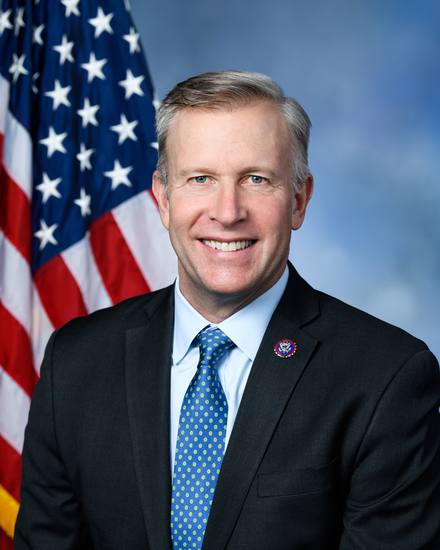
Rep. Chris Jacobs
Sponsored bills
Dismemberment Abortion Ban Act of 2021 This bill restricts the performance of dismemberment abortions. It defines the term dismemberment abortion . Specifically, the bill prohibits a physician from knowingly performing a dismemberment abortion. It provides an exception for a dismemberment abortion that is necessary to save the life of a mother whose life is endangered by a physical disorder, illness, or condition. The bill establishes criminal penalties—a fine, a prison term of up to two years, or both—for a physician who performs a prohibited dismemberment abortion. It also authorizes civil remedies for a woman or parent of a minor who undergoes a dismemberment abortion. A woman who undergoes a dismemberment abortion may not be prosecuted or held civilly liable.
David Dorn Act of 2021 This bill increases criminal penalties for rioting and related offenses (e.g., inciting a riot). Specifically, the bill increases the maximum prison term from 5 to 10 years. Additionally, if a fine is imposed for an offense, the bill sets a minimum fine amount of $1,000.
Patrick Underwood Federal Law Enforcement Protection Act of 2021 This bill revises the federal criminal statute that prohibits assaulting, resisting, or impeding certain federal officers or employees. Among other changes, the bill increases the applicable penalties for such offenses.
This joint resolution proposes a constitutional amendment limiting Representatives to three terms and Senators to two terms. Terms beginning before the ratification of this amendment do not count towards these term limits.
This joint resolution proposes an amendment to the Constitution to require that the Supreme Court consist of nine Justices.
Nutrition Counseling Aiding Recovery for Eating Disorders Act of 2021 or the Nutrition CARE Act of 2021 This bill provides for Medicare coverage of medical nutrition therapy services for individuals with eating disorders. Such services must be furnished by a registered dietitian or nutrition professional pursuant to a referral from a physician, psychologist, or other authorized mental health professional.
Qualified Immunity Act of 2021 This bill codifies the defense of qualified immunity for law enforcement officers in any case under provisions regarding civil actions for deprivation of rights under color of law. Specifically, a law enforcement officer subject to such an action in his or her individual capacity shall not be found liable if the officer establishes that the right, privilege, or immunity secured by the Constitution or federal law was not clearly established at the time of the deprivation, or that at this time, the state of the law was not sufficiently clear that every reasonable law enforcement officer would have understood that the conduct alleged constituted a violation of the Constitution or federal law; or a court of competent jurisdiction had issued a final decision on the merits holding, without reversal, vacatur, or preemption, that the specific conduct alleged to be unlawful was consistent with the Constitution and federal laws. A law enforcement agency or unit of local government that employed a law enforcement officer subject to such an action shall not be liable if the officer is found not liable and to have been acting within the scope of his or her employment.
This bill revises criminal provisions related to the interstate transportation of firearms and ammunition. An individual may transport a firearm between two places (e.g., states) where it is legal to possess, carry, or transport the firearm. During transport, the firearm must be unloaded and secured or securely stored. Additionally, an individual may transport ammunition, or a detachable magazine or feeding device, between two places where it is legal to possess, carry, or transport the ammunition, magazine, or feeding device. During transport, the ammunition, magazine, or feeding device must not be loaded into a firearm and must be securely stored. The term transport includes staying in temporary lodging overnight; stopping for food, fuel, vehicle maintenance, an emergency, or medical treatment; and any other activities that are incidental to the transportation. It does not include transportation related to certain crimes. The bill prohibits the arrest or detention of an individual for a state or local firearm or ammunition violation unless there is probable cause to believe the individual failed to comply with the provisions of this bill.
No Social Media Accounts for Terrorists or State Sponsors of Terrorism Act of 2021 This bill bars access to certain social media platforms by individuals designated as terrorists or senior officials of a government that is a state sponsor of terrorism. Specifically, the bill requires the President to prohibit providers of social media platforms (i.e., platforms that allow users to generate and share content and that have over 100,000 active users) from making such platforms available to barred individuals or officials. The bill does, however, allow officials to use these platforms solely for legitimate emergency alert purposes. Violations of this prohibition are subject to civil and criminal penalties. In addition, the President may waive the prohibition in the interests of U.S. national security. The Department of the Treasury must report to Congress on (1) the status and impact of the prohibitions of this bill, and (2) efforts to facilitate the free flow of information and access to communications technologies by civil society and democratic activists in Iran, Syria, North Korea, Cuba, and other countries controlled by authoritarian regimes.