

Maddy summaryHR 2402, the No Hungry Kids in Schools Act, creates a new option for states to implement a statewide program under the National School Lunch Act starting in 2025. States would cover costs from non-federal funds to allow all schools in the state to receive full federal reimbursement for meals served, eliminating income-based eligibility thresholds. Key provisions include setting the eligibility threshold to zero and calculating student eligibility statewide instead of by individual school district. This directly affects state education agencies (which must fund the program) and schools (which gain simplified access to full meal reimbursement), benefiting students in qualifying schools.
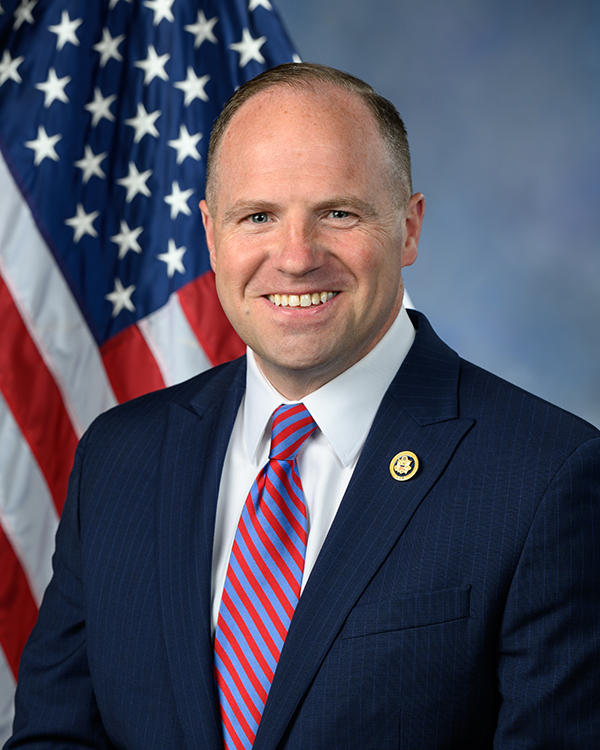
Rep. Timothy M. Kennedy
Sponsored bills
Maddy summaryHR 2398, the Rural Veterinary Workforce Act, amends federal tax law to exempt certain student loan repayment or forgiveness assistance from income tax for veterinarians working in rural areas. It specifically expands existing tax exclusions to include programs under the National Agricultural Research, Extension, and Teaching Policy Act (7 U.S.C. 3151a) and similar state-level programs designed to increase rural veterinary access. This change directly affects veterinarians participating in qualifying loan repayment or forgiveness programs in states prioritizing rural veterinary services. The policy change modifies IRS tax treatment to reduce the financial burden on veterinarians serving underserved rural communities.
Maddy summaryThe Providing Veterans Essential Medications Act requires the Department of Veterans Affairs to reimburse State homes or provide medications directly for certain high-cost drugs used by veterans in State-run nursing homes. A medication is defined as high-cost if its price (including a 3% fee) exceeds 8.5% of the VA's monthly payment for the veteran's care at that home. This applies specifically to State homes that provide such medications to veterans under VA contracts. The bill ensures veterans receive essential medications without financial burden on the State homes, using clear cost thresholds to determine eligibility.
Maddy summaryThis bill provides housing loans and education assistance to Black World War II veterans who were denied GI Bill benefits due to racial discrimination, or to their surviving spouses, children, or direct descendants. To qualify, applicants must certify they were denied benefits on racial grounds under the original 1944 GI Bill and apply within five years of the law's enactment. The Department of Veterans Affairs must implement these provisions within 90 days and report to Congress on participation and program costs. It specifically addresses documented historical discrimination where Black veterans were steered toward vocational training instead of college, with only 6% earning degrees compared to 19% of White veterans.
Maddy summaryHR 2381, the SCREENS for Cancer Act of 2025, reauthorizes and updates the National Breast and Cervical Cancer Early Detection Program (NBCCEDP). It directly affects low-income, uninsured, or underinsured women across all 50 states, territories, and tribal communities by expanding access to breast and cervical cancer screenings, diagnostic services, and patient navigation support. Key provisions include updating program language to emphasize prevention alongside detection and control, adding specific strategies to reduce disparities, and appropriating $235 million annually for fiscal years 2026-2030. The bill also requires a GAO study by 2027 to assess program eligibility, service trends, and barriers to screening access.
Maddy summaryThe Safer Skies Act of 2025 requires specific smaller airlines to adopt enhanced security screening protocols currently used by larger carriers. It mandates that "covered air carrier operations" - defined as airlines operating under certain FAA rules, offering individual seats with public schedules, using planes with more than nine passenger seats, and not using TSA checkpoints - to follow the Aircraft Operator Standard Security Program (49 CFR §1544.101(a)) within 360 days of the bill's enactment. The Transportation Security Administration must revise its rules to enforce this requirement. This directly affects regional and private charter airlines that currently skip TSA checkpoint screening but serve the public with scheduled passenger flights.
Maddy summaryHR 2360 permanently exempts school bus drivers from the engine compartment inspection requirement during their commercial driver's license skills test, which was previously granted as a temporary measure in a 2024 federal notice. This affects school bus drivers in states that choose to participate in the exemption program. For six years after the bill's enactment, participating states must submit annual reports to the Transportation Secretary detailing how many drivers use this exemption. The exemption maintains the specific conditions established in the 2024 notice.
Maddy summaryThis bill would require federal firearms licensees to prohibit sales of specific high-capacity rifles and shotguns to people under 21. It targets semiautomatic centerfire rifles and shotguns capable of holding more than 5 rounds in their magazines, raising the age limit from 18 to 21 for these weapons. Exceptions apply for active military members and certain government employees authorized to carry firearms. The law directly affects gun retailers and individuals under 21 seeking to purchase these specific firearms. It modifies existing federal gun sale rules without changing age requirements for other firearms.
Maddy summaryHR 2138, the Veterans’ Compensation Cost-of-Living Adjustment Act of 2025, requires the Department of Veterans Affairs to increase disability compensation and survivor benefits for veterans and their families on December 1, 2025. It directly affects veterans receiving disability compensation (including wartime rates), dependents, and survivors (spouses and children) who currently qualify for benefits under specific provisions of Title 38, U.S. Code. The bill mandates that these payments increase by the same percentage as the annual cost-of-living adjustment (COLA) for Social Security benefits effective December 2025. This ensures veterans' benefits rise with inflation, aligning with Social Security’s automatic adjustment mechanism.
Maddy summaryHCONRES 21 is a symbolic House resolution recognizing the persistent gender wage gap in the U.S., where women earn significantly less than men for comparable work. It cites specific data showing women overall earn 75 cents and women of color earn even less (e.g., 58 cents for Latinas) per dollar earned by White, non-Hispanic men. The resolution does not create new laws or policies but formally acknowledges the economic impact of this disparity, including annual lost wages exceeding $994 million for full-time women workers. It also highlights designated Equal Pay Days for different demographic groups to underscore the varying timelines to close the gap.