

Maddy summaryThe Invest to Protect Act of 2025 establishes a $50 million annual grant program (2027-2031) for local governments employing fewer than 175 law enforcement officers, including counties, municipalities, and Tribal governments. Grants fund de-escalation training, victim-centered domestic violence response training, evidence-based safety training for scenarios like mental health crises or active shooters, recruitment/retention bonuses (capped at 20% of salary), and mental health resources for officers. Recipients must report on program use, disclose bonus amounts publicly, and comply with audits to prevent misuse of funds. The bill aims to improve officer safety and community relations through targeted support for smaller law enforcement agencies.
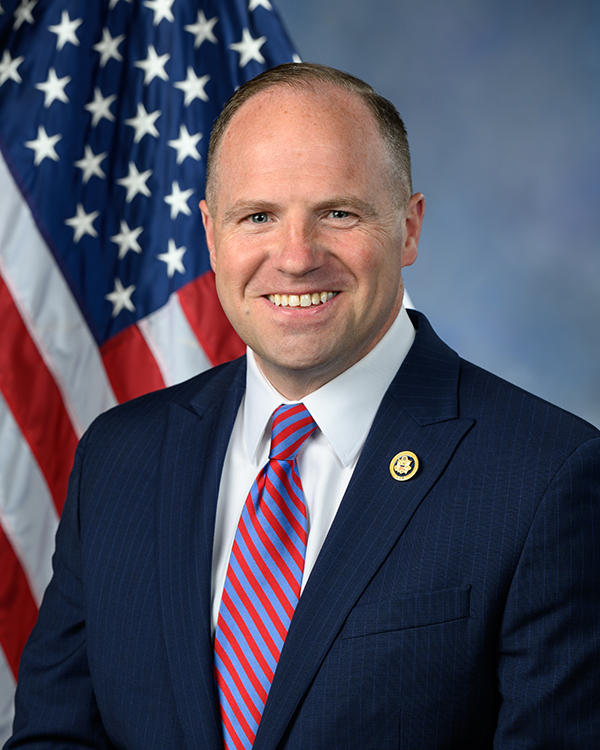
Rep. Timothy M. Kennedy
Sponsored bills
Maddy summaryHR 2698, the Bolstering Security Against Ghost Guns Act, mandates federal agencies to develop coordinated strategies addressing threats from "ghost guns" (privately made firearms). It requires the Department of Homeland Security to create a department-wide strategy within one year, including cross-agency collaboration and partner coordination. The bill also directs the Transportation Security Administration to report annually on ghost gun violations at checkpoints, U.S. Immigration and Customs Enforcement to analyze cross-border firearm smuggling patterns, and the Office of Intelligence and Analysis to produce threat assessments on terrorism-linked ghost gun use. These provisions apply directly to DHS components, the Secret Service, TSA, and ICE, focusing on data sharing, threat reporting, and prevention efforts without imposing new restrictions on firearm ownership.
Maddy summaryThe No Tax Breaks for Union Busting Act would deny tax deductions for employers who spend money to influence employees' decisions about union activities, such as union elections or collective bargaining. It defines "labor organization activities" broadly to include union elections, labor disputes, and collective actions. The bill requires employers to report such spending on tax returns and prevents them from deducting these expenses from taxable income. This would apply to employers using tactics like captive audience meetings, outside consultants, or other efforts to sway workers' union decisions. The policy aims to remove tax incentives for employers to interfere with workers' rights under labor law.
Maddy summaryHR 2674, the Department of Homeland Security Climate Change Research Act, requires the DHS Under Secretary for Science and Technology to evaluate how climate change impacts homeland security operations, including preparedness for natural disasters and federal disaster response systems. The bill mandates DHS to conduct research on mitigating these climate-related security risks, prioritize impacts on DHS operations, and coordinate with other agencies, state/local governments, and critical infrastructure owners. DHS must submit annual reports to Congress detailing this research for four years after enactment. This bill does not create new programs or allocate funding but establishes a formal research requirement within DHS to better understand climate change effects on national security.
Maddy summaryHR 2678, "Ellie’s Law," authorizes $20 million annually from fiscal years 2026 through 2030 for the National Institute of Neurological Disorders and Stroke to conduct new research on unruptured brain aneurysms. The funding specifically aims to study diverse patient populations by age, sex, and race, addressing gaps in current research. This bill directly affects the estimated 6.8 million Americans with unruptured brain aneurysms - particularly women and people of color, who face higher rupture risks - by advancing medical understanding of the condition. The law requires the funds to supplement, not replace, existing research budgets.
Maddy summaryThe Tax Fairness for Workers Act (HR 2671) would allow certain employees to deduct work-related expenses directly from their gross income. Specifically, it creates an above-the-line deduction for union dues (amending IRC Section 62(a)(1)) and reinstates a deduction for other out-of-pocket work costs like uniforms or tools (amending IRC Section 67(g)), effective for 2025 tax years. This directly affects union members and workers with significant job-related expenses who previously could not deduct these costs. The bill removes the prior limitation that barred these deductions, making them available without needing to itemize. The policy change simplifies tax filing for affected workers by treating these expenses as deductible business costs.
Maddy summaryThis bill, HR 2253 (Puppy Protection Act of 2025), sets new federal standards for commercial dog dealers who sell puppies to the public. It requires specific housing sizes based on dog size (e.g., 12-30 square feet per dog), daily exercise in safe outdoor areas, clean water and nutritious food twice daily, and annual veterinary exams including dental checks. The bill also limits breeding frequency (max 2 litters in 25 months), sets age minimums for breeding (18 months for small dogs, 2 years for large dogs), and mandates health screenings to prevent genetic diseases. These requirements apply directly to commercial dealers, with final regulations to be issued within 18 months of enactment.
Maddy summaryHR 2195, the Feed Hungry Veterans Act of 2025, would expand eligibility for food assistance under the Supplemental Nutrition Assistance Program (SNAP) to more veterans. It adds four new qualifying categories to the existing rules: veterans with a "catastrophically disabled" determination under military disability law, veterans under 65 receiving a pension, and veterans meeting specific combined disability rating thresholds. The bill amends the Food and Nutrition Act to include these new groups in SNAP eligibility, directly affecting veterans who currently may not qualify under existing disability rating criteria. The changes would take effect on October 1, 2030.
Maddy summaryThis bill, HR 2102 (Major Richard Star Act), allows veterans with combat-related disabilities to receive both full military retired pay and veterans' disability compensation simultaneously, without the previous offset that reduced retired pay. It directly affects veterans already eligible for both benefits due to combat-related injuries, removing the requirement that their retired pay be reduced by the disability compensation amount. The key provision amends Title 10 and Title 38 to eliminate the offset rule (sections 5304 and 5305 of Title 38) for these veterans. The change applies to payments starting after the bill’s enactment date, effective for all qualifying veterans. This is a policy change to increase financial support for affected veterans, not a new benefit.
Federal Firearm Licensee Act This bill establishes new security requirements and expands recordkeeping and reporting requirements for federally licensed dealers, importers, and manufacturers of firearms (i.e., federal firearms licensees, or FFLs). The bill also broadens the authority of the Bureau of Alcohol, Tobacco, Firearms and Explosives (ATF) to administer federal firearms laws and enforce violations. Specifically, bill requires FFLs to implement and comply with a plan to secure their business premises, conduct quarterly physical checks of their business inventories, maintain video surveillance of the area where firearms are sold or transferred, and initiate firearms-related background checks for employees. Additionally, the bill requires FFLs to report to the ATF any inventory firearm that is lost, stolen, or unaccounted for and to notify the ATF about default-proceed transactions (i.e., allowable firearm transfers to an unlicensed person prior to the completion of a background check when the submitted background check remains incomplete after three business days). Finally, the bill removes limits on the ATF's authority to conduct activities related to the administration of federal firearms laws. It enhances the ATF's inspection authority, including by removing the limit on the number of annual compliance inspections (currently, one), requiring inspections of high-risk FFLs, and authorizing an additional 650 investigators. Finally, the bill directs the ATF to deny an application for a federal firearms license if it would endanger public safety or if the applicant is unlikely to comply with the law.