

Maddy summaryHR 3002, the Homeland Security Climate Change Coordination Act, creates a new Climate Coordinating Council within the Department of Homeland Security (DHS). The council, composed of at least 20 senior DHS officials from offices like FEMA, Customs, Coast Guard, and Cybersecurity, must identify climate impacts across DHS operations and develop risk-based strategies to address them. It will also report annually to Congress for ten years on actions taken, ensuring DHS aligns its efforts with Executive Order 14008 on climate. The bill directly affects DHS programs, assets, and personnel by mandating coordinated climate adaptation planning.
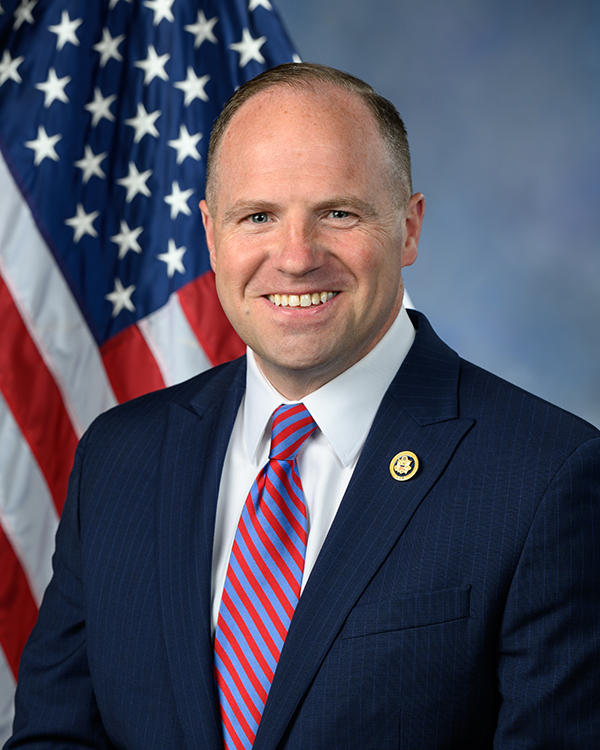
Rep. Timothy M. Kennedy
Sponsored bills
Maddy summaryThis bill updates highway safety laws to better protect people involved in roadside incidents and work zones. It expands definitions to include "occupants and pedestrians associated with disabled vehicles" in safety programs and requires collecting data on roadside deaths and work zone fatalities. The bill creates two new working groups - one focused on disabled vehicle crashes and another on work zone safety - to analyze data, develop solutions, and share best practices with the National Highway Traffic Safety Administration. It also mandates annual reports from the Federal Highway Administration on how states use work zone safety funds, including spending details and effectiveness. These changes directly affect drivers, pedestrians, construction workers, and emergency responders by improving data collection and safety planning.
Maddy summaryHR 3011 allows the U.S. Postal Service to mail alcoholic beverages under specific conditions, primarily affecting licensed alcohol businesses (like wineries, breweries, and retailers) that register with the USPS. The bill requires shipments to be for personal use only (not resale), include age verification (21+ with ID), and comply with state delivery rules. It explicitly states that state, local, or tribal laws prohibiting alcohol shipments remain in effect and cannot be overridden by this federal law. The USPS must create regulations to implement these rules, and states can sue the USPS for violations under local alcohol laws.
Maddy summaryHR 2473, the Healthy Food Access for All Americans Act, creates tax credits and grants to help establish grocery stores, food banks, and temporary food access points in areas with limited food access (called "food deserts"). The bill offers a 15% tax credit for new grocery stores or permanent food banks in food deserts, and a 10% credit for renovations or temporary food access points like mobile markets. To qualify, locations must meet specific criteria including being in areas with high poverty rates and limited access to grocery stores, and applicants must be certified by the government. The program aims to improve access to healthy food in underserved communities by making it more financially feasible for businesses to operate in these areas. The bill also requires annual updates to the USDA's Food Access Research Atlas to track food retailer locations.
Maddy summaryHR 2357, the Food Secure Strikers Act of 2025, removes a restriction that previously barred workers on strike from receiving Supplemental Nutrition Assistance Program (SNAP) benefits. The bill amends the Food and Nutrition Act of 2008 to eliminate language making workers ineligible for SNAP "as a result of being on strike," ensuring striking workers are not automatically denied food assistance during labor disputes. This change directly affects workers participating in strikes who would otherwise lose access to SNAP benefits. The key mechanism updates the eligibility rules to prevent SNAP ineligibility solely due to strike participation.
Maddy summaryHRES 334 amends House Resolutions 211 (for the emergency declared February 1, 2025) and 313 (for the emergency declared April 2, 2025) by removing sections that previously defined how days are counted for terminating these emergencies. The bill changes the counting method to include all calendar days (including weekends and holidays) instead of only legislative days during the first session of Congress. This procedural adjustment affects the timeline for when a joint resolution to end the emergencies can be considered but does not alter the emergency declarations or termination requirements. The change is purely administrative and applies only to the process of ending the two specific national emergencies.
Maddy summaryThis bill increases the federal tax credit for rehabilitating historic buildings. It raises the standard credit rate from 20% to 30% for qualifying small projects (with a $3.75 million expenditure cap) and further increases the cap to $5 million for projects in rural areas. The bill also allows taxpayers to transfer all or part of this credit to another taxpayer, creating a new market for the credit. These changes apply to properties placed in service after the bill's enactment date. The bill directly affects developers and owners of historic properties seeking tax incentives for rehabilitation projects.
Maddy summaryThis bill requires the United States Postal Service to assign a single, unique ZIP Code exclusively for Wheatfield, New York, within 270 days of enactment. It directly affects residents and businesses in Wheatfield by standardizing their postal addressing. The provision mandates the USPS to establish this dedicated ZIP Code for the specific geographic area of Wheatfield, New York.
Maddy summaryHRES 332 is a resolution designating April 11-17, 2025, as "Black Maternal Health Week" to raise awareness about maternal health disparities affecting Black women and birthing people in the U.S. It references CDC data showing Black women are 2-3 times more likely to die from pregnancy-related causes than White women and that the U.S. has the highest maternal mortality rate among developed nations. The resolution emphasizes the need to address systemic inequities contributing to these outcomes without creating new laws or funding. It serves as a symbolic recognition to amplify community-led efforts, such as those by the Black Mamas Matter Alliance, rather than implementing policy changes.
Maddy summaryThe DRIVE Act of 2025 requires the Department of Veterans Affairs (VA) to set mileage reimbursement rates for veterans at the federal government's current standard rate for employees using personal vehicles on official business, replacing the previous fixed rate of 41.5 cents per mile. It also mandates that the VA process and pay these reimbursements within 90 days of a veteran's valid request. This directly affects veterans who travel for VA medical appointments or services using their personal vehicles. The bill aligns veteran travel reimbursements with federal employee standards and ensures timely payments.