

Maddy summaryHR 4101, the Cancer Drug Parity Act of 2025, requires group health plans and insurance plans to provide equal cost-sharing (like deductibles and copays) for oral anticancer drugs as for intravenous or injected cancer drugs. This directly affects insured cancer patients prescribed oral medications, ensuring they face no higher out-of-pocket costs than for IV treatments when medically necessary. The law prohibits plans from changing benefits to increase costs for oral drugs or applying stricter limits on them compared to IV drugs. It takes effect for plan years starting January 1, 2026, and mandates a GAO study to assess the law’s impact on patient costs within two years of enactment.
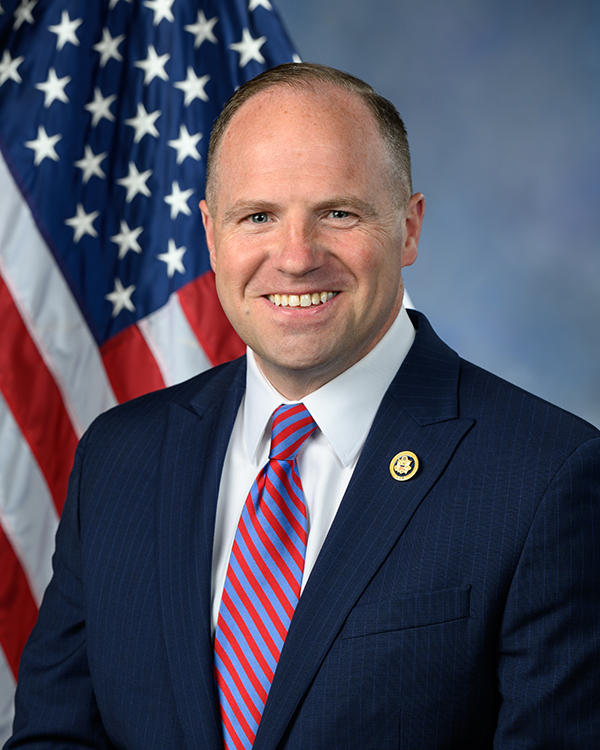
Rep. Timothy M. Kennedy
Sponsored bills
Maddy summaryThis bill creates federal funding for community-based violence intervention programs in high-violence areas, targeting communities with 35+ homicides annually or 20+ homicides with rates double the national average. It establishes grants for community organizations to implement trauma-informed violence interruption strategies, hospital-based programs for injured patients, and job training for "opportunity youth" (16-25 year olds not in school or work). The legislation authorizes $300 million in 2026, increasing to $700 million annually through 2033, with requirements for evidence-based approaches that reduce violence without contributing to mass incarceration. It creates a National Community Violence Response Center to coordinate data collection, research, and best practices for these programs. The focus is on prevention through economic opportunity, trauma care, and community-driven interventions rather than traditional law enforcement approaches.
Maddy summaryThe Caring for Survivors Act of 2025 increases monthly dependency and indemnity compensation for surviving spouses of veterans. It changes the calculation method from a fixed $1,154 to 55% of a specific veteran compensation rate, effective six months after enactment. The bill also reduces the required continuous disability rating period for survivors from 10 years to 5 years, and provides a proportional payment for cases where the rating period is shorter than 10 years. Surviving spouses of veterans who died before January 1, 1993, receive the greater of their current benefit or the new calculation. This directly affects surviving spouses eligible for benefits under Title 38, U.S. Code, particularly those with veterans who died prior to 1993.
Maddy summaryHRES 533 is a non-binding House resolution calling on the President to lift the indefinite suspension of U.S. refugee admissions, which has left over 100,000 refugees stranded in limbo since January 2025. It specifically references Executive Order 14163 (2025) that halted refugee arrivals, citing the plight of refugees conditionally approved for resettlement, including Afghans, Rohingya, and Sudanese. The resolution reaffirms U.S. commitments under the Refugee Act of 1980 and international obligations, urging restoration of the U.S. Refugee Admissions Program to protect vulnerable refugees. It also calls for increased international cooperation, support for frontline host countries, and meeting global refugee protection pledges. The resolution does not create new law but expresses congressional intent to address the refugee crisis.
Maddy summaryHR 4083, the Marshall “Major” Taylor Congressional Gold Medal Act, authorizes the posthumous presentation of a Congressional Gold Medal to honor cyclist Marshall Walter "Major" Taylor (1878-1932), recognizing his pioneering achievements as a Black athlete who broke racial barriers in professional cycling during the late 19th and early 20th centuries. The bill directs the Secretary of the Treasury to strike the medal with his name and image, to be presented to Taylor’s great-granddaughter, Karen Donovan. It also permits the sale of bronze duplicates to cover costs, classifying all medals as national commemorative items under U.S. law. This is a ceremonial bill with no policy changes, solely focused on commemorating Taylor’s legacy.
Maddy summaryThe Insurrection Act of 2025 would clarify and limit when the President can deploy military forces domestically to address insurrections, rebellions, or widespread violence. It requires state and local authorities to be unable to handle the situation, with specific circumstances including obstruction of voting rights or Federal law, and mandates the state governor's request for assistance. The bill requires the President to consult Congress, issue a proclamation ordering lawbreakers to disperse, and submit a detailed report before deployment, with military action limited to 7 days unless Congress passes a joint resolution approving it for up to 14 days. The bill explicitly prohibits using National Guard members on training duty for these purposes and provides for judicial review of deployments.
Maddy summaryThe Autism Family Caregivers Act of 2025 creates a 5-year pilot program funding grants to community organizations for free, evidence-based skills training for family caregivers of children (ages 0-9) with autism spectrum disorder or other developmental disabilities or delays. The program requires training in communication, social engagement, daily living skills, and caregiver self-care strategies, with emphasis on cultural competence and coordination with local health, education, and community services. Grants must support at least 25 organizations across 15+ states, using $10 million annually (2026-2030), and mandate stakeholder committees including caregivers and local providers. It directly affects families caring for young children with these conditions by expanding access to structured support, while requiring programs to supplement - rather than replace - existing Medicaid, education, or insurance-covered services.
Maddy summaryThe Occupational Therapy Mental Health Parity Act requires the U.S. Department of Health and Human Services to provide education and outreach about Medicare coverage for occupational therapy services treating mental health and substance use disorders. Specifically, it directs the Secretary to clarify how these services are covered under the Medicare Benefit Policy Manual using standard medical billing codes (HCPCS). This education must be completed within one year of the bill's enactment. The goal is to improve understanding of existing Medicare coverage for occupational therapy in mental health and substance use treatment, without changing current benefit rules.
Maddy summaryHRES 509 is a symbolic resolution expressing the U.S. House of Representatives' support for designating June 2025 as "Black Music Month." It does not create new laws or directly affect any individuals or entities; instead, it urges the public to recognize and celebrate Black music's cultural impact through voluntary actions like promoting artists and spreading awareness. The resolution highlights Black music's historical influence across genres - from spirituals to hip-hop - and calls for honoring its legacy in education, media, and community initiatives. It follows a tradition started by President Carter in 1979 but has no legal force.
Maddy summaryHRES 512 is a symbolic resolution expressing the House of Representatives' support for designating Sunday, June 15, 2025, as "Father's Day." It recognizes fathers' roles in families and society, citing statistics about fatherhood and the benefits of involved fathering. The resolution urges support for existing policy proposals like universal paid family leave, affordable childcare, and a child tax credit - though it does not create new laws or funding. As a commemorative measure, it has no legal effect beyond formally acknowledging Father's Day.