

Maddy summaryHRES 729 is a symbolic resolution designating September 17, 2025, as "Constitution Day" to honor the 250th anniversary of the U.S. Constitution's signing (September 17, 1787). It does not create new laws or affect any specific group; instead, it urges the American public to observe the day with ceremonies and activities. The resolution emphasizes the Constitution's historical significance and its role in establishing American democracy. As a commemorative measure, it has no binding effect on policy or governance.
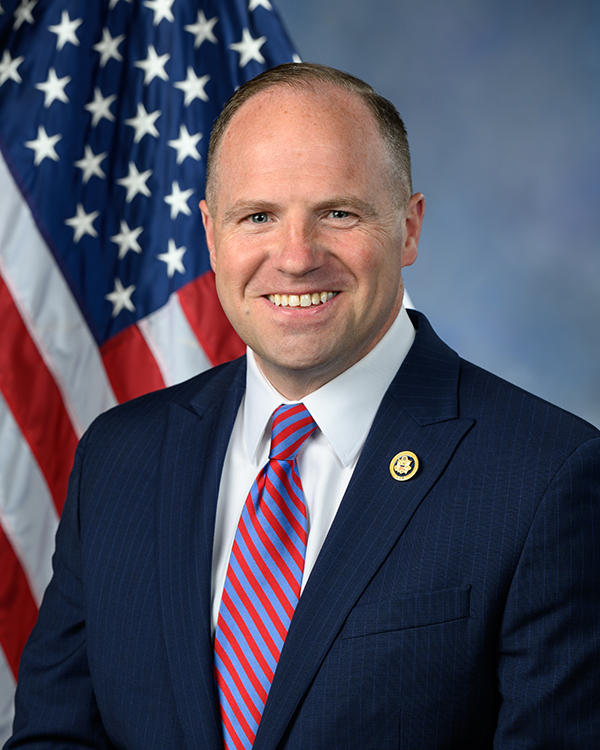
Rep. Timothy M. Kennedy
Sponsored bills
Maddy summaryThis bill creates a 70% tax credit for eligible small businesses to cover costs of installing diaper changing stations and dispensers in restrooms. It applies to businesses with annual gross receipts under $5 million or fewer than 100 full-time equivalent employees. To qualify, businesses must ensure both men’s and women’s restrooms at each location have accessible diaper changing stations (free to use) and diaper dispensers. The credit is capped at $10,000 per business location annually and applies to expenses like station installation, labor, and restroom renovations meeting the "family bathroom requirement." The credit begins for tax years starting after December 31, 2025.
Maddy summaryThis bill requires the 988 Suicide Prevention Lifeline to establish a dedicated "Press 3" option (via IVR) for LGBTQ+ youth seeking crisis support, directly affecting LGBTQ+ youth who face a four times higher suicide risk than peers. It mandates that at least 9% of funds allocated for the lifeline's services be reserved specifically for these specialized LGBTQ+ youth services. The bill amends existing law to formalize this dedicated resource, building on current services that handled over 1.5 million contacts from LGBTQ+ youth in 2025. This creates a concrete policy change for accessing tailored crisis support without altering other lifeline operations.
Maddy summaryHR 5395, the Disaster Relief Disbursement Accountability Act, requires federal disaster fund recipients (like state and local governments) to report how quickly they distribute funds to subrecipients after disaster declarations. It mandates recipients to submit annual reports on average disbursement times for programs including hazard mitigation grants and public assistance (sections 403, 404, 406, 407, 428, and 502 of the Stafford Act). Recipients must also provide a retroactive report within one year for disasters declared before the bill’s enactment. The Administrator must then compile these reports and submit an annual summary to Congress starting three years after the bill’s enactment. This focuses on transparency and accountability in the disbursement process, not on changing eligibility or funding levels.
Maddy summaryHR 2721, the Honoring Our Heroes Act of 2025, establishes a two-year pilot program for the Department of Veterans Affairs (VA) to provide headstones or burial markers for eligible veterans. It directly affects families or representatives of veterans who died on or before November 1, 1990, by allowing them to request these markers through a VA application process. The program requires the VA to update its website with eligibility details and terminates two years after the bill's enactment. This is a procedural measure focused on commemorating specific veterans, not altering benefit eligibility or funding.
Maddy summaryThe Health Access Innovation Act of 2025 establishes a federal grant program to fund community-based organizations in medically underserved areas. These organizations, which must address health disparities and serve communities disproportionately affected by them, will use funds to expand culturally and linguistically appropriate care, support community health workers (like promotores de salud), and address social barriers to health. The program authorizes $50 million in 2026, increasing to $70 million by 2029, with 5% of funds allowed for administrative costs. Priority is given to groups that operated health programs during recent public health emergencies.
Maddy summaryThe FAMILY Act would establish a national paid family and medical leave insurance program that provides wage replacement benefits for workers needing time off for caregiving or medical reasons. It defines "qualified caregiving" to include caring for a family member with a serious health condition, personal medical needs, or recovery from violence (including domestic violence, sexual assault, or stalking). Benefits would be calculated based on earnings, with a minimum monthly benefit of $580 and maximum of $4,000, administered by a new Office of Paid Family and Medical Leave within the Social Security Administration. Eligible individuals would need to have worked for at least 8 quarters in the previous year and file an application with required documentation, while existing state paid leave programs would continue to operate alongside this federal program.
Equal COLA Act This bill applies a cost-of-living adjustment (COLA) for annuities paid under the Federal Employees Retirement System that is equal to the increase in inflation, regardless of the amount of the increase. Specifically, for any year in which the Consumer Price Index (CPI) has increased over the previous year, the COLA amount shall be increased by the change in the CPI from the previous year. Current law applies an adjustment equal to the change in CPI only if the change is 2% or less. If the change is between 2% and 3%, the adjustment is limited to 2%. If the change is more than 3%, the adjustment is limited to 1% less than the change.
Maddy summaryHR 5353, the Peer to Peer Mental Health Support Act, creates a federal pilot program to fund evidence-based mental health peer support programs in secondary schools (grades 6-12). It provides competitive grants to states, tribes, or school districts to train student helpers and school professionals to support peers facing mental health challenges, with programs overseen by school-based mental health professionals. The program requires measuring participation, training details, and impacts on student mental health outcomes, with annual reports to Congress. The initiative expires on September 30, 2029.
Maddy summaryThe National Infrastructure Bank Act of 2025 would establish a government-owned bank to finance infrastructure projects across the United States, aiming to address a $3.69 trillion financing gap identified by the American Society of Civil Engineers. The bank would provide loans up to $5 trillion for transportation, energy, environmental, and community development projects, with specific criteria focused on economic growth, environmental benefits, and serving disadvantaged communities. It would be governed by a 25-member Board of Directors with diverse regional and expertise qualifications, and would operate with tax exemptions and capital requirements to ensure financial stability. The bill also establishes regional economic accelerator planning groups to coordinate infrastructure development and create a pipeline of projects for the bank to finance.