

Securing and Enabling Commerce Using Remote and Electronic Notarization Act of 2022 or the SECURE Notarization Act of 2022 This bill allows a notary public commissioned under state law to remotely notarize electronic records and perform notarizations for remotely located individuals. The bill provides technical requirements for such notarizations, including the creation and retention of video and audio recordings and the use of communication technologies (i.e., video chat). Additionally, the bill requires U.S. courts and states to recognize notarizations—including remote notarizations of electronic records and notarizations of remotely-located individuals—that occur in or affect interstate commerce and are performed by a notary public commissioned under the laws of other states. The bill also allows a notary public to remotely notarize electronic records involving an individual located outside of the United States, subject to certain requirements.
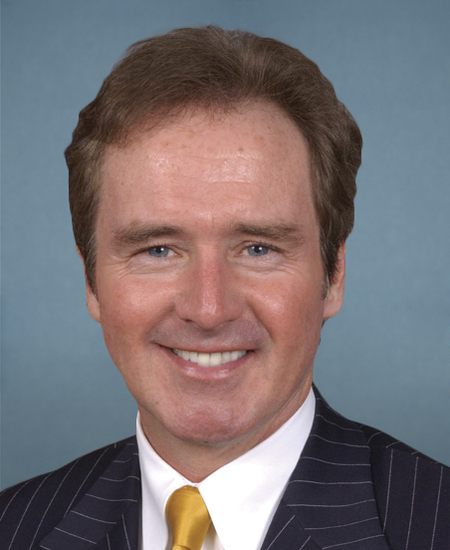
Rep. Brian Higgins
Sponsored bills
Atrocity Crimes, Relief and Accountability Act or the ACRA Act The bill requires the State Department and the U.S. Agency for International Development to provide assistance to suspected victims, survivors, and witnesses of war crimes; establishes a Ukraine victims trust fund; and establishes a Ukraine atrocity crimes rewards fund. The bill also allows the International Criminal Court to conduct limited activities in the United States relating solely to foreign nationals suspected of committing war crimes in Ukraine.
Shirley Chisholm Congressional Gold Medal Act This bill provides for the posthumous presentation of a Congressional Gold Medal in commemoration of Shirley Chisholm, in recognition of her activism, independence, and groundbreaking achievements in politics, election as the first African American woman in Congress, and campaign to be the first African American to gain the nomination of a major political party for President of the United States. Following its award, the gold medal shall be given to the Smithsonian Institution where it shall be available for display and research.
Equal Access to Justice for Victims of Gun Violence Act of 2022 This bill removes limitations on the civil liability of gun manufacturers and the disclosure of gun trace data in civil actions. Specifically, the bill repeals the Protection of Lawful Commerce in Arms Act, which prohibits civil actions against a firearm or ammunition manufacturer, seller, importer, dealer, or trade association for damages resulting from the criminal or unlawful misuse of a firearm. Additionally, the bill states that firearms trace data maintained by the Bureau of Alcohol, Tobacco, Firearms and Explosives is not immune from legal process. Such data is subject to discovery; is admissible as evidence; and may be used, relied on, or disclosed in a civil action or administrative proceeding.
Formula Act This bill provides through December 31, 2022, duty-free treatment to infant formula. During this time period, articles of infant formula shall not be subject to (1) any additional safeguard duties that may be imposed under subchapter IV of chapter 99 of the Harmonized Tariff Schedule; or (2) any other import quotas, tariff-rate quotas, additional duties, or any other duties, fees, exactions, or charges that otherwise would apply to such articles. Importers shall provide the applicable and anticipated tariff classifications for articles of infant formula on applicable customs entry documents.
Maddy summaryThis House Resolution (HRES 1242) is a symbolic measure designating July 20, 2022, as "National Heroes Day" to honor everyday individuals who risked their lives during mass shootings, such as those in Aurora (2012), Uvalde (2022), and Buffalo (2022). It does not create new laws or policies but calls on all U.S. citizens to observe the day through community service, displaying the flag, or other charitable acts. The resolution specifically recognizes heroic actions during recent tragedies, including people shielding others during attacks. It directly affects the public by encouraging personal reflection and community engagement, though it has no legal force. The resolution was introduced on July 20, 2022, by Rep. Perlmutter and colleagues.
LGBTQI+ and Women's History Education Act of 2022 This bill directs the National Museum of American History of the Smithsonian Institution to carry out, among other things (1) the development and national dissemination of accurate, relevant, and accessible national resources for classrooms to administer LGBTQI+ and women's history education in an inclusive and intersectional approach; (2) the development, national dissemination, and implementation of principles of sound pedagogy for administering LGBTQI+ and women's history education; and (3) the development, operation, and expansion of a teacher fellowship program to cultivate and support leaders in LGBTQI+ and women's history education. In addition to the activities described in this bill, the museum shall develop and maintain on its website content designated for educators, students, and families to improve their awareness and understanding of LGBTQI+ and women's history education.
Serving Our LGBTQ Veterans Act This bill establishes a Center for Lesbian, Gay, Bisexual, Transgender, and Queer (LGBTQ) Veterans within the Department of Veterans Affairs (VA). Among other functions, the center must serve as principal adviser to the VA on the adoption and implementation of policies and programs affecting veterans who are LGBTQ.
Ensuring Women's Right to Reproductive Freedom Act This bill prohibits anyone acting under state law from interfering with a person's ability to access out-of-state abortion services. ( Abortion services includes the use of any drugs that are approved to terminate pregnancies and any health care services related to an abortion, whether or not provided at the same time or on the same day.) Specifically, the bill prohibits any person acting under state law from preventing, restricting, impeding, or retaliating against health care providers who provide legal abortion services to out-of-state residents, any person or entity who helps health care providers to provide such services, any person who travels to another state to obtain such services, any person or entity who helps another person travel to another state to obtain such services, or the movement in interstate commerce of drugs that are approved to terminate pregnancies. The Department of Justice may enforce this bill through civil actions; the bill also establishes a private right of action for violations.
Access for Veterans to Records Act of 2022 This bill directs the Office of the Archivist of the United States to submit to Congress a comprehensive plan for reducing the backlog of requests for records from, and improving the efficiency and responsiveness of operations at, the National Personnel Records Center. Such plan must include an estimate of the number of backlogged record requests for veterans; target time frames to reduce the backlog; a detailed plan for using existing funds to improve technology infrastructure, including secure access to appropriate agency federal records, to prevent future backlogs; actions to improve customer service for requesters; measurable goals with respect to the comprehensive plan and metrics for tracking progress toward such goals; and strategies to prevent future record request backlogs, including backlogs caused by an event that prevents employees of the center from reporting to work in person. The office must submit updates of such plan at specified intervals.