Gun Theft Prevention Act This bill makes various changes to federal firearms laws related to detecting and deterring the theft of firearms from federally licensed gun dealers. Among the changes, the bill establishes security requirements for gun dealers; background check requirements for employees of gun dealers; inspection requirements for the Bureau of Alcohol, Tobacco, Firearms and Explosives; and reporting requirements for individual gun owners.
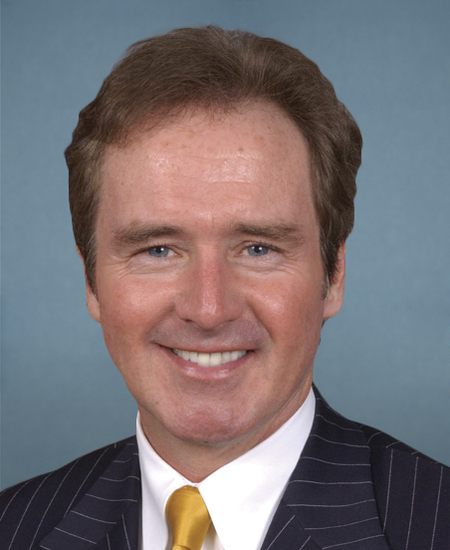
Rep. Brian Higgins
Sponsored bills
Amend the Code for Marriage Equality Act of 2021 This bill amends the Internal Revenue Code, the Social Security Act (SSAct), and other federal laws to replace (1) references to wife or husband with references to spouse , and (2) references to husband and wife or husband or wife with references to married couple or married person. For purposes of federal laws or regulations, marriage is defined as a legal union between two people as spouses. The bill eliminates a definition of spouse that refers only to a person of the opposite sex who is a husband or a wife. Requirements concerning compensation to a surviving wife after the disability or death of a person employed at a military, air, or naval base outside the United States are revised to make surviving spouses eligible for such compensation. The bill makes similar revisions to the Family and Medical Leave Act of 1993 and the Federal Mine Safety and Health Act of 1977. The bill revises title II (Old Age, Survivors and Disability Insurance) of the SSAct to consolidate separate provisions for a wife's insurance benefits and a husband's insurance benefits into a single standard for a spouse's insurance benefits. Criminal penalties that currently apply to persons who threaten to kill, kidnap, or inflict bodily harm upon a former President's wife or widow are revised to apply to threats made to a former President's spouse or surviving spouse.

Disarm Hate Act The bill expands the categories of persons who are prohibited from receiving or possessing a firearm. Specifically, it prohibits firearm sale or transfer to and receipt, possession, shipment, or transport by a person (1) who has been convicted of a misdemeanor hate crime, or (2) who has received an enhanced hate crime misdemeanor sentence.
This bill declares that Congress apologizes on behalf of the nation for violations of the civil liberties and constitutional rights of Italian Americans during World War II.
Northern Border Reopening Transparency Act This bill requires the Department of Homeland Security to submit a report on considerations relating to easing restrictions on or reopening the United States-Canada border to essential and nonessential travel.
Keeping Our Promise Act This bill authorizes issuing visas to certain individuals who were previously refused a diversity immigrant visa or admission into the United States because of certain executive orders or the COVID-19 public health emergency. (Diversity immigrant visas are available to eligible immigrants from countries with relatively low rates of immigration to the United States.) Specifically, this bill applies to individuals who were refused such a visa solely due to certain executive orders from 2017 to 2020, including orders which suspended the entry of individuals from certain countries. The bill also applies to diversity visa applicants who, because of the COVID-19 emergency, were (1) unable to receive a visa interview despite requesting one, or (2) unable to be admitted into the United States despite being approved for a visa. The Department of State must notify each individual covered under this bill of the individual's visa eligibility. To retain eligibility, an individual must respond to the State Department's notice within one year of the notice. An individual may also lose eligibility if the State Department determines that the applicant fails to meet certain requirements. The bill also relaxes certain annual numerical limits for individuals obtaining a visa under this bill. An individual who was a child when initially selected for a visa shall be treated as a child for the purposes of a visa application under this bill.
Conrad State 30 and Physician Access Reauthorization Act This bill modifies the Conrad 30 Waiver program, which incentivizes qualified foreign physicians to serve in underserved communities. It also extends statutory authority for the program for three years from this bill's enactment. Aliens coming to the United States under a J-1 nonimmigrant visa to receive medical training typically must leave the country and reside for two years abroad before being eligible to apply for an immigrant visa or permanent residence. The Conrad program waives this requirement for individuals who meet certain qualifications, including serving for a number of years at a health care facility in an underserved area. The bill increases the number of waivers that a state may obtain each fiscal year from 30 to 35 if a certain number of waivers were used the previous year, and provides for further adjustments depending on demand. An alien physician may be employed at an academic medical center to meet the Conrad program's employment requirements if the alien's work is in the public interest, even if the medical center is not in an underserved area. Employment contracts for alien physicians under the Conrad program shall contain certain information, such as the maximum number of on-call hours per week the physician shall have to work. Certain alien physicians (along with the physician's spouse and children) shall be exempt from the direct annual numerical limits on immigration, including those physicians that have met certain requirements related to visas for physicians to serve in underserved areas.
Extreme Risk Protection Order Act of 2021 This bill establishes grants to support the implementation of extreme risk protection order laws at the state and local levels, extends federal firearms restrictions to individuals who are subject to extreme risk protection orders, and expands related data collection. Extreme risk protection order laws, or red flag laws, generally allow certain individuals (e.g., law enforcement officers or family members) to petition a court for a temporary order that prohibits an at-risk individual from purchasing and possessing firearms. Among its provisions, the bill directs the Office of Community Oriented Policing Services within the Department of Justice to establish a grant program to help states, local governments, Indian tribes, and other entities implement extreme risk protection order laws; extends federal restrictions on the receipt, possession, shipment, and transportation of firearms and ammunition to individuals who are subject to extreme risk protection orders; and requires the Federal Bureau of Investigation to compile (and later destroy) records from federal, tribal, and state courts and other agencies that identify individuals who are subject to extreme risk protection orders.
This resolution supports the designation of Oxi Day in commemoration of Greece's refusal to submit to the Axis Powers during World War II and notes that this resistance likely led to the ultimate defeat of Nazi Germany. (Greece's Prime Minister at the time, Ioannis Metaxas, had responded to Italy's demand for surrender with the single word Oxi! or No! )
Original National Domestic Violence Awareness Month Resolution of 2022 This resolution supports the goals and ideals of National Domestic Violence Awareness Month. Further, it expresses the sense of the House of Representatives that Congress should continue to raise awareness of and support programs to end domestic violence.