

Maddy summaryThis bill improves the VA Work-Study program for veterans and active-duty military members by expanding eligible work opportunities to include roles with state/local governments and nonprofits that support veterans. It establishes a higher minimum wage standard, requiring payments to meet the highest of federal, state, or local minimum wage rates. The bill also requires electronic time tracking for participants and annual public reporting on program data, including participant demographics, wages, hours worked, and participating schools. These changes apply to work-study payments made on or after January 1, 2026.
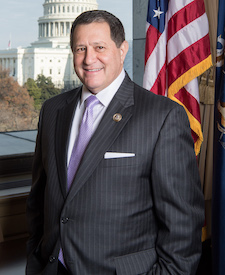
Rep. Joseph D. Morelle
Sponsored bills
Maddy summaryThe Equality Act (HR 15) would amend federal civil rights laws to explicitly prohibit discrimination based on sexual orientation and gender identity in public accommodations, housing, employment, credit, and jury service. It amends the Civil Rights Act of 1964 to include sexual orientation and gender identity as protected characteristics under existing sex discrimination provisions. The bill would require businesses, housing providers, employers, and government entities to provide equal access and services without regard to a person's sexual orientation or gender identity. It includes specific definitions for gender identity and sexual orientation to clarify protections across all covered areas. The law would apply to all entities covered by the Civil Rights Act of 1964, including those receiving federal funding.
Maddy summaryHR 4121, the Right to Contraception Act, establishes a federal statutory right for individuals to access contraceptives and contraception services without government restriction or coercion, directly affecting all people seeking reproductive care and health care providers. The bill prohibits state or federal laws that limit access to contraceptives (defined broadly to include devices, drugs, and fertility methods), prevent individuals from obtaining or using them, or allow providers to refuse services based on personal beliefs. It preempts conflicting state laws, requires any restrictions to be justified by "clear and convincing evidence" of advancing access with no less restrictive alternative, and allows private lawsuits to challenge violations. The Act applies nationwide to all health care providers and individuals, protecting access regardless of factors like race, income, or location.
Maddy summaryHR 4076 establishes a joint U.S.-Israel program to fund health technology development, authorizing $4 million annually (2024-2026) through the U.S. Health and Human Services Department. It requires Israel to match U.S. funding and focuses on collaborative projects in artificial intelligence, vaccines, telemedicine, diagnostic tests, and data-driven personalized medicine for emerging infectious diseases. The program can either build on an existing U.S.-Israel agreement or create a new one under a 2008 science cooperation framework. This bill directly affects U.S. federal health agencies and the Israeli government, with funds restricted to joint projects meeting specific technological and health priorities.
Maddy summaryHR 3946, the FASD Respect Act, establishes a new federal program within the Department of Health and Human Services (HHS) to address fetal alcohol spectrum disorders (FASD). The bill creates FASD Centers for Excellence to build state, tribal, and national capacity for prevention, identification, and support services - directly affecting individuals with FASD, their families, and healthcare providers. Key provisions include developing standardized diagnostic guidelines, expanding screening and training for medical professionals, creating a national resource directory for FASD services, and promoting culturally informed interventions. The program requires HHS to report to Congress on progress within four years. This legislation restructures existing HHS authority to focus comprehensively on FASD across the lifespan, replacing older terminology with consistent "FASD" references.
Maddy summaryThe Senior Legal Hotline Act of 2023 creates a federal grant program to fund statewide legal assistance hotlines for older adults. It authorizes $10 million annually (2024-2028) for competitive grants to nonprofit organizations or partnerships that establish free legal hotlines providing telephone-based counseling, referrals, and advocacy to seniors. These hotlines must prioritize older individuals with the greatest economic and social need, coordinate with state agencies and other legal aid providers, and ensure trained staff/volunteers serve all areas of the state. The bill directly affects seniors across all 50 states through expanded access to no-cost legal help for civil issues like housing, benefits, and elder abuse.
Maddy summaryHR 4184 repeals legal protections for gun manufacturers and sellers under the Protection of Lawful Commerce in Arms Act. It allows victims of gun violence to use gun trace data from the ATF's Firearms Trace System in civil court cases. This data, previously protected from discovery, can now be subpoenaed, admitted as evidence, and relied upon in lawsuits against gun sellers or manufacturers. The bill directly affects victims seeking legal recourse and gun industry defendants in civil litigation.
Maddy summaryThe Computer Science for All Act of 2023 would provide $250 million in federal grants to states, school districts, and eligible tribal schools to expand computer science education. The bill requires grant recipients to ensure all high school students have access to computer science within five years and to create a progression of computer science education from pre-kindergarten through middle school. It specifically targets reducing disparities by requiring schools to address gaps for underrepresented groups including minorities, girls, and students from low-income families. Grants would fund teacher training, learning materials, and programs supporting students traditionally underrepresented in tech fields, with schools required to track and report student demographics to monitor progress.
Maddy summaryHR 4166, the Support UNFPA Funding Act, authorizes annual U.S. funding for the United Nations Population Fund (UNFPA) over five years. It directly supports UNFPA’s global programs serving women and girls in over 150 countries, particularly focusing on reducing preventable maternal deaths, expanding access to contraception, ending gender-based violence, and addressing harmful practices like female genital mutilation and child marriage. The bill specifically directs funding toward UNFPA’s core work in developing nations, humanitarian crises (such as in Ukraine and Yemen), and rebuilding health systems post-pandemic, without altering UNFPA’s existing operations or policies.
Maddy summaryThe American Dream and Promise Act of 2023 would create two pathways to permanent residency for certain immigrants. The "Dream Act" portion would provide conditional permanent resident status to individuals who entered the U.S. as children, have lived continuously in the U.S. since January 1, 2021, and meet educational requirements (such as completing high school, earning a degree, or enrolling in education programs). The "American Promise Act" portion would provide permanent residency to individuals eligible for Temporary Protected Status (TPS) or Deferred Enforced Departure (DED) as of specific dates (January 1, 2017, or January 20, 2021). The bill includes provisions for background checks, fee exemptions for low-income applicants, and processes for removing conditional status after meeting specific criteria like completing higher education or earning income.