

Maddy summaryHR 4157, the "Not Just a Number Act," requires the Department of Veterans Affairs (VA) to produce annual reports on veteran suicide rates and their connection to VA healthcare and benefits. The reports must break down suicide rates by age, gender, and race, and examine how engagement with VA services (like Vet Centers, healthcare enrollment, benefits claims, and housing loans) correlates with suicide trends. The bill also mandates a VA toolkit for state/local coroners to improve veteran suicide death reporting, and a study on creating a dedicated VA suicide prevention office. These measures aim to standardize data collection and identify effective prevention strategies, directly affecting VA operations, congressional oversight, and veteran care systems.
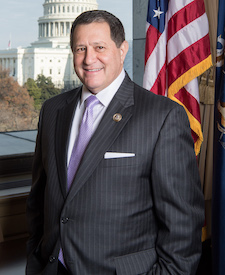
Rep. Joseph D. Morelle
Sponsored bills
Maddy summaryHR 4785, the Fracturing Responsibility and Awareness of Chemicals Act of 2023, requires oil and gas companies conducting hydraulic fracturing operations to disclose detailed chemical information to state agencies or the EPA. Specifically, companies must provide a pre-operation list of chemicals (including CAS numbers and volumes) and a post-operation report of chemicals actually used, which states must then make publicly available online. The bill also mandates immediate disclosure of proprietary chemical formulas to medical personnel during emergencies, without requiring prior written consent. It explicitly excludes natural gas storage from the definition of hydraulic fracturing. This bill directly affects oil and gas operators and state environmental agencies managing disclosure requirements.
Maddy summaryThis bill, the CLOSE Act (HR 4782), removes a loophole that allowed oil and gas facilities to aggregate emissions from multiple sources when calculating pollution levels under federal law. It requires the EPA to add hydrogen sulfide - a pollutant linked to health harm - directly to the list of hazardous air pollutants within 180 days of the bill becoming law. The EPA must then, within a year, define specific categories of oil and gas wells and other sources that emit hydrogen sulfide. This change directly affects oil and gas operators by subjecting hydrogen sulfide emissions from their facilities to stricter federal pollution controls.
Maddy summaryThe FRESHER Act of 2023 requires the Secretary of the Interior to study stormwater runoff impacts from oil and gas operations on environmental contamination and groundwater resources. The study must analyze measurable contamination levels, groundwater conditions, and aquifer vulnerability to contamination in affected areas. The Secretary must complete the study and submit a report to Congress within one year of the bill’s enactment. This bill does not impose new regulations on the oil and gas industry but mandates a federal review to inform future environmental policy decisions.
Maddy summaryThe CLEANER Act of 2023 requires the Environmental Protection Agency (EPA) to evaluate within one year of enactment whether waste from oil, gas, and geothermal energy production - such as drilling fluids and produced waters - is hazardous. If determined hazardous, these wastes must be listed and regulated under existing hazardous waste rules, with potential modifications to address their unique properties while ensuring health and environmental protection. For non-hazardous waste from these sources, the EPA must establish new facility requirements, including groundwater monitoring, location standards, and financial assurance for cleanup. This bill directly affects oil, gas, and geothermal energy producers and facilities handling such waste.
Maddy summaryHR 4811 requires oil, gas, and geothermal companies conducting hydraulic fracturing (fracking) operations to test nearby underground drinking water sources before, during, and after activities. It mandates testing at specific intervals (e.g., before starting operations, every 6 months during operations, and annually for five years post-operation) and submitting results to the EPA within two weeks. Companies must test using EPA-certified labs for contaminants linked to fracking, with results stored in a public, searchable EPA database by ZIP code. The requirement does not apply if no accessible drinking water source exists within one mile of the site. The bill amends the Safe Drinking Water Act to establish these testing and reporting obligations.
Maddy summaryHR 4733 provides EPA grants to local air quality agencies to help communities prepare for wildfire smoke and extreme heat. Funds support concrete actions like monitoring air quality, installing air filtration in public buildings, distributing masks and protective equipment, and community outreach in areas vulnerable to poor air quality. The bill prioritizes communities with high wildfire smoke exposure or extreme heat risks, particularly those already facing air quality challenges. It also establishes research centers and planning grants, but the primary mechanism is direct funding for local preparedness efforts.
Maddy summaryHR 4663, the Federal Mechanical Insulation Act, defines "mechanical insulation" (insulation around pipes and equipment in federal buildings) as an eligible energy efficiency measure. It requires federal agencies to include mechanical insulation in their required energy and water evaluations, specifically mandating that evaluations identify this insulation as a potential efficiency measure. The bill specifies that such insulation must meet minimum standards under Reference Standard 90.1 to qualify. This change directly affects federal building managers and contractors by formally recognizing mechanical insulation as a standard efficiency option in compliance with existing energy conservation laws.
Maddy summaryH.J.Res. 25 would remove the 1979 deadline for states to ratify the Equal Rights Amendment (ERA), which was originally proposed in 1972. This bill directly affects states that ratified the ERA after the deadline (such as Nevada, Illinois, and Virginia in 2017-2018) by making their ratifications legally valid. The key provision states that the ERA is valid as part of the Constitution if ratified by three-fourths of states, regardless of the original deadline. The bill does not create new rights but aims to finalize the constitutional amendment process by eliminating the time limit.
Maddy summaryThis bill, HR 1282 (Major Richard Star Act), expands benefits for certain military retirees by allowing them to receive both veterans' disability compensation and military retirement pay simultaneously. It specifically affects combat-related disabled retirees under Chapter 61 of the military retirement system who have fewer than 20 years of service. The key change removes the automatic reduction of military retirement pay when these retirees also receive disability compensation, as amended in Section 1413a(b)(3) of Title 10. Technical updates to the law’s structure and effective date (starting after enactment) complete the provisions.