

Maddy summaryThe COCOA Act of 2024 codifies Congress’s existing constitutional authority to send observers to monitor federal election processes. It requires states to grant designated congressional observers (House or Senate staff) full access to all election administration areas - including ballot handling, counting, and certification - during pre- and post-election activities. The bill prohibits observers from interfering with voting, handling ballots, or compromising voter privacy, while establishing a 24-hour notice requirement to congressional committees if an observer is removed for violating these rules. It does not create new congressional powers but formalizes existing constitutional authority under Article I, Sections 4 and 5 of the U.S. Constitution.
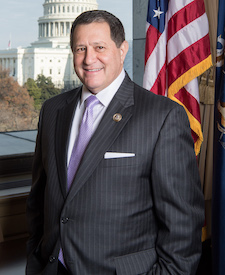
Rep. Joseph D. Morelle
Sponsored bills
Maddy summaryHR 3433, the "Give Kids a Chance Act of 2024," requires pharmaceutical companies developing certain cancer drugs to conduct pediatric studies if the drugs target molecular pathways relevant to childhood cancers. It directly affects drug manufacturers submitting new applications for cancer treatments, particularly those combining previously approved adult cancer drugs or containing a single new active ingredient. The bill amends FDA regulations to mandate these pediatric investigations only when specific conditions are met, such as when a drug's molecular target is relevant to pediatric cancer growth. The FDA must issue implementing guidance within 12 months, and reports to Congress will track implementation and effectiveness starting 2 years after enactment.
Maddy summaryHCONRES 129 designates the week of September 22-28, 2024, as "National Fall Prevention Awareness Week" to raise public awareness about falls among older adults. The resolution cites CDC data showing falls cause approximately 14 million incidents, 3 million emergency visits, and $80 billion in annual medical costs for adults aged 65+. It supports existing evidence-based prevention strategies - such as balance exercises, home safety modifications, and medication management - without creating new legal requirements or funding. The bill focuses on awareness and collaboration among government agencies, healthcare providers, and community organizations to reduce fall risks.
Maddy summaryHRES 1489 is a symbolic House resolution designating the week of September 23-27, 2024, as "National Clean Energy Week." It expresses congressional support for recognizing clean energy's role in economic growth (citing 8.35 million jobs in the sector) and encourages voluntary actions like public awareness, investment in clean energy technologies, and supporting local clean energy jobs. The resolution does not create new laws, funding, or obligations - it only formally endorses the week-long observance to highlight clean energy’s economic and environmental benefits. It directly affects no specific group but aims to raise national awareness of the clean energy sector.
Maddy summaryHRES 1491 is a ceremonial resolution designating October 23, 2024, as "Public Radio Music Day" to honor public radio music stations. It expresses the House's appreciation for these stations' role in serving listeners, musicians, and communities across all 50 states, the District of Columbia, and Puerto Rico. The resolution highlights how these noncommercial stations provide unique access to diverse music genres, support local artists, and foster community cultural engagement. As a symbolic gesture with no legal or financial impact, it does not change any policies or directly affect specific groups beyond recognizing the stations' contributions.
Maddy summary# Summary of Voter Empowerment Act Legislation This comprehensive legislation, titled the "Voter Empowerment Act," aims to significantly reform election administration across the United States to increase voter access, improve election security, and ensure equitable treatment of all voters. Key provisions include: 1. **Voter Access Enhancements**: - Requires states to provide voter-verified paper ballots for all voters - Mandates secure drop boxes for absentee ballots with specific accessibility requirements - Prohibits restrictions on curbside voting - Requires states to notify voters of polling place changes at least 7 days before elections - Allows use of sworn written statements or student ID cards to meet voter ID requirements 2. **Special Populations Accommodations**: - Requires accommodations for voters residing on Indian lands, including designated ballot pickup locations - Mandates bilingual voting materials for covered jurisdictions - Provides special provisions for military and overseas voters - Requires institutions of higher education to serve as voter registration agencies 3. **Election Administration Improvements**: - Requires states to establish contingency plans for natural disasters and public health emergencies - Establishes minimum standards for polling place operations to prevent unreasonable waiting times - Mandates states to provide sufficient poll workers and voting systems - Requires states to participate in post-election surveys 4. **Enforcement Mechanisms**: - Creates private rights of action for individuals to challenge violations - Authorizes the Attorney General to bring civil actions for enforcement - Establishes clear timelines for addressing violations - Prohibits campaign activities by chief state election officials 5. **Implementation Timeline**: - Most provisions apply to the 2026 election cycle or later - Some provisions apply immediately upon enactment The legislation is designed to modernize election administration while ensuring accessibility and security, with specific provisions addressing the needs of historically marginalized voting populations and creating new enforcement mechanisms to hold states accountable for compliance.
Maddy summaryHR 6319 (the 911 SAVES Act of 2023) requires the Office of Management and Budget to reclassify public safety telecommunicators as "Protective Service Occupations" within 30 days of enactment. This change corrects their current misclassification in the federal Standard Occupational Classification (SOC) system, which is used for statistical data on jobs. The bill directly affects how these professionals - critical in emergency calls involving missing children, active threats, and officer safety - are officially categorized in government workforce data. It does not create new benefits or funding but aims to better recognize their lifesaving role through accurate federal job classification.
Maddy summaryThis bill creates a new occupational category (code 31-1123) within the federal Standard Occupational Classification system specifically for direct support professionals (DSPs) who assist people with intellectual or developmental disabilities. It directly affects DSPs, state agencies, and federal data collectors by reclassifying their work - currently grouped under home health aides - into a distinct category. The key mechanism is revising the SOC system to better track DSP workforce data, address high turnover rates (43% nationally), and recognize their unique role in promoting clients' independence and community inclusion. This change aims to improve data accuracy for addressing staffing challenges, without altering service delivery or benefits.
Maddy summaryThis bill expands online privacy protections under the Children's Online Privacy Protection Act to cover teens aged 12-17, in addition to children under 13. It requires website and app operators to obtain verifiable consent from parents for children and from teens themselves before collecting personal information. The bill restricts operators from using collected data for individual-specific advertising to children or teens and mandates clear notices about data practices. Operators must provide users with the right to access, delete, and correct personal information they've collected. These requirements apply to websites, online services, and mobile applications that collect information from children or teens or have actual knowledge a user is a child or teen.
Maddy summaryThe Kids Online Safety Act (HR 7891) would require major online platforms (with high revenue or user numbers) to implement safety features for children and teens, including default protective settings, parental controls, and age verification. It would mandate platforms to report annually on risks to minors and their safety measures, and prohibit advertising harmful products (like tobacco, alcohol, or gambling) to minors. The bill directly affects social media platforms, online video games, and video streaming services that are used by minors, with the goal of preventing mental health harms, compulsive usage, and cyberbullying.