

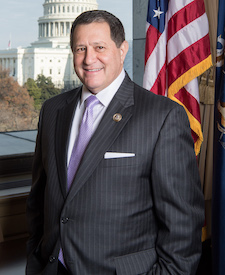
Photo of Joseph D. Morelle
D United States House · District 25 · New York On the 2026 ballot

Rep. Joseph D. Morelle

Compare
Total votes
2,837
all sessions
Attendance
98%
51 missed
Near the chamber average
With party
97%
of cast votes
Near the chamber average
Bipartisan score
2%
crosses aisle rarely
Near the chamber average
Sponsored
1,434
bills & resolutions
Near the chamber average
Committees
7
assignments
1,434 bills and resolutions

Sponsored bills

Total
1,434
Primary
110
Co-sponsor
1,324
This page
1,434
matching current filters
Co-sponsor HR 6394
Passed · United States House · Co-sponsor
Semiquincentennial Congressional Time Capsule Act

Maddy summaryThis bill directs the Architect of the Capitol to create a time capsule for the U.S. Semiquincentennial (250th anniversary of independence). Congressional leadership will determine its contents, including representative materials about the Semiquincentennial, copies of key legislative milestones, and a message to future Congress. The capsule will be sealed on the Capitol's West Lawn by July 4, 2026, and remain unopened until July 4, 2276, when it will be presented to the 244th Congress for their consideration. The bill is procedural and does not affect citizens or change existing laws.

Passed Dec 17, 2024 1 co-sponsor
Co-sponsor HR 5744
In committee · United States House · Co-sponsor
Energy Innovation and Carbon Dividend Act of 2023

Maddy summaryHR 5744, the Energy Innovation and Carbon Dividend Act of 2023, would impose a carbon fee on fossil fuels (crude oil, coal, and natural gas) based on their greenhouse gas emissions, starting at $15 per metric ton of CO2 equivalent in 2023 and increasing by $10 annually. The revenue from this fee would be distributed directly to American citizens as monthly "carbon dividends" through a new trust fund, with adults receiving full payments and children under 19 receiving half payments. The bill also establishes a border fee adjustment on imported carbon-intensive products to prevent companies from moving operations to countries with weaker environmental regulations. It sets specific emissions reduction targets: 8% annual reductions from 2025-2030 and 2.5% annual reductions from 2031-2050 relative to 2005 levels. The carbon fee would be phased out once emissions drop to 10% of 2005 levels and monthly dividends fall below $20 for three consecutive years.

In committee Dec 17, 2024 1 co-sponsor
Co-sponsor HR 5601
In committee · United States House · Co-sponsor
MORE Act

Maddy summaryThe MORE Act (HR 5601) would federally decriminalize cannabis by removing it from the Schedule I list of controlled substances under the Controlled Substances Act. It requires federal courts to expunge non-violent cannabis convictions and associated arrests, with a focus on addressing racial disparities in cannabis enforcement. The bill creates an Opportunity Trust Fund that would allocate 50% of funds to criminal justice programs, 20% to small business assistance for minority cannabis entrepreneurs, and 20% to community reinvestment grants for individuals impacted by the War on Drugs. It also prohibits federal agencies from denying benefits or security clearances based on cannabis use or past cannabis convictions, and establishes a Cannabis Justice Office to administer these programs.

In committee Dec 17, 2024 1 co-sponsor
Co-sponsor HR 5547
In committee · United States House · Co-sponsor
Maintaining Investments in New Innovation Act

Maddy summaryThe Maintaining Investments in New Innovation Act (HR 5547) extends the exclusivity period for certain advanced drugs from 7 to 11 years. It defines an "advanced drug product" as a drug using genetically targeted technology to change how genes work, such as drugs that suppress or activate gene function. The bill amends the Social Security Act to update the definition of "qualifying single source drug" to include these advanced therapies with the longer exclusivity period. This change directly affects drug manufacturers developing such advanced therapies and influences Medicare's drug coverage rules by delaying generic competition for these specific treatments.

In committee Dec 17, 2024 1 co-sponsor
Co-sponsor HR 4895
In committee · United States House · Co-sponsor
Lowering Drug Costs for American Families Act

Maddy summaryThe Lowering Drug Costs for American Families Act expands Medicare's drug price negotiation program from 20 to 50 drugs, allowing the government to negotiate lower prices for these medications. It requires private health insurance plans and group health coverage to apply these negotiated prices to their members' cost-sharing for covered drugs, with plans able to opt out while publicly disclosing their decision. The bill also extends these negotiated prices to drugs covered by commercial insurance markets, not just Medicare. This would directly affect Medicare beneficiaries and people with private health insurance who take the negotiated drugs.

In committee Dec 17, 2024 1 co-sponsor
Co-sponsor HR 4731
In committee · United States House · Co-sponsor
Access to Infertility Treatment and Care Act

Maddy summaryThe Access to Infertility Treatment and Care Act would require most health insurance plans to cover infertility treatment (including assisted reproductive technology like IVF) and fertility preservation services for people undergoing medical treatments that might cause infertility, such as cancer therapies. It prohibits cost-sharing (like deductibles and copays) for these services that exceeds what's charged for similar medical services and applies to private insurance, federal employee health plans, TRICARE, veterans' benefits, and Medicaid programs. The bill also requires insurers to provide clear notice to plan members about these coverage requirements. This legislation aims to ensure infertility treatment is covered similarly to other medical conditions, as recognized by medical organizations.

In committee Dec 17, 2024 1 co-sponsor
Co-sponsor HR 4583
In committee · United States House · Co-sponsor
Social Security 2100 Act

Maddy summaryThe Social Security 2100 Act would significantly enhance Social Security benefits for millions of Americans by increasing monthly payments for retirees, disabled workers, widows/widowers, and children. Key provisions include raising the minimum benefit for long-term low earners, improving cost-of-living adjustments using a more accurate index, eliminating the 5-month waiting period for disability benefits, and extending child benefits to age 26. The bill also changes how Social Security taxes are calculated by applying them to income above $400,000 and establishes a unified Social Security Trust Fund to manage program finances. Most provisions would apply to benefits payable from 2025 through 2034, affecting all current and future Social Security beneficiaries.

In committee Dec 17, 2024 1 co-sponsor
Co-sponsor HR 4475
In committee · United States House · Co-sponsor
Period PROUD (Providing Resources for Our Underserved and Disadvantaged) Act of 2023

Maddy summaryHR 4475, the Period PROUD Act of 2023, allocates $1.9 billion over four years (2025-2028) through the Social Services Block Grant Program to provide free menstrual products to low-income menstruating individuals. It requires states to distribute funds to qualified nonprofits for direct product distribution, community outreach, and improving access, while limiting administrative costs to 9% of funds. The bill mandates an evaluation by 2030 to assess health impacts and requires annual reports on program effectiveness. It also establishes best practices for schools on discussing menstruation and exempts funding from automatic budget cuts.

In committee Dec 17, 2024 1 co-sponsor
Co-sponsor HR 3851
In committee · United States House · Co-sponsor
Access to Breast Cancer Diagnosis Act of 2023

Maddy summaryHR 3851, the Access to Breast Cancer Diagnosis Act of 2023, requires most health insurance plans (including group and individual coverage) to cover diagnostic and supplemental breast exams without any out-of-pocket costs like copays or deductibles. This applies to medically necessary exams used to evaluate abnormalities detected during screening (diagnostic) or to screen high-risk individuals without abnormalities (supplemental), following National Comprehensive Cancer Network guidelines. Plans may still require prior authorization for these exams, and state laws providing stronger protections remain in effect. The law takes effect for plan years beginning January 1, 2024.

In committee Dec 17, 2024 1 co-sponsor
Co-sponsor HR 3646
In committee · United States House · Co-sponsor
Menstrual Equity For All Act of 2023

Maddy summaryThe Menstrual Equity For All Act of 2023 requires free menstrual products to be available at no cost in public schools, colleges, correctional facilities, and federal buildings. It makes menstrual products covered by Medicaid, prohibits taxes on these products, and provides funding through social services programs to help low-income individuals access menstrual products. The bill directly affects students (K-12 and college), incarcerated people, homeless individuals, employees (in businesses with 100+ workers), Medicaid beneficiaries, and people receiving Temporary Assistance for Needy Families (TANF). Key provisions include amending school funding to require free products, creating college grant programs for menstrual product distribution, and adding menstrual products to Medicaid coverage and social services programs.

In committee Dec 17, 2024 1 co-sponsor
Showing 391 to 400 of 1,434 bills
Previous 1 … 39 40 41 … 144 Next