Social Security 2100: A Sacred Trust This bill makes changes to Social Security benefits, taxes, and other aspects of the program, including by raising the primary insurance amount, increasing the maximum taxable earnings that are subject to Social Security payroll taxes, and requiring Social Security account statements to be mailed unless the individual recipient opts for electronic delivery.
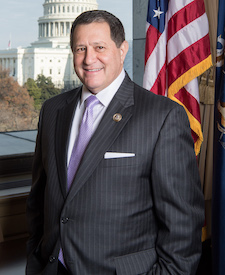
Rep. Joseph D. Morelle
Sponsored bills
Family Violence Prevention and Services Improvement Act of 20 21 This bill modifies, expands, and reauthorizes through FY2026 the Family Violence and Prevention Services program, which funds emergency shelters and supports related assistance for victims of domestic violence. Specifically, the bill requires the Department of Health and Human Services (HHS) to award grants and enter cooperative agreements with state and tribal domestic violence coalitions, and community-based organizations, to support prevention services. Depending on the type of organization, grant recipients must use funding to (1) provide technical assistance; (2) promote evidence-informed prevention strategies; (3) implement coordinated, community responses to reduce risk factors for family violence; and (4) develop prevention partnership strategies. Further, HHS must award specified grants to organizations that provide population-specific services in underserved communities and to community-based organizations that provide culturally specific domestic violence services to racial and ethnic minority groups. The bill also establishes a grants program for tribal domestic violence coalitions to support the provision of local, tribal, family domestic or dating violence services and requires HHS to award a grant for the administration of a hotline dedicated to serving Indians affected by domestic violence. In addition, the bill modifies certain program-wide definitions; changes the requirements for specified grant applications, eligibility criteria, and use of funds; and makes other technical revisions.

Original National Domestic Violence Awareness Month Resolution of 2021 This resolution supports the goals and ideals of National Domestic Violence Awareness Month. Further, it expresses the sense of the House of Representatives that Congress should continue to raise awareness of and support programs to end domestic violence.
This bill revises certain requirements under the Federal Pell Grant Program for students with disabilities. Currently, Pell Grant awards are based on enrollment status and a student must attend an institution of higher education (IHE) on a full-time basis in order to receive the maximum award amount. This bill provides an exception for a student with a disability who is receiving appropriate and reasonable accommodations for such disability. Specifically, the bill requires the amount of a Pell Grant to be calculated as if such a student is attending an IHE on a full-time basis, without regard to whether the student is attending less than full time. Additionally, the bill extends the period of time during which a student with a disability may receive a Pell Grant. In particular, the bill allows a student to exceed the current 12-semester limit to complete the first undergraduate baccalaureate course of study if required by the student's accommodations.
Public Service Freedom to Negotiate Act of 20 21 This bill provides minimum collective bargaining rights and procedures for public employees and prohibits strikes by certain public safety workers. The Federal Labor Relations Authority (FLRA) shall determine for each state whether the laws of such state substantially provide for each of the minimum standard collective bargaining rights and procedures specified by this bill, including the right of public employees and supervisory employees to self-organize, form or join a labor organization, or collectively bargain. The FLRA must issue rules and take actions to establish and administer bargaining rights and procedures for those states that do not substantially provide for them. No employers, emergency services employees, or law enforcement officers may engage in a lockout, strike, or any other organized job action that is likely to result in a measurable disruption of the delivery of emergency or public safety services. Furthermore, no labor organization may be the cause of a violation of such prohibition.
State, Local, Tribal, and Territorial Fiscal Recovery, Infrastructure, and Disaster Relief Flexibility Act This bill allows states, tribes, territories, and localities to use certain COVID-19 relief funds for new categories of spending, including for natural disasters and infrastructure projects. It also makes changes to expenditure deadlines and other aspects of this funding. Specifically, recipients may use funds for emergency relief from natural disasters and associated negative economic impacts of natural disasters. In addition, recipients may use a portion of their COVID-19 relief funds for designated infrastructure projects, such as nationally significant freight and highway projects. Furthermore, the bill allows recipients to expend COVID-19 relief funds on these types of infrastructure projects until September 30, 2026. Under current law, recipients must expend the funds by December 31, 2024. Other changes in the bill include (1) modifying eligibility and allocation requirements for funding set aside for counties and Indian tribes that are near public lands, (2) allowing Indian tribes an additional year to expend their COVID-19 relief funds, and (3) establishing a process for government entities to decline COVID-19 relief funds and requiring any declined funds to be used to reduce the federal deficit.
This resolution supports the designation of Macedonian American Heritage Month. Expresses warm congratulations and best wishes to all Macedonian people around the world as they mark Macedonian Independence Day. Praises the integral role of Macedonian Americans in the economy, culture, and identity of the United States.
United States Cadet Nurse Corps Service Recognition Act of 2021 This bill recognizes service as a member of the U.S. Cadet Nurse Corps between July 1, 1943, and December 31, 1948, as active duty service. The active duty designation entitles qualifying individuals to certain benefits afforded to veterans, such as burial benefits (not including interment or inurnment at Arlington National Cemetery) and honorary veteran status. Under the bill, the Department of Defense (DOD) must issue individuals who served in the corps during the specified period a discharge from their service under honorable conditions if such a discharge is warranted based on the duration and nature of the service. Such individuals are not entitled to Department of Veterans Affairs benefits aside from those related to burials and memorials. The bill also authorizes DOD to produce a service medal or other commendation, memorial plaque, or grave marker to honor the individuals.
This resolution recognizes the opportunity for Black Maternal Health Week to raise national awareness of the state of Black maternal health in the United States.
This bill generally addresses the adverse effects of climate change with a particular focus on immigration. Specifically, the bill establishes an immigration pathway to admit climate-displaced persons into the United States. These are individuals (1) who need durable resettlement because of an environmental change that adversely affects their living conditions, and (2) whose government cannot or will not provide a resettlement solution. Persons admitted to the United States under this pathway are entitled to the same resettlement assistance and benefits available to refugees. Additionally, the bill authorizes the President to provide foreign assistance for promoting resilience and reducing vulnerability among communities facing adverse effects of climate change. It also creates the position of Coordinator of Climate Change Resiliency in the Department of State. Moreover, the State Department must implement, and periodically report on, a strategy to mitigate the impact of climate change on displacement and humanitarian emergencies. The State Department must also provide (1) training on climate displacement to foreign service officers assigned to countries from which climate-displaced persons originated, and (2) guidance on the humanitarian impacts associated with climate change to all U.S. diplomatic missions. The bill also requires the President to report on displacement caused by climate change.