

9/11 Memorial and Museum Act This bill directs the Department of Homeland Security (DHS) to award to the official organization that operates the National September 11 Memorial & Museum a one-time grant to be used solely for the purposes of the operation, security, and maintenance of the memorial and museum. As a condition on receipt of the grant, the organization must provide for free admission to all facilities and museums associated with the memorial and museum for active and retired members of the Armed Forces, individuals who were registered first responders to the terrorist attacks of September 11, 2001, and family members of victims of such attacks; provide for dedicated free admission hours for the general public at least once a week; and allow for annual federal audits of its financial statements.
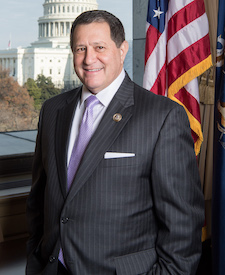
Rep. Joseph D. Morelle
Sponsored bills
Healthcare Extension and Accessibility for Developmentally disabled and Underserved Population Act of 2021 or the HEADs UP Act of 2021 This bill authorizes the Department of Health and Human Services (HHS) to award grants to support health centers that provide services for individuals with developmental disabilities, including dental care. Grant recipients must provide specialized treatment to individuals with developmental disabilities as necessary. The bill also provides statutory authority for HHS to designate individuals with developmental disabilities as health-professional shortage population groups for the purposes of the National Health Service Corps (NHSC). The NHSC provides scholarships and student loan repayment awards to eligible providers who agree to work with designated populations or in areas that face shortages of primary care, dental care, and mental health care providers.
Strength in Diversity Act of 2021 This bill establishes a program through which the Department of Education may award planning and implementation grants to specified educational agencies (e.g., local educational agencies) to improve diversity and reduce or eliminate racial or socioeconomic isolation in publicly funded early childhood education programs, public elementary schools, or public secondary schools.
Equity and Inclusion Enforcement Act of 2021 This bill authorizes private civil causes of action for disparate impact violations (to the same extent as intentional violations) of Title VI of the Civil Rights Act of 1964, which prohibits discrimination based on race, color, or national origin in federally funded programs or activities. Education programs that receive financial assistance authorized or extended by the Department of Education (ED) must designate at least one Title VI compliance coordinator to carry out responsibilities, investigate complaints, and provide assistance to ensure students and employees are aware of their rights and responsibilities. The bill requires ED to appoint a Special Assistant for Equity and Inclusion to (1) promote, coordinate, and evaluate efforts to engender program compliance and inform individuals of their rights; and (2) advise ED on matters relating to compliance.
Access to Birth Control Act This bill requires pharmacies to comply with certain rules related to ensuring access to contraceptives. Specifically, pharmacies must provide without delay a customer with any contraceptive or related medication that is in stock. If the contraceptive is not in stock, the pharmacy must immediately inform the customer and either order the contraceptive or refer the customer to a pharmacy that has it in stock. Laws in some states provide pharmacists with the right to refuse to dispense contraceptive-related drugs on religious or conscience grounds. Pharmacies may refuse to provide a contraceptive to a customer (1) if the customer lacks a valid prescription for a prescription contraceptive or is unable to pay for the contraceptive, or (2) based on a pharmacy employee's professional clinical judgment. The bill also establishes a private cause of action and civil monetary penalties for violations of the bill.
This resolution (1) censures Representative Paul Gosar for posting a certain video on his social media accounts that depicts violence against Representative Alexandria Ocasio-Cortez and President Joseph R. Biden , and (2) removes him from the Committee on Natural Resources and the Committee on Oversight and Reform.
IDEA Full Funding Act This bill provides permanent, mandatory funding for the grant program that assists states and outlying areas in providing special education and related services to children with disabilities.
Credit Union Governance Modernization Act of 2021 This bill revises the procedure for expelling members from a federal credit union. Specifically, a member may be expelled for cause pursuant to a policy adopted by a majority vote of a quorum of the directors of a credit union. Currently, a member may be expelled by a two-thirds vote of the credit union membership present at a special meeting. The member may request a hearing from the board of directors. After the hearing, the board shall hold a vote on expelling the member. The expelled member may request reinstatement through a two-thirds vote of the members present at a meeting. Member conduct that may be cause for expulsion includes a material loss to the credit union, a violation of the credit union membership agreement, a substantial disruption to the operations of a credit union, fraud or attempted fraud, and other illegal or inappropriate behavior.
Protect Older Job Applicants Act of 2021 or the POJA Act of 2021 This bill prohibits employers from limiting, segregating, or classifying job applicants based on an applicant's age. It also requires the Equal Employment Opportunity Commission to study and report on claims received from job applicants involving age discrimination.
Maddy summaryHRES 785 is a symbolic resolution designating November 8, 2021, as "National First-Generation College Celebration Day." It urges all Americans to celebrate this day, recognize the contributions of first-generation college students (those whose parents did not earn bachelor's degrees), and honor the Higher Education Act of 1965. The resolution highlights existing federal programs like TRIO and Pell Grants that support underrepresented students but does not create new laws or funding. As a non-binding resolution, it has no direct policy impact but aims to raise awareness about first-generation students' challenges and achievements.