

Maddy summaryThe Fred Hamilton Veterans' Lost Records Act allows the Department of Veterans Affairs to approve benefits for veterans whose service or medical records are missing or damaged due to government mishandling. Instead of requiring complete official records, the bill permits the VA to use alternative evidence such as medical exams after discharge, the veteran's own account of service-related injuries, and statements from fellow service members. The VA must create specific rules for this process within a year of the bill's passage, and the change applies to claims where records were lost after federal custody. This measure aims to help veterans receive benefits even when official documentation is unavailable due to government error.
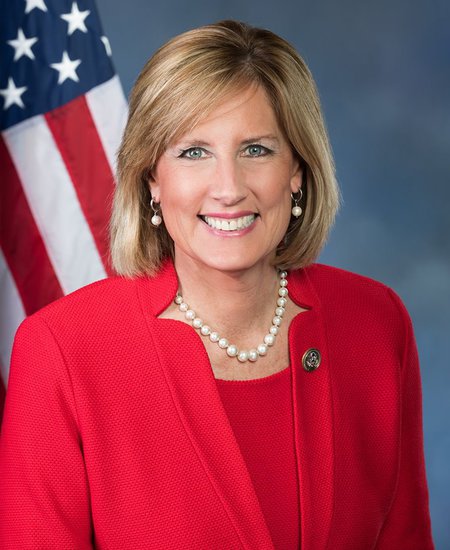
Rep. Claudia Tenney
Sponsored bills
Maddy summaryHR 8231, the James Earl Jones Congressional Gold Medal Act, authorizes a Congressional Gold Medal to be awarded to actor James Earl Jones in recognition of his distinguished career in theater and film, and his role in advancing inclusion and equal opportunities for people of all backgrounds in the entertainment industry. The Treasury will strike the medal with an image and inscription of Jones, and may produce and sell bronze duplicates to cover costs, with proceeds deposited into the U.S. Mint's public enterprise fund. This bill serves as a ceremonial honor with no new legal requirements or policy changes.
Maddy summaryHR 6285, the Alaska’s Right to Produce Act of 2023, requires the federal government to reissue canceled oil and gas leases on six specific tracts (16, 17, 24, 26, 27, and 30) in Alaska’s Coastal Plain. It mandates the Secretary of the Interior to accept the highest valid bids from January 2021 within 30 days and issue leases by December 2024, while blocking new environmental reviews for the program. The bill also nullifies federal actions that paused leasing, including a 2023 BLM rule and a 2021 Secretarial Order, and restricts judicial review of related approvals. This directly affects oil companies that bid on the canceled leases and the Bureau of Land Management, requiring them to proceed under the 2020 Record of Decision.
Maddy summaryThis bill directs the Department of Education to use the International Holocaust Remembrance Alliance (IHRA) definition of antisemitism when enforcing Title VI of the Civil Rights Act in federal education programs. It clarifies that discrimination against Jewish individuals based on actual or perceived shared ancestry or ethnic characteristics may violate Title VI protections, requiring agencies to consider antisemitism intent during investigations. The law affects schools and universities receiving federal funds by guiding how they handle discrimination complaints related to antisemitism. It does not create new legal standards or expand the Department of Education's authority, as explicitly stated in the bill.
Maddy summaryHJRES 134 is a joint resolution seeking congressional disapproval of a Department of Labor rule titled "Improving Protections for Workers in Temporary Agricultural Employment." The bill targets the specific rule published in the Federal Register (89 Fed. Reg. 33898, April 29, 2024) that aimed to strengthen worker protections for temporary agricultural employees. If passed, this resolution would block the rule from taking effect, preventing the Department of Labor's new regulations from being implemented. The measure directly affects the rule's implementation, not the workers or employers it was designed to protect.
Maddy summaryThis joint resolution seeks congressional disapproval of a Department of Labor rule designed to improve protections for temporary agricultural workers. It invokes a specific federal process under Title 5 to block the rule from taking effect, preventing the proposed changes from being implemented. The rule, published April 29, 2024, would have affected temporary farmworkers’ rights and working conditions. If passed, the resolution would nullify the rule, meaning the Department of Labor’s proposed protections would not be enforced.
Maddy summaryHR 8208, the Stop the BIS Rule Act, blocks federal funding for the Bureau of Industry and Security (BIS) to finalize, implement, or enforce a proposed rule on firearms export controls. The rule, issued April 26, 2024 (89 Fed. Reg. 34680), aimed to enhance controls for firearms and related items. By prohibiting funds for this specific rule, the bill prevents the government from moving forward with the proposed regulations, which would have affected firearms exporters. The bill directly targets the BIS's ability to act on the rule, not the rule's content.
Maddy summaryThe Weather Act Reauthorization Act of 2023 reauthorizes and updates the Weather Research and Forecasting Innovation Act of 2017, focusing on improving weather forecasting capabilities across multiple domains. It authorizes annual funding for research and development in tornado, hurricane, and atmospheric river forecasting, with specific provisions for enhancing data collection from commercial sources and improving public communication of weather warnings. The bill establishes programs to improve data assimilation practices, support agricultural and water management applications, and enhance the National Oceanic and Atmospheric Administration's computing resources for weather modeling. This legislation directly affects the National Oceanic and Atmospheric Administration, its partners in the weather enterprise, and the public who rely on weather forecasts and warnings for safety and planning.
Maddy summaryThe Growing and Preserving Innovation in America Act of 2024 amends the Internal Revenue Code to reduce the tax deduction rate for foreign-derived intangible income (FDII) from 50% to 37.5%. This directly affects U.S. corporations earning income from intellectual property abroad, as it lowers the tax deduction they can claim on that income. The change takes effect on the date the bill is enacted, altering the tax treatment of foreign-derived income for affected businesses. The provision is a specific policy adjustment to the tax code, not a broader innovation incentive.
Maddy summaryHR 8163, the FORKS Made in America Act, adds stainless steel flatware to the Berry Amendment, which requires the U.S. military to purchase certain items made in America. This change directly affects the Department of Defense's procurement of stainless steel flatware (including forks, spoons, and knives) for use in military facilities, effective October 1, 2023. The bill expands the existing list of covered items under the Berry Amendment to include this specific kitchenware category, ensuring such purchases must be domestically produced. It does not alter existing requirements for other military equipment or create new funding.