

Maddy summaryThe Semiconductor Superiority Act expands the advanced manufacturing investment credit to include semiconductor facilities located in outer space, specifically low-Earth orbit. This provision allows companies to claim tax credits for equipment used in space-based manufacturing, even if some components are not physically located in orbit or are used for transporting crew and supplies. The bill also clarifies that flight control, crew habitation, and repair activities in space count as manufacturing functions for the purpose of this credit. Additionally, the law excludes rockets and launch vehicles from qualifying as eligible property under this new rule. These changes apply only to facilities and equipment placed in service after the act is enacted.
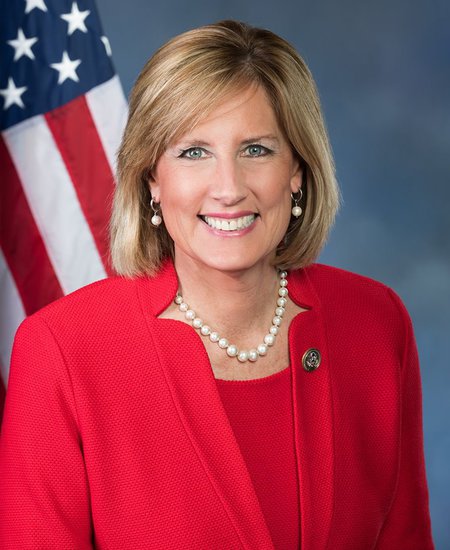
Rep. Claudia Tenney
Sponsored bills
Maddy summaryThis bill, the Provider Reimbursement Stability Act of 2026, aims to create more predictable payment adjustments for physicians and other healthcare providers under the Medicare program. It directly affects medical practices and providers who receive reimbursement for services through the physician fee schedule. The legislation increases a threshold for certain budget neutrality calculations from $20 million to $54.3 million in 2027, with automatic increases every five years thereafter. It also requires the government to correct payment estimates when actual service usage differs significantly from projections, mandates regular updates to cost calculations for practice expenses, and limits how much Medicare payment rates can change from year to year to a maximum of 2.5 percent.
Maddy summaryThis bill would add pharmacist services to Medicare Part B coverage for beneficiaries, specifically covering pharmacist-led testing and treatment for illnesses like flu, COVID-19, or strep throat during public health emergencies. It defines covered services as those performed under state law, often requiring collaboration with a physician, and sets payment at 80% of the lesser of the actual charge or 85% of physician payment rates. Pharmacists would be prohibited from balance billing for these services, ensuring Medicare beneficiaries pay only their standard copayment. The changes would take effect January 1, 2026.
Maddy summaryThe Recycling Infrastructure and Accessibility Act of 2025 establishes a competitive federal grant program to fund projects improving recycling access in underserved communities. It authorizes $30 million annually (2025-2029) for grants to states, local governments, tribes, or public-private partnerships to build infrastructure like transfer stations, expand curbside collection, or reduce transport costs. Grants must be $500,000-$15 million, with 70% reserved for projects in communities lacking a materials recovery facility within 75 miles. The program requires grantees to report on implementation and outcomes, excluding funding for recycling education.
Maddy summaryThis bill authorizes the U.S. Mint to produce commemorative $5 gold and $1 silver coins marking the 25th anniversary of the September 11, 2001, terrorist attacks. The coins must feature designs honoring victims and first responders (including the inscription "Never Forget") and will be sold only during 2027-2028. All surcharges ($35 per gold coin, $10 per silver coin) collected from sales will fund the National September 11 Memorial and Museum at the World Trade Center, with no net cost to the federal government. The coins are legal tender but primarily intended for collectors, not circulation.
Maddy summaryThe Smithsonian American Women’s History Museum Act authorizes the creation of a new Smithsonian museum dedicated to women’s history, to be located within the National Mall Reserve in Washington, D.C. If the site is managed by another federal agency, the bill requires that agency to transfer the land after notifying Congress and relevant committees. The museum must ensure exhibits and programs accurately represent diverse women’s experiences by consulting a broad range of experts and community voices. The Smithsonian will submit biennial reports to Congress detailing how the museum meets these representation standards.
Maddy summaryThe Dietary Supplements Access Act allows individuals to use funds from specific tax-advantaged health accounts to purchase dietary supplements without paying income taxes on those withdrawals. This legislation directly affects holders of Health Savings Accounts, Archer Medical Savings Accounts, and Health Flexible Spending Arrangements by permitting up to $500 per year in tax-free spending on these products, with a lower limit of $250 for married couples filing separately. The bill explicitly defines dietary supplements according to federal law but excludes energy drinks, soft drinks, and sodas from this benefit. These tax advantages will only become effective for expenses incurred after December 31, 2025.
Maddy summaryThis bill directs the Department of Defense to connect military recruits who cannot enlist with the Job Corps program for training in skilled industrial jobs within the defense industry. It expands specific workforce incentives to include Job Corps centers and gives local operators more flexibility to hire staff, partner with educational institutions, and manage their programs without waiting for federal approval. The legislation also updates rules to allow Job Corps centers to accept cash donations and grants more easily while streamlining enrollment for veterans and active-duty service members. Overall, the act aims to reduce shortages of skilled workers in defense manufacturing by aligning Job Corps training with the needs of the defense industrial base.
Maddy summaryThe Freedom from Taxes Act of 2026 eliminates federal transfer and making taxes on firearms, which directly affects individuals buying or manufacturing guns. By setting these specific taxes to zero, the bill removes the $200 fee previously required when transferring or making certain firearms. The law also adds a time limit to a special tax, ensuring it no longer applies to years beginning after the bill takes effect. These changes would become active on the first day of the first calendar quarter starting more than 90 days after the legislation is signed into law.
This bill designates the facility of the United States Postal Service located at 5951 Riverdale Avenue in Bronx, New York, as the "Eliot L. Engel Post Office".