

Maddy summaryThis bill creates a tax exclusion for landowners who sell certain property interests through the Defense Department's Readiness and Environmental Protection Integration (REPI) program. It excludes the gain from taxable income when selling "qualified real property interests" (including full ownership, remainder interests, or surface use restrictions) to a qualified organization under the REPI program, which protects military readiness areas while conserving environmentally sensitive lands. The exclusion does not apply if the property was purchased within three years prior to sale (except for family partnerships or family-owned entities). This policy change directly affects landowners participating in the REPI program by reducing tax liability on qualifying sales.
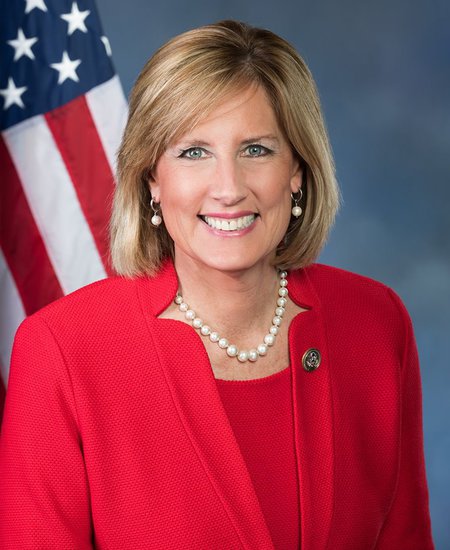
Rep. Claudia Tenney
Sponsored bills
Maddy summaryThe Jobs and Opportunities for Medicaid Act would require most Medicaid recipients aged 18 to 65 to work or volunteer at least 20 hours per week (averaged monthly) to maintain health coverage, starting January 1, 2026. Exemptions include individuals who are pregnant, primary caregivers for children under 6, medically unable to work, or enrolled in substance abuse treatment programs. States would need to verify each month whether recipients meet this work requirement to continue receiving Medicaid benefits.
Maddy summaryThis bill amends the Social Security Act to require states to establish and enforce child support obligations from biological fathers for unborn children. It allows mothers to request support payments starting from the month of conception (as determined by a physician), with retroactive collection even if paternity is confirmed after birth. Key provisions include requiring the mother's consent for paternity testing, prohibiting testing that risks harm to the unborn child, and mandating court-determined payments based on the mother's and child's best interests. The bill defines "unborn child" as any human fetus at any stage of development in the womb. These changes apply to child support under Title IV of the Social Security Act, effective two years after enactment.
Maddy summaryThe Primary Care Enhancement Act of 2025 changes how certain primary care arrangements are treated for tax purposes. It defines "direct primary care service arrangements" as fixed-fee models (max $150/month per person, excluding prescriptions/anesthesia/labs) that won’t count as "health plans" under tax law. This allows the fees to be treated as deductible medical expenses and requires employers to report them on W-2 forms. The law applies to taxable years starting after 2025, affecting patients in these arrangements, employers offering them, and tax filing processes.
Maddy summaryThe Stop Funding Our Adversaries Act of 2023 prohibits federal agencies like Defense, Energy, Health, and Environmental Protection from funding research conducted by the Chinese government, the Chinese Communist Party, or entities owned or controlled by them. It blocks all funding mechanisms - including grants, contracts, and cooperative agreements - for such research. This directly affects how these agencies allocate research budgets and restricts support for projects led by Chinese state entities. The bill enacts a concrete policy change by banning federal financial support for research involving specified Chinese entities.
Maddy summaryHR 1037, the Voter Eligibility Verification Act of 2025, amends a 1996 federal law to require state election officials to provide immigration status information for individuals on potential voter lists within 15 days when requested by a state Attorney General or Secretary of State. This bill directly affects state election administrators who must now verify voter eligibility using immigration data upon formal request. The key provision establishes a 15-day deadline for states to share this information, creating a new administrative requirement for voter eligibility checks. The bill focuses on modifying existing federal law to facilitate state-level verification processes without changing voter eligibility criteria.
Fair Access to Banking Act This bill places restrictions on certain banks, credit unions, and payment card networks if they refuse to do business with a person who complies with the law. Restrictions include prohibiting the use of electronic funds transfer systems and lending programs, termination of an institution's depository insurance, and specified civil penalties. Banks and other specified financial institutions are allowed to deny financial services to a person only if the denial is justified by a documented failure of that person to meet quantitative, impartial, risk-based standards established in advance by the institution. This justification may not be based upon reputational risks to the institution. The bill establishes the right for a person to bring a civil action for a violation of this bill.
Maddy summaryHR 1024, the US-Kazakhstan Trade Modernization Act, terminates the application of Title IV of the Trade Act of 1974 to Kazakhstan. This means the U.S. will no longer apply special trade restrictions tied to Kazakhstan's emigration policies, as Kazakhstan has been found compliant since 1997. The bill allows the President to determine that Title IV no longer applies and extend normal trade relations (NTR) treatment to Kazakhstan's products. As a result, Kazakhstan's exports to the U.S. will be subject to standard U.S. trade rules rather than the specific Title IV provisions.
Maddy summaryHR 1007, the Antisemitism Awareness Act of 2025, clarifies how the Department of Education enforces Title VI of the Civil Rights Act of 1964 to address discrimination against Jewish individuals. It requires the Department to consider the International Holocaust Remembrance Alliance (IHRA) definition of antisemitism when investigating complaints involving discrimination based on actual or perceived Jewish ancestry or ethnic characteristics. This affects Jewish students and communities in K-12 schools and colleges receiving federal funding, as it ensures antisemitism is assessed under existing civil rights protections. The bill does not create new laws but specifies that the IHRA definition - already used by the Department since 2018 - must be applied in Title VI enforcement cases.
Maddy summaryHRES 106 is a non-binding resolution calling on the United Nations Security Council to immediately impose an arms embargo on Burma’s military (the Tatmadaw). It directly targets the military junta responsible for the 2021 coup, ongoing human rights abuses, and violence against civilians, including ethnic minorities like the Rohingya. The resolution specifies that lifting the embargo would require the military to end violence, release detained leaders, allow humanitarian access, restore internet, and transition power to a civilian government. It also urges the international community to support affected civilians and promote peace dialogues. This resolution expresses congressional support for UN action but does not create new U.S. policy.