

Homes for Every Local Protector, Educator, and Responder Act of 2025 or the HELPER Act of 2025 This bill establishes a program administered by the Department of Housing and Urban Development to provide mortgage assistance to law enforcement officers, elementary and secondary school teachers, firefighters, or other first responders. Specifically, these individuals may be eligible for a first-time mortgage on a primary family residence with no down payment. Instead, the mortgage is subject to a one-time, up-front mortgage insurance premium.
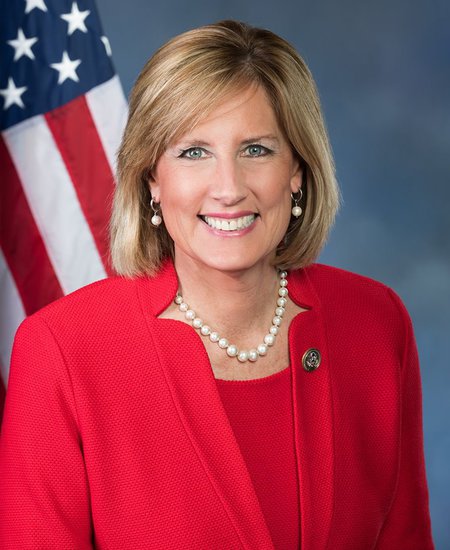
Rep. Claudia Tenney
Sponsored bills
Maddy summaryHR 1156, the Pandemic Unemployment Fraud Enforcement Act, extends the time limit for prosecuting fraud related to pandemic unemployment programs. It adds a 10-year window for criminal or civil actions against individuals who falsely claimed benefits under Pandemic Unemployment Assistance (PUA), Federal Pandemic Unemployment Compensation (FPUC), or Mixed Earner Unemployment Compensation (MEUC). The law applies only to fraud committed during these specific pandemic-era programs and does not revive cases where the original statute of limitations had already expired before this bill passed. This change gives authorities more time to pursue fraud cases without altering the programs' core eligibility rules.
Maddy summaryThe Credit for Caring Act of 2025 creates a federal tax credit for family caregivers of elderly or disabled relatives. It allows eligible caregivers (with over $7,500 in earned income) to claim a credit equal to 30% of qualified caregiving expenses exceeding $2,000, capped at $5,000 per year. Qualified expenses include human assistance, home modifications, respite care, counseling, lost wages for unpaid time off, and transportation, all requiring certification from a licensed healthcare provider that the care recipient has long-term needs. The credit phases out for higher earners (over $75,000 single/$150,000 joint) and requires documentation of expenses and care recipient certification.
Maddy summaryThis bill changes how individual investors in mutual funds (regulated investment companies) are taxed on certain dividends. It allows investors to defer paying tax on capital gain dividends that are automatically reinvested in additional fund shares through a dividend reinvestment plan. The deferred tax is recognized later when the investor sells shares or upon their death. It also establishes that shares acquired through this reinvestment are treated as held for over one year from the start, potentially qualifying for long-term capital gains rates. The rule applies only to individual investors (not estates, trusts, or dependents claimed by others).
Maddy summaryHR 2060, the Traveler’s Gun Rights Act, clarifies where individuals are considered residents for gun background checks when traveling. It defines "State of residence" to include active-duty military members' duty station or commute location, and people using a private mailbox or PO box without a physical home. The bill requires background checks to include either a physical address or a PO box address for gun buyers. This directly affects travelers, military personnel, and those without a fixed residence who purchase firearms across state lines. The change modifies existing federal background check procedures under Title 18, U.S. Code.
Maddy summaryHR 2042 establishes the Space National Guard as a reserve component of the Space Force, specifically for seven states (Alaska, California, Colorado, Florida, Hawaii, New York, and Ohio). It transfers existing Air National Guard space units - like the 213th Space Warning Squadron in Alaska and the 137th Space Warning Squadron in Colorado - to this new structure, while prohibiting additional personnel or new facilities. The bill requires the Secretary of the Air Force to implement the change within one year and provide annual reports to Congress on its status, missions, and funding. This reorganization officially recognizes these state-based units as part of the Space Force reserve without creating new military capabilities or infrastructure.
Maddy summaryHR 2033, the Military Spouse Hiring Act, expands the Work Opportunity Tax Credit to include spouses of active-duty military personnel. It adds "qualified military spouse" as an eligible category for the tax credit, meaning employers who hire such spouses can claim the credit. A "qualified military spouse" is defined as someone certified by a local agency as married to an active-duty service member at the time of hire. The credit applies to hires occurring after the bill's enactment date. This directly affects military spouses seeking employment and employers hiring them, providing a tax incentive to encourage their hiring.
Maddy summaryHR 2039, the Protecting the Right to Keep and Bear Arms Act of 2025, prevents the President and Health Secretary from using emergency declarations (under the National Emergencies Act or Public Health Service Act) to implement gun control measures. It amends disaster relief law to explicitly prohibit future rules that would ban firearm possession, sales, or accessories during emergencies. The bill directly affects federal agencies and future emergency declarations, blocking them from being used as a tool for gun regulation. It does not change existing gun laws but restricts how emergency powers can be applied to firearms policy.
Maddy summaryThe FLASH Act authorizes construction of navigable roads along federal border lands to improve U.S. Customs and Border Protection access and operational control. It requires federal agencies to develop protocols for reducing trash accumulation and environmental degradation from unauthorized border crossings, while targeting illegal cannabis cultivation sites with environmental response initiatives. The bill prohibits using federal funds to provide housing for undocumented immigrants on federal lands and establishes criminal penalties for illegal pesticide use. The legislation affects how federal land management agencies (National Park Service, Bureau of Land Management, etc.) operate along the southern border, with specific reporting requirements for environmental impacts and trash collection.
Maddy summaryHRES 208 is a non-binding House resolution expressing solidarity with New York State corrections officers who are striking over unsafe working conditions. It cites rising assaults on staff (2,070 in 2024), staffing shortages (down to 13,886 officers in 2025), and the HALT Act's restrictions on solitary confinement as key issues driving the strike. The resolution urges the New York State Legislature to repeal the HALT Act and condemns Governor Hochul's response to the strike. As a symbolic gesture, it does not create new law or directly affect policy.