Maddy summaryHR 2574, the "No Iranian Energy Act," amends existing sanctions law to explicitly prohibit U.S. sanctions on natural gas transactions involving Iran. It expands the Iran Freedom and Counter-Proliferation Act of 2021 by adding natural gas to the list of energy sectors subject to sanctions under Sections 1244 and 1247 of the law. The bill directly affects foreign entities or governments that engage in the sale, supply, or transfer of natural gas to or from Iran. This change modifies existing legal provisions without creating new sanctions, targeting Iran's gas industry as part of broader sanctions policy.
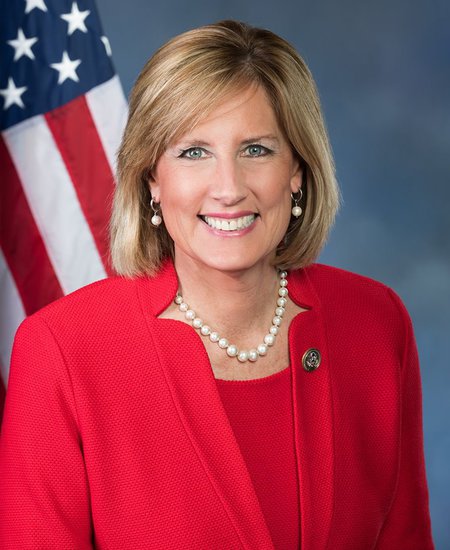
Rep. Claudia Tenney
Sponsored bills
Maddy summaryThis bill creates a new Medicare payment model (the "Comprehensive Alternative Response for Emergencies Model") that allows Medicare Part B to cover ground ambulance services provided in response to emergency medical calls *without* a full transport. It directly affects Medicare beneficiaries receiving emergency ambulance care and ambulance providers, ensuring they are paid for services like dispatch and initial response that don't include transport. The model requires payment rates to align with standard transport payments, mandates compliance with state protocols, and operates for a 5-year test period. A report by the Comptroller General will evaluate the model's impact on beneficiary access, outcomes, and regional differences after 4 years.
Maddy summaryThis bill prohibits the District of Columbia from using ranked choice voting in any election, including those for local or federal offices and ballot initiatives. It amends the Help America Vote Act to add a new provision (Section 305) explicitly banning ranked choice voting systems where voters rank candidates by preference. The law directly affects DC voters and election administrators by requiring all District elections to use traditional single-choice voting instead. This is a procedural change to federal election law, not a new voting right or policy.
Maddy summaryThis bill codifies a "maximum pressure" policy toward Iran, requiring the U.S. to maintain all sanctions until Iran meets specific conditions related to its nuclear program, missile development, support for terrorism, and human rights violations. It expands sanctions on Iran's Revolutionary Guard Corps (IRGC) and entities supporting Iran's ballistic missile program, while prohibiting waivers of sanctions on these entities. The bill mandates regular reports to Congress on Iran's nuclear activities, support for terrorist groups like Hamas and Hezbollah, and human rights abuses within Iran. It also directs the use of frozen Iranian assets to support victims of state-sponsored terrorism and prevents the release of funds that could benefit Iran's terrorist proxies. The bill aims to maintain economic and diplomatic pressure on Iran until it changes its behavior across multiple fronts.
Maddy summaryHR 2581, the Iranian Terror Prevention Act, requires the U.S. government to designate 29 specific Iranian-backed militant groups as terrorist organizations within 90 days of the bill’s passage. The President must then decide within 60 days whether to impose sanctions on these groups, blocking their U.S. assets and transactions under existing law. The bill also mandates regular reports to Congress on these designations and sanctions, including for any new groups meeting the criteria. This law directly affects the 29 named groups (such as the Badr Organization and Houthis) and any entities controlled by Iran’s Islamic Revolutionary Guard Corps.
Maddy summaryHR 2575 terminates specific financial authorizations related to Iran. It ends a 2023 waiver allowing funds transfer from South Korea to Qatar and all related licenses issued by the Treasury's Office of Foreign Assets Control (OFAC). The bill also prohibits the President from reissuing similar waivers or licenses that would permit the Iranian government or Iranian individuals to access certain financial accounts. This directly affects Iran's ability to access designated funds previously authorized under prior legislation. The law creates a permanent restriction on these financial arrangements without requiring new congressional approval.
Maddy summaryHR 2552, the RIFLE Act, repeals the federal tax on firearm transfers (Section 5811 of the Internal Revenue Code). This directly affects firearm sellers and purchasers by removing the tax paid when transferring firearms. The bill also updates related tax code references to reflect the repeal and specifies the tax removal applies to transfers after the law's enactment. It clarifies that the repeal does not change how firearms are regulated under the National Firearms Act or involve the Consumer Product Safety Commission.
Maddy summaryHR 2577, the PLAN for School Safety Act of 2025, establishes a federal grant program to create statewide or regional School Safety Development Centers. These centers, funded through $25 million annually (2026-2030), will provide schools - especially those in rural, Tribal, or low-resourced communities - with free, customized consulting to develop or improve evidence-based school safety and mental health plans. Centers must offer tailored consultations, help schools access federal/state funding, and provide training, while prohibiting the use of funds for firearm training or hiring school staff. The bill directly affects public schools and their communities by supporting data-driven safety planning without altering existing civil rights or safety laws.
Maddy summaryThis bill, titled "Secure Family Futures Act of 2025" but actually focused on tax code changes, primarily affects a specific subset of insurance companies. It amends the Internal Revenue Code to exclude certain debts (like bonds or notes) held by these companies from being counted as capital assets (Section 2), and extends their capital loss carryover period to 10 years for losses from foreign expropriation or losses incurred by these companies (Section 3). The changes apply to debts acquired and losses arising after December 31, 2025. The bill's title is misleading, as it does not relate to family policy but is a technical tax amendment targeting defined insurance industry entities.
Sanctioning Russia Act of 2025 This bill imposes penalties on certain persons (individuals and entities) if the President determines that the Russian government or a person acting at Russia's direction is involved with (1) refusing to negotiate a peace agreement with Ukraine; (2) violating a negotiated peace agreement; (3) initiating another invasion of Ukraine; or (4) overthrowing, dismantling, or seeking to subvert the Ukrainian government. If the President makes such a determination, the bill requires certain actions including the President must impose visa- and property-blocking sanctions on specified persons such as the Russian president, certain Russian military commanders, and any foreign person that knowingly provides defense items to the Russian armed forces; the President must increase the rate of duty on all goods and services imported from Russia into the United States to at least 500% relative to the value of such goods and services; the President must increase the rate of duty on all goods and services imported into the United States from countries that knowingly engage in the exchange of Russian-origin uranium and petroleum products to at least 500% relative to the value of such goods and services; the Department of the Treasury must impose property-blocking sanctions on any financial institution organized under Russian law and owned wholly or partly by Russia, and any financial institution that engages in transactions with those entities; and the Department of Commerce must prohibit the export, reexport, or in-country transfer to or in Russia of any U.S.-produced energy or energy product.