

Maddy summaryThe Neighborhood Homes Investment Act creates a new tax credit for developers who build or rehabilitate affordable homes in distressed communities. The credit is calculated as the lesser of (1) the difference between development costs and sale price, (2) 40% of development costs, or (3) 32% of the national median home price. It applies only to homes sold to qualified homeowners with income up to 140% of area median income in designated "qualified census tracts" (areas with high poverty rates, low median home values, and low median family income). Developers must meet quality standards and repay the credit if the home is sold within 5 years of the affordable sale. This credit aims to address the "value gap" that prevents housing development in distressed communities by incentivizing affordable home construction and rehabilitation.
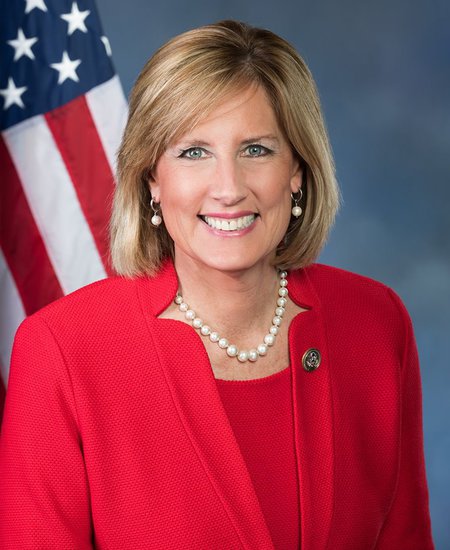
Rep. Claudia Tenney
Sponsored bills
Promoting Affordable Childcare for Everyone Act or the PACE Act This bill increases and makes refundable the tax credit for qualified child and dependent care expenses. The bill also increases the exclusion from gross income for employer-provided child and dependent care benefits. Under current law, a nonrefundable tax credit is allowed for up to 35% (maximum tax credit percentage) of qualified child and dependent care expenses incurred by an individual to work or look for work, up to a maximum amount. The percentage of such expenses allowed as a tax credit may be reduced, but not below 20% (minimum tax credit percentage), based on an individual’s adjusted gross income. The bill generally increases the tax credit for qualified child and dependent care expenses by increasing the maximum tax credit percentage to 50%, increasing the minimum tax credit percentage to 35%, and adjusting the maximum credit amounts annually for inflation. The bill also makes the tax credit for qualified child and dependent care expenses refundable. Finally, the bill increases and adjusts for inflation the amount that may be excluded from gross income for employer-sponsored child and dependent care benefits (e.g., dependent care flexible spending arrangements) to $7,500 (from $5,000).
Maddy summaryThis bill repeals a restriction that previously prevented individuals from rolling over funds directly from their Individual Retirement Accounts (IRAs) to donor-advised funds (DAFs) for charitable giving. It directly affects IRA account holders who wish to make tax-advantaged charitable contributions through DAFs. The key provision amends the Internal Revenue Code to remove the specific language barring such rollovers, allowing these transfers to occur without triggering taxable distributions. The change becomes effective after the bill's enactment, streamlining a pathway for donors to support charities via DAFs using IRA assets.
Maddy summaryHR 2810, the Family Cord Blood Banking Act, allows individuals to deduct payments for private umbilical cord blood or tissue banking as medical expenses on their federal taxes. It directly affects people who pay for these private banking services through accredited providers meeting specific federal safety standards. The bill amends the tax code to add private cord banking services as a qualifying medical expense, effective for tax years starting after December 31, 2024. This change simplifies tax treatment for those using private cord banking without altering insurance coverage or public banking access.
Maddy summaryThis bill updates federal definitions and policies to support small modular nuclear reactors (SMRs). It increases the size threshold for SMRs from 300 megawatts to 500 megawatts per reactor unit (and adjusts combined capacity limits), ensuring projects within this range qualify for federal funding. The bill requires the Nuclear Regulatory Commission and Department of Energy to revise their guidance to align with these new definitions and creates a federal working group to assess U.S. competitiveness in SMR manufacturing and commercialization. These changes directly affect nuclear developers, manufacturers, and federal agencies managing energy policy and regulation.
Maddy summaryHR 1526 (NORRA of 2025) limits U.S. district courts' power to issue injunctions. It prohibits courts from granting court orders that stop actions affecting parties outside the specific lawsuit, restricting injunctions to apply only to the immediate parties involved in the case. This change would directly affect federal district courts and the parties seeking injunctive relief in litigation. The bill adds Section 1370 to Title 28 of the U.S. Code, requiring that any injunction be limited to the specific case parties. It does not alter other court powers or affect existing legal procedures beyond this specific restriction.
Safeguard American Voter Eligibility Act or the SAVE Act This bill requires individuals to provide documentary proof of U.S. citizenship when registering to vote in federal elections. Specifically, the bill prohibits states from accepting and processing an application to register to vote in a federal election unless the applicant presents documentary proof of U.S. citizenship. The bill specifies what documents are considered acceptable proof of U.S. citizenship, such as identification that complies with the REAL ID Act of 2005 that indicates U.S. citizenship. Further, the bill (1) prohibits states from registering an individual to vote in a federal election unless, at the time the individual applies to register to vote, the individual provides documentary proof of U.S. citizenship; and (2) requires states to establish an alternative process under which an applicant may submit other evidence to demonstrate U.S. citizenship. Each state must take affirmative steps on an ongoing basis to ensure that only U.S. citizens are registered to vote, which shall include establishing a program to identify individuals who are not U.S. citizens using information supplied by certain sources. Additionally, states must remove noncitizens from their official lists of eligible voters. The bill allows for a private right of action against an election official who registers an applicant to vote in a federal election who fails to present documentary proof of U.S. citizenship. The bill establishes criminal penalties for certain offenses, including registering an applicant to vote in a federal election who fails to present documentary proof of U.S. citizenship.
Maddy summaryHR 2783, the Infrastructure Project Acceleration Act, fast-tracks large-scale manufacturing projects in the U.S. by waiving certain federal environmental reviews. It applies to projects costing $1 billion or more that require federal approvals, directly affecting major manufacturers seeking to build or expand facilities. Key provisions exclude projects from needing permits under the Clean Water Act (Section 404) and the Endangered Species Act (Sections 7, 9, 10), modify National Environmental Policy Act (NEPA) reviews to accept equivalent state/Tribal environmental processes, and limit court challenges by barring judicial review of approvals for these projects. The bill aims to speed up manufacturing projects in critical sectors like defense and healthcare while reducing reliance on foreign manufacturing.
Maddy summaryHR 2798 creates a federal tax credit allowing individuals to claim 75% of qualified cash or securities donations (up to $5,000 or 10% of adjusted gross income) to eligible charter school organizations. To qualify, organizations must be 501(c)(3) entities meeting strict criteria, including being in the top 10% for student performance in their state or receiving specific federal grants, and must undergo annual audits. The credit is subject to a $5 billion annual cap, allocated first to states (with $10 million per state) and then nationally on a first-come, first-served basis. This directly affects individual donors making qualifying contributions and charter school organizations seeking to expand operations through tax-advantaged funding.
Maddy summaryHR 2806 prohibits the Secretary of Energy from selling petroleum products from the Strategic Petroleum Reserve to entities under Chinese Communist Party control or if the products could be exported to China. It directly affects U.S. energy sales to Chinese-linked companies and the Department of Energy’s management of the reserve. Key provisions require the Secretary to block such sales and mandate that any sale not result in exports to China. This policy change restricts access to U.S. strategic oil reserves for China-related entities.